
Commentary
For years, we’ve argued over whether social media is good or bad, about whether it connects us or divides us, whether it empowers voices or corrodes society. But a new consensus is forming, not in think tanks or Silicon Valley panels, but in classrooms, courtrooms, and homes.
Social media isn’t social anymore.
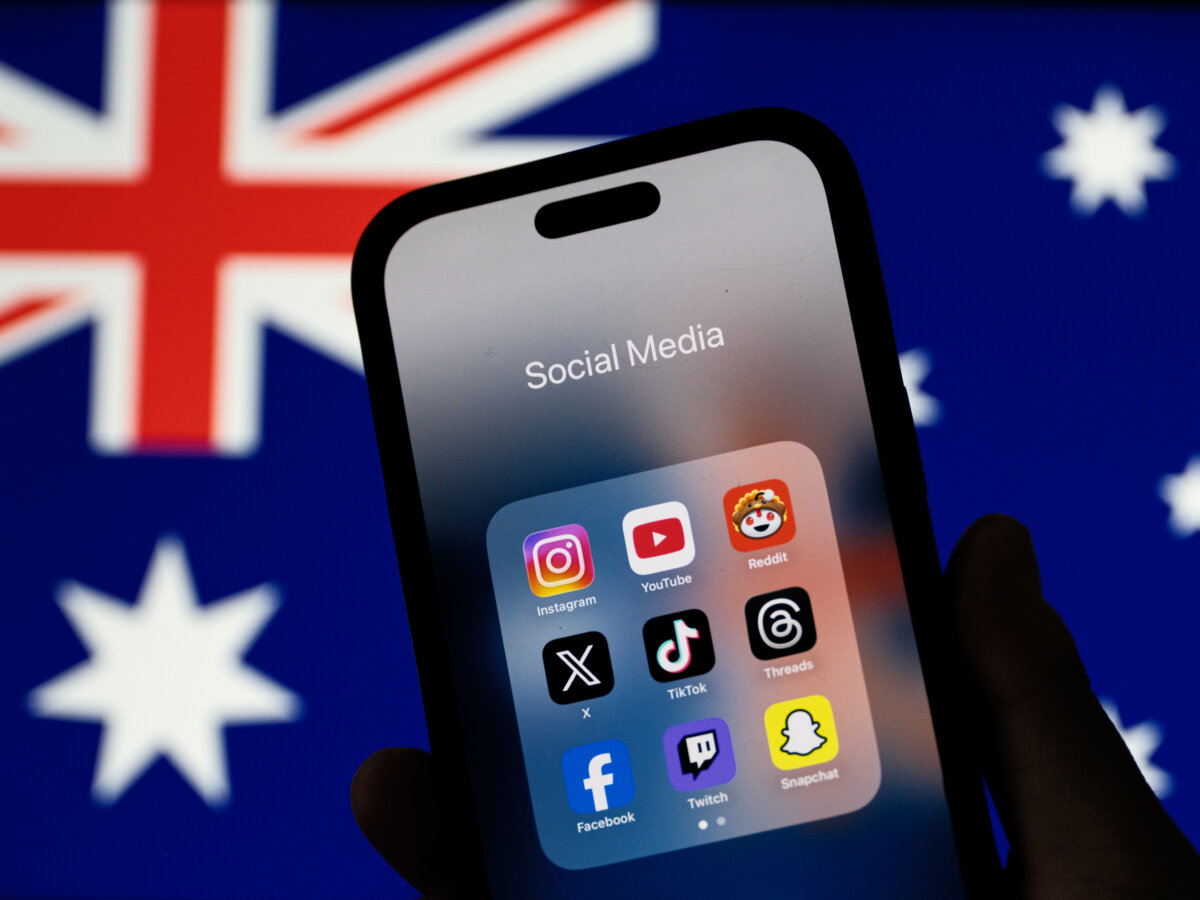
That realization is now driving real-world consequences. Australia recently announced restrictions on social media use for minors, citing mounting evidence of harm to children’s mental health. In the United States, New York City and dozens of states have filed suit against major social media companies, accusing them of knowingly designing platforms that addict children and damage psychological development. Teachers, parents, pediatricians, and even former tech insiders are converging on the same conclusion: Something about the environment has fundamentally changed.
This isn’t a panic about screens or a moral backlash against technology. It’s a reckoning with what kind of social world these platforms have become.
When social media first emerged, it extended everyday human relationships. Feeds were largely chronological. You mostly saw posts from people you knew. Interaction carried context. Time moved at something like a human pace. The stated goal, however imperfectly achieved, was connection.
That structure is gone.
Today, major platforms are governed by predictive systems designed to maximize engagement, not relationships. Content is selected not because it comes from someone you know but because an algorithm predicts that it will provoke a reaction. What fills the feed is less conversation than stimulus: outrage, affirmation, fear, desire—whatever keeps attention from wandering.
What we still call “social” media now functions more like a personalized broadcast stream. Users participate less in shared communities and more in private feeds optimized for engagement. The experience is individualized, continuous, and detached from the ordinary rhythms of human interaction.
But when a space stops functioning as genuinely social, it no longer teaches people how to relate to one another.
Social skills are not innate. They develop through repeated, everyday interaction, such as reading facial expressions, managing disagreement, tolerating boredom, and repairing misunderstandings. These skills form gradually through lived experience, not by instruction alone.
Empathy is one of those skills. It depends especially on real-time feedback, by seeing how words are received by another human, adjusting behavior, and trying again. When social interaction is reduced to mere reactions, metrics, and performance, those feedback loops for social development don’t happen as they have for as many generations of humans as we can remember.
Educators are increasingly encountering the effects. Teachers describe classrooms where students struggle with basic social cues such as eye contact, emotional regulation, and patience with one another. As a result, schools are now being asked to teach emotional skills that once developed naturally through regular human contact.
This shift is most visible in Generation Alpha, the first generation to grow up fully immersed in algorithmic digital environments from early childhood.
These children are not damaged. They are adapted. They have spent their most formative developmental years inside systems that never pause, never rest, never forget, and respond instantly to behavior. AI researchers sometimes describe these digital systems as “alien,” not because they are hostile or from another planet but because they do not operate on human rhythms or cycles found in nature. They do not sleep. They do not age. They do not require patience or negotiation.
During early brain development, children adjust to the world around them. Their minds adapt to what they experience most. When attention is constantly pulled in different directions and stimulation never lets up, the brain learns to stay reactive rather than steady. Sustained focus becomes harder. Silence feels uncomfortable. Patience and waiting become unfamiliar.
This is not a cultural preference that Gen Alpha chose. Their development is a biological response to the new, hybrid, human-plus-non-human environment that they were surrounded by.
The children shaped by these systems are now in classrooms and homes, and the patterns are hard to ignore. Lawsuits, policy changes, and cultural pullbacks all point to the same realization: Some parts of growing up were handed off too early, and the effects don’t disappear with age.
At the same time, the way people use social media is also changing. Younger users are posting less. Many scroll without engaging or leave altogether. The rise of a new “posting zero” trend—choosing only to consume and not to share personal content at all—reflects a growing sense that these platforms no longer offer much in return.
Social media companies recognize this shift, but instead of rebuilding their platforms around real human interaction, they are moving in the opposite direction. Feeds are increasingly filled with AI-generated content, and recommendation systems push harder to hold attention. New devices, such as smart glasses and immersive displays, aim to weave algorithm-curated feeds directly into everyday life. And as human participation drops, simulation steps in to fill the space.
The future being built is even less social, more automated, more immersive, and less dependent on actual human presence. In that world, connection doesn’t require another person. Interaction is predicted in advance, and companionship is manufactured. According to this current trajectory, culture will be delivered, not lived.
That is why the real question is no longer how to fix social media. It’s whether we’re willing to stop calling it something it no longer is. Once we stop pretending these platforms are social, responsibility can shift. Parents, educators, lawmakers, and individuals have to decide how much human development they are willing to leave in the hands of non-human systems designed to maximize engagement, not relationships.
We must relearn that there is no neutral environment. What surrounds us shapes us.
The next phase of this conversation won’t be about apps or features. It will be about boundaries and recognizing that human development cannot happen without human space, human presence, and on human time. Technology will keep moving forward, but the choice is whether we let technology define what “social” means or whether we let humans make that definition.
Social media may no longer be social, but humanity still is—as long as we protect the conditions that allow it to grow.
Views expressed in this article are the opinions of the author and do not necessarily reflect the views of The Epoch Times.
 Friends Read Free
Copy
Facebook
Tweet
Friends Read Free
Copy
Facebook
Tweet