
Commentary
Japan, with the fourth-largest economy in the world, has begun its return to the world strategic stage after eight decades of penance, apology, and subordination to the United States following Japan’s World War II defeat by the Allies.
One of the immediate beneficiaries of Japan’s new move will be the Republic of China—Taiwan—which will be given additional security cover from the expanding Japanese defense forces. Significantly, it was the Republic of China, under Chiang Kai-shek, that fought the long fight against Japan’s invasion of China in the 1930s, and yet today it is the People’s Republic of China (PRC)—which largely avoided fighting the Japanese at that time—that has never forgiven Japan’s 20th-century invasion of mainland China.
It would not be unrealistic to assume that Japan could also be at the start of a new phase of economic growth, given the affirmation of conservative principles—as in the United States under the Trump administration—of reduction of the role of the state in the economy.
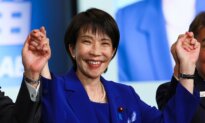
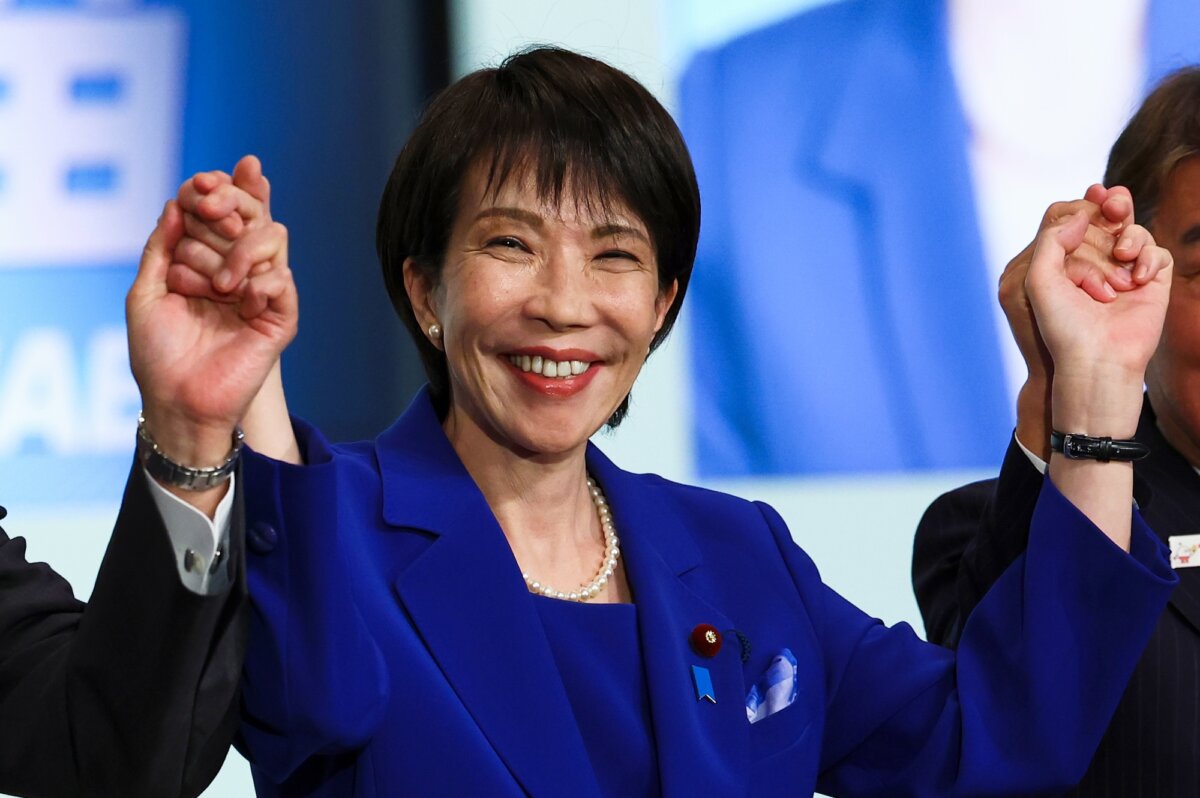
Japan confirmed its new strategic direction—economically, militarily, and in terms of global confidence and action—with the election on Oct. 4, 2025, of Sanae Takaichi as the new leader of its governing Liberal Democratic Party (LDP) and the culmination of a decade or more of gradually increasing conservatism and nationalism in the country.
Japan has moved from a defensive posture to a more assertive nationalism to face increasing hostility from the PRC. Prime Minister Shinzo Abe (who was prime minister from 2012 to 2020) began the process of rebuilding Japan as a fully sovereign power in the face of growing PRC threats and the need for Japan to face global challenges with its own solutions.
This return to nationalist confidence in the face of the regional threat from the PRC also brings with it a restoration of the importance of Japan’s symbol of unity and destiny, the Imperial Chrysanthemum Throne, currently held by Emperor Naruhito. Takaichi has taken a strong interest in the traditional importance of the Imperial Throne, including a reinforcement of the legal status of male primogeniture in the Imperial line.
Japan’s move in electing a confident, nationalist leader has reinforced nervousness in the leadership of the PRC, which is currently in the midst of its own leadership struggles and internal and military breakdown. This is largely because of the unambiguous support for a strong military and foreign policy position by the new leader of Japan’s governing LDP.
The election of someone perceived as the strongest possible new leader for the LDP promises to reinforce the solidarity of the Japan–U.S. alliance at a critical time in East Asia, as the Chinese Communist Party (CCP) faces its most strategic threat in the 76 years since it assumed dominance of mainland China.
In turn, the election of conservative Takaichi—Japan’s first female prime minister—sends a message to other regional powers, particularly South Korea, the Philippines, and Australia, that anti-CCP powers intend to prevail. Takaichi defeated Shinjiro Koizumi, 44, in a second-round run-off vote for the LDP leadership with 185 votes to 156. Takaichi has been a member of the House of Representatives since 1993 (with a two-year gap from 2003 to 2005), and has served in a variety of senior ministerial posts since 2006.
Before her political career, Takaichi was an author, legislative aide, and broadcaster. She was also a protégé of the late Abe.
Incumbent Prime Minister Shigeru Ishiba said in September that he would step down from the premiership and LDP leadership, triggering the leadership vote. Parliament, dominated by the LDP since 1955, voted to confirm Takaichi, 64, as prime minister. She is an avowed follower of the leadership philosophies of UK Prime Minister Margaret Thatcher. Unlike Thatcher, she was a heavy metal drummer during her college years.
Takaichi officially received U.S. President Donald Trump when he visited Japan on Oct. 28, a meeting that was significant in formulating the new relationship between Japan and the United States, during which she also reaffirmed the recent U.S.–Japan trade treaty.
The United States is highly dependent on Japan for the containment of the PRC. Part of the reassertion of Japanese strategic autonomy has also been the commencement of Japanese defense industrial exports, which began to be embraced during the Abe era, and has recently become significant. To an important degree, this has been done without U.S. involvement and has included clients such as Australia.
Japan is a partner with Italy in developing the UK-led sixth-generation fighter program at a time when both Italian Prime Minister Giorgia Meloni and Takaichi are ideologically at odds with the philosophies of UK Prime Minister Keir Starmer. Similarly, Takaichi is ideologically at odds with the Australian government of Anthony Albanese, which recently ordered 11 new frigates from Japan, at a cost of some $6.5 billion. The first three of those frigates will be built by Mitsubishi Heavy Industries in Japan; the remaining eight will be built in Australia.
These defense deals may well be unaffected by the growing ideological polarization between Japan and Australia and the UK but may cause Japan and the United States to double down on their historical defense relationship since World War II. In other words, Japan’s increasing sovereign assertiveness is not expected to come at a cost to the relationship with the United States.
Indeed, the rebirth of Japanese nationalism and traditionalism does not mirror the Japanese territorial expansionism, which was seen as critical to Japan’s food and population issues of the 1930s, just as the rise or rebirth of nationalism in Germany at the hands of the Alternative für Deutschland is not necessarily a parallel to the nationalist-socialist movement in Germany in the 1930s.
Japan is on a significant new course, which has reinforced its commitment to its tradition, values, and symbols, coupled with what could be called a “modern nationalism.”
Views expressed in this article are the opinions of the author and do not necessarily reflect the views of The Epoch Times.
 Friends Read Free
Copy
Facebook
Tweet
Friends Read Free
Copy
Facebook
Tweet