
Commentary
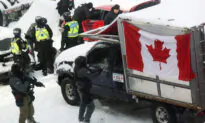
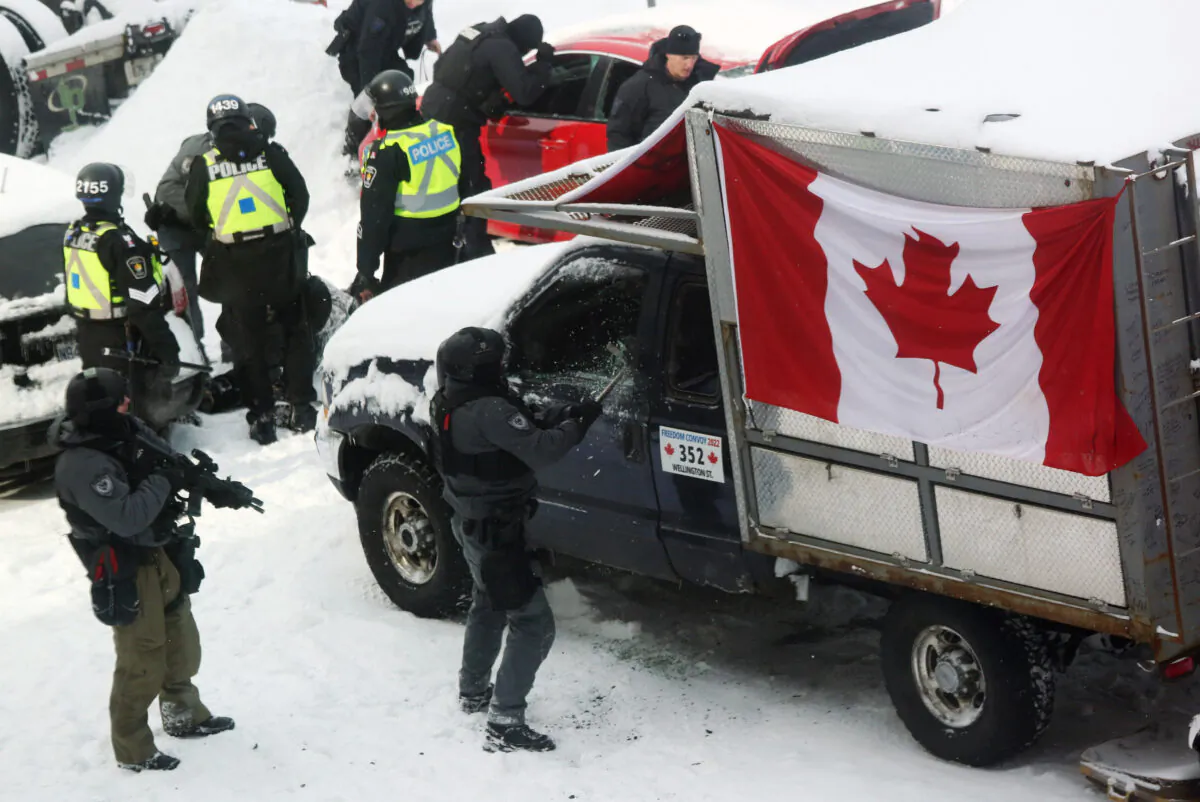
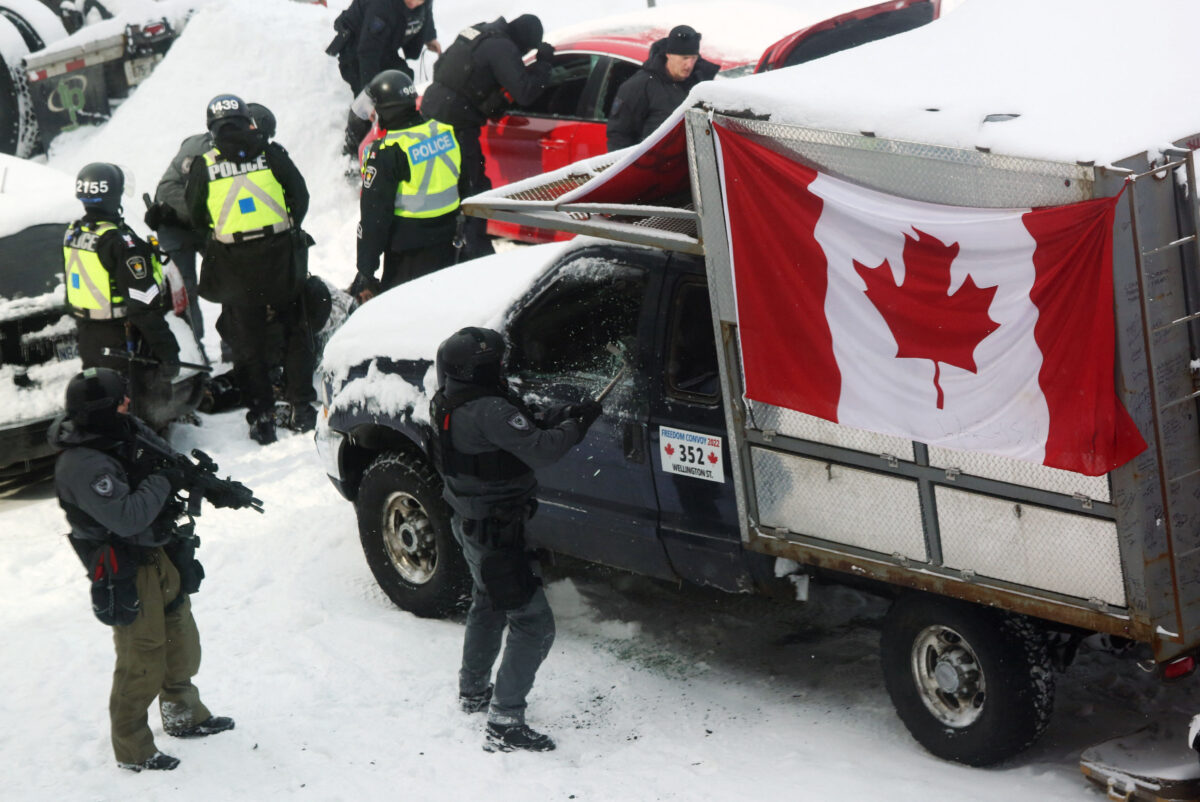
The federal government’s unprecedented use of the Emergencies Act to close down the 2022 Freedom Convoy protest in Ottawa and other protests stemming from it, has taken another judicial ruling squarely on the chin.
In a unanimous decision signed only by “The Court”—a move considered so rare it may have been used to signal the emphatic nature of the ruling—the Federal Court of Appeal has upheld the judgment made two years ago by Federal Court Justice Richard Mosley that the government illegally invoked the Emergencies Act and violated protesters’ rights.
Not only is this a huge victory for the Canadian Constitution Foundation and Canadian Civil Liberties Association—two of the bodies that along with individual protesters had challenged the legality of the federal government’s use of what used to be known as the War Measures Act—the ruling must also be considered vital to the sustenance of freedom of expression.
In contrast to the conclusion reached by Justice Paul Rouleau, whose public inquiry found that former Prime Minister Justin Trudeau’s suspension of civil liberties through the use of the act was justified, Mosley had ruled that while the parking of hundreds of vehicles in downtown Ottawa was disruptive, nothing had occurred that met the definition of a “national emergency.”
“While I agree that the evidence supports the conclusion that the situation was critical and required an urgent resolution by government, the evidence, in my view, does not support the conclusion that it could not have been effectively dealt with under other laws of Canada,” he wrote in his ruling, noting that “The scope of the regulations was overbroad in so far as it captured people who simply wanted to join in the protest by standing on Parliament Hill carrying a placard.”
The ruling is yet another blow against a decision civil libertarians considered overwrought, panicky, and even thuggish. Of particular concern was the creation of the Emergency Economics Order that authorized banks to freeze the accounts of people linked to the protests.
Several ministers in the new Carney government were members of the Trudeau cabinet that—unjustly, according to the courts—invoked the Emergencies Act. Should the government now decide to take the case to the Supreme Court of Canada, that’s where matters could get tricky.
In the weeks that followed the dismantling of the protests in Ottawa and the arrests of its leaders, Tamara Lich and Chris Barber, Chief Justice Richard Wagner took the extraordinary step of publicly expressing a point of view on the matter to Le Devoir. It summarized the interview by stating, “Forced blows against the state, justice and democratic institutions like the one delivered by protesters to the doors of the Prime Minister’s office and … the Supreme Court of Canada … must be denounced with force, and this, by all the figures of power in the country, believes Mr. Wagner.”
That prompted a group of 13 lawyers to file a complaint with the Canadian Judicial Council stating: “[T]he Chief Justice’s views expressed in the Le Devoir article fit within the legal definition of a reasonable apprehension of bias and an appearance of partiality. We submit that the Chief Justice’s remarks will undermine Canadians’ confidence in the independence of the Supreme Court of Canada in particular, and in the judiciary, generally.”
The Judicial Council, of which Wagner is head, later defended the chief justice’s actions and dismissed the lawyers’ concerns with some vigour. Further complicating matters is the upcoming retirement of Supreme Court Justice Sheilah Martin, whose replacement will be up to the prime minister.
Should the federal government appeal this latest ruling and should the Supreme Court agree to hear it (it is under no obligation to do so), Martin’s replacement (if there is one in time) and the chief justice’s comments are likely to become matters of controversy. I rather doubt they would be raised directly, as it seems unlikely any lawyer would risk provoking the court by challenging its integrity.
But the Wagner matter is guaranteed to be revived by convoy defenders on social media where commentary risks diminishing trust in an institution that, if we are to enjoy a healthy democracy, badly needs to retain the public’s faith. In the meantime, Carney is left with the task of laying the ghost of Trudeau’s government to rest.
It won’t be easy. It might not even be possible.
Views expressed in this article are the opinions of the author and do not necessarily reflect the views of The Epoch Times.
 Friends Read Free
Copy
Facebook
Tweet
Friends Read Free
Copy
Facebook
Tweet