
Commentary
Now that the lingering pain of the Winter Olympics has eased, Canadians are left to ponder what can be done to lift their spirits, knowing their longstanding claim that hockey is “our game” can no longer be stated without contention.
This new reality will be hard to take, particularly given the current state of the nation’s psyche. So startled, frightened, angry (pick one) are we at the moment that a recent poll showed that a majority of Canadians believe the USA to be a greater threat to the nation’s security than China.
The survey by Nanos and Bloomberg showed that 55 percent of Canadians believe their neighbours pose the most danger to the safekeeping of their sovereignty. Comparatively, only 15 percent pointed to China, followed by 14 percent who view Russia as most menacing. This is a remarkable state of affairs given that it is the latter two countries that are believed to have nuclear weapons pointed in Canada’s direction, while it is the currently much-feared former that provides the overwhelming majority of our defence against the same.
On the surface, this points to a people prone to a panicked, if somewhat understandable, irrationality. The reasons for this mood are, in my view, so complex and longstanding that they cannot be dealt with in a single 850-word commentary, so for the time being all we can do is accept it as our current reality. In the meantime, all most Canadians can do is watch to see whether their media/political class exploits the mood or works to place their perceptions in a more fulsome context.
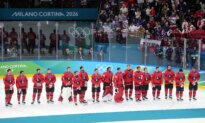
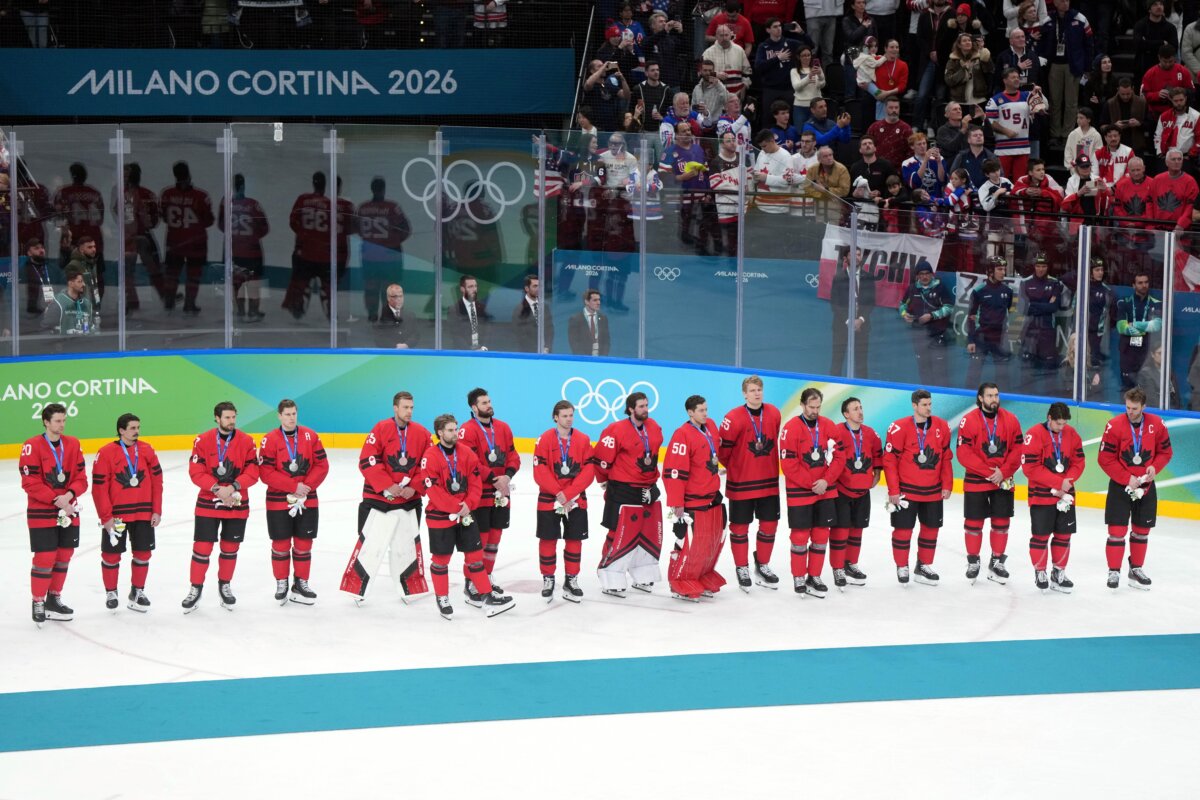
In that light, settling for silver medals in women’s and men’s hockey—both overtime losses to Team USA—represented a debilitating blow to Canadian pride. Hockey, an increasingly expensive sport in an increasingly expensive nation, has long been in decline in terms of registration numbers, but it remains a primary cultural identifier. Schools closed or brought TVs into classrooms for the big games at the Olympics. The regular course of commerce was interrupted, and pubs opened at the crack of dawn on a Sunday morning while many church pews were left vacant. The game was on.
For the gold medal finals, millions of people who have never been inside a community hockey rink, let alone played the game, donned whatever red attire they had available, waved the flag and—in the most delightfully non-partisan way—were united as Canadians regardless of language, race, or ethnicity.
This is something the country desperately needs more of. At a time when so much divides us, Canada should be recognizing the immense power of sport as a national unifier. When watching athletes—and this can and should apply to far more than hockey teams—represent the nation, victorious high fives are shared regardless of the political persuasion of the man or woman next to you. When we win we all celebrate, and when we lose we are one in shared consolation.
Yet history shows our public policy class struggles to join the dots between sports, culture, and unity.
Since the glory of the Vancouver 2010 Olympics, when Canada set a new standard for gold medals won in a single Winter Games, there has been no significant increase in federal funding for sports organizations and their athletes. Yes, there has been some shuffling of the deckchairs in terms of targeting funding, but there is no escaping the metaphorical words of Eric Myles, the Canadian Olympic Committee’s chief sport officer, that “our system is in decline.”
While many millions get spent on various foreign aid projects, some of which are questionable, those who represent the nation and have the power to unite it remain of diminishing interest on Parliament Hill. While separatist movements shift and grumble in Quebec and Alberta, those who can bring a proud tear to our eyes and light a fire in our hearts when the flag is raised and the anthem sung are left on the sidelines in terms of policy priorities.
In a little over 100 days, Canada will co-host the world’s largest sporting event, FIFA’s World Cup. Not only has the federal government provided no additional funding to the Canadian Soccer Association, in what will amount to an international embarrassment, the Canadian Premier League can’t even get its scores and standings posted on the websites of the country’s sports broadcasters, and the rights holder to national team games—OneSoccer—is now four years into a struggle to get cable carriage thanks to corporate and regulatory intransigence.
This is an unacceptable state of affairs for a country aching to burst with national pride. After a decade of being encouraged to feel shame concerning historical wrongs, the current contretemps has prompted a deep desire to feel pride in being not just a free true north but one that is strong and respected on the world stage.
Our athletes, as individuals and teams, deserve our and our ruling class’s support. It is, after all, hard to play with your elbows up when you have pulled your own jersey over your head.
Views expressed in this article are the opinions of the author and do not necessarily reflect the views of The Epoch Times.
 Friends Read Free
Copy
Facebook
Tweet
Friends Read Free
Copy
Facebook
Tweet