
Commentary
I bought my first home in Alberta for 60 percent of what the original owner had paid for it a few years previously.
That was in 1985, shortly after a couple of years during which tens of thousands of people fled the city, its battered economy, and a housing market in a state of complete collapse. If you were willing to assume a mortgage, you could buy a home for $1.
I bought mine for, as best I can recall, $62,000. Five years previously, its original owner had paid $107,000 or so for it. For a little more context, I had just signed on in 1983 in the Calgary Sun’s sports department for the princely wage of $525 a week.
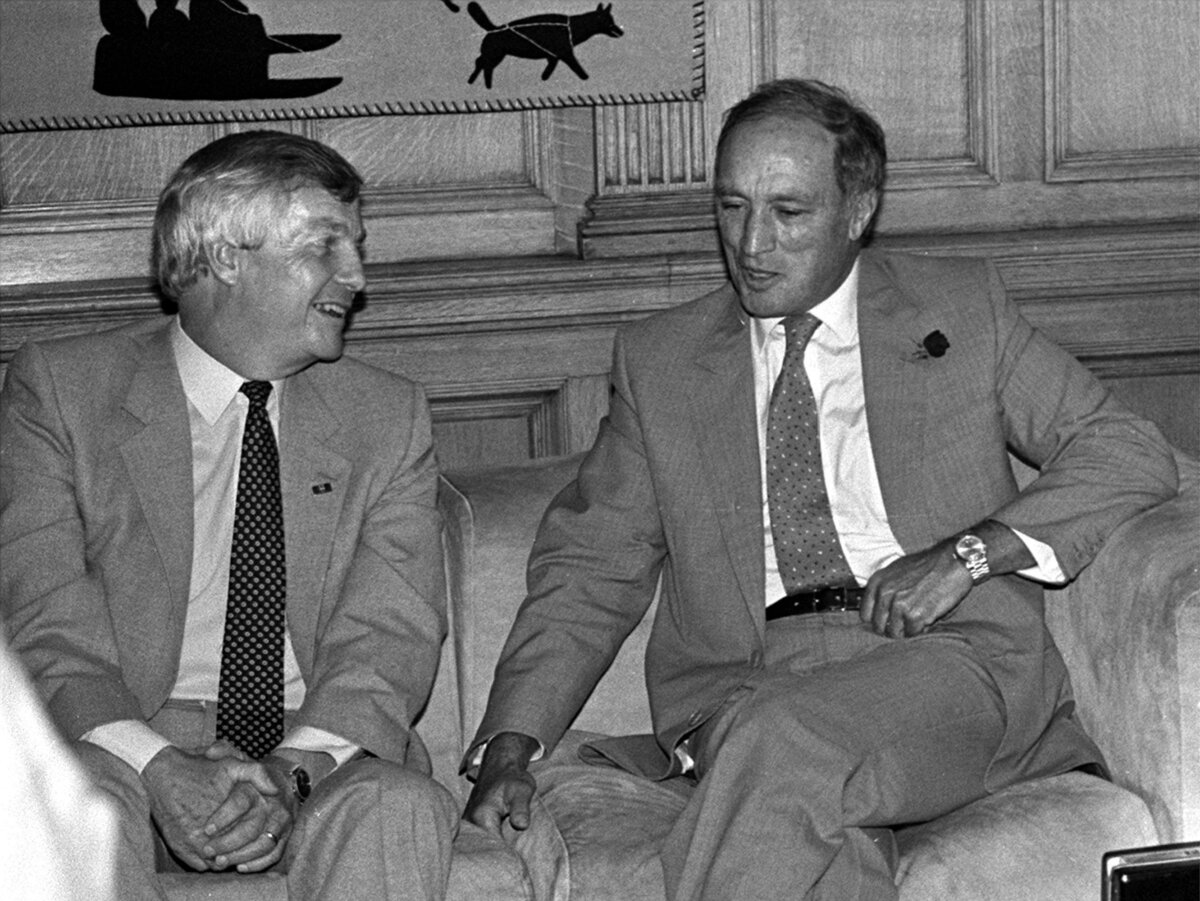
The situation in the rest of the province was similarly grim and separatist sentiment was widespread. It was initially triggered by the re-election as prime minister, in 1980, of Pierre Trudeau, who was not a friend or a fan of Western Canada. His creation of the National Energy Program (NEP) later that year triggered the collapse of the oil industry as investment fled the country. Indeed, the day the NEP was announced—Oct. 28, 1980—was for many years referred to in my province as a day that will live in infamy—a political Pearl Harbor, if you will.
In 1981, a poll by the Canada West Foundation found that 49 percent agreed that “Western Canadians get so few benefits from being part of Canada that they might as well go it on their own.”
Separatist parties such as the Western Canada Concept emerged and, in 1982, one of its members, Gordon Kessler, won a byelection in the riding of Olds-Didsbury and became a member of the Alberta legislature.
People were very, very angry. As they are today.
Following close to 10 years of being governed by another Prime Minister Trudeau—Pierre’s son, Justin—many Albertans were hoping last year for a federal government that would abandon overt hostility towards it and embrace its potential for national prosperity.
What they got instead was a re-elected Liberal government. Its new leader, Prime Minister Mark Carney, is less obviously bent on winding down the energy industry than his predecessor, but has still been grinding the province really hard on environmental investments before agreeing to back a pipeline to the West Coast. Even then, that comes with caveats. While he’s not legally obliged to do so, Carney has granted British Columbia and a small group of northwest coast First Nations de facto vetoes over the project, saying they must agree before a pipeline is built.
And there is definitely a faction within his caucus that is deeply opposed to any move to embrace Canada’s potential as an energy superpower. Fourteen MPs wrote a formal letter to Carney expressing their concern, and then-former cabinet minister Steven Guilbeault announced that his principles (he is a former Greenpeace activist) wouldn’t allow him to continue as a Liberal MP.
So, as they say, here we are.
The wave of 1980s anger in Alberta was placated following Pierre Trudeau’s comprehensive defeat by the Progressive Conservatives in 1984. But the alienation was never resolved, and within a few years Alberta had elected the first of what would become many Reform MPs under the cry of “The West Wants In.”
It still does, in my view, want in. Nothing builds anger, bitterness, and resentment quite like the feeling of exclusion. No relationship stays healthy when one or more of the parties is concerned that their needs aren’t being met and their voice is not being heard.
There is a fair amount of hysteria going on in, and around, Alberta at the moment since the decision was made, following two large petitions representing about a quarter of the voting public, to ask people to vote on whether they would like to have a vote to choose between staying as a part of Canada or chart a new path forward as an independent nation. The current scheduled vote isn’t a referendum—it’s a non-binding plebiscite that the Alberta government is free to ignore. It’s being treated in many media as if it is as determinative as Quebec’s breathtaking votes on independence, but we’re not there yet.
Still, there is a lot of shouting on social media and plenty of name-calling. Albertans’ anger, unresolved for decades, is being met too often with equivalent anger and contempt from within the rest of Canada.
There hasn’t been a lot of listening. There hasn’t been a lot of inquiry into the history of Alberta’s longstanding grievances and its unaddressed frustration with a game many of them—separatists and others—see as being rigged against them and just not fair.
Hopefully, the discussion in the months ahead will expand from “stay” or “leave” to “leave and do what” and “stay and do what?”
Because all we’re doing right now is spinning our wheels and getting angrier.
Views expressed in this article are the opinions of the author and do not necessarily reflect the views of The Epoch Times.
 Friends Read Free
Copy
Facebook
Tweet
Friends Read Free
Copy
Facebook
Tweet