
Commentary
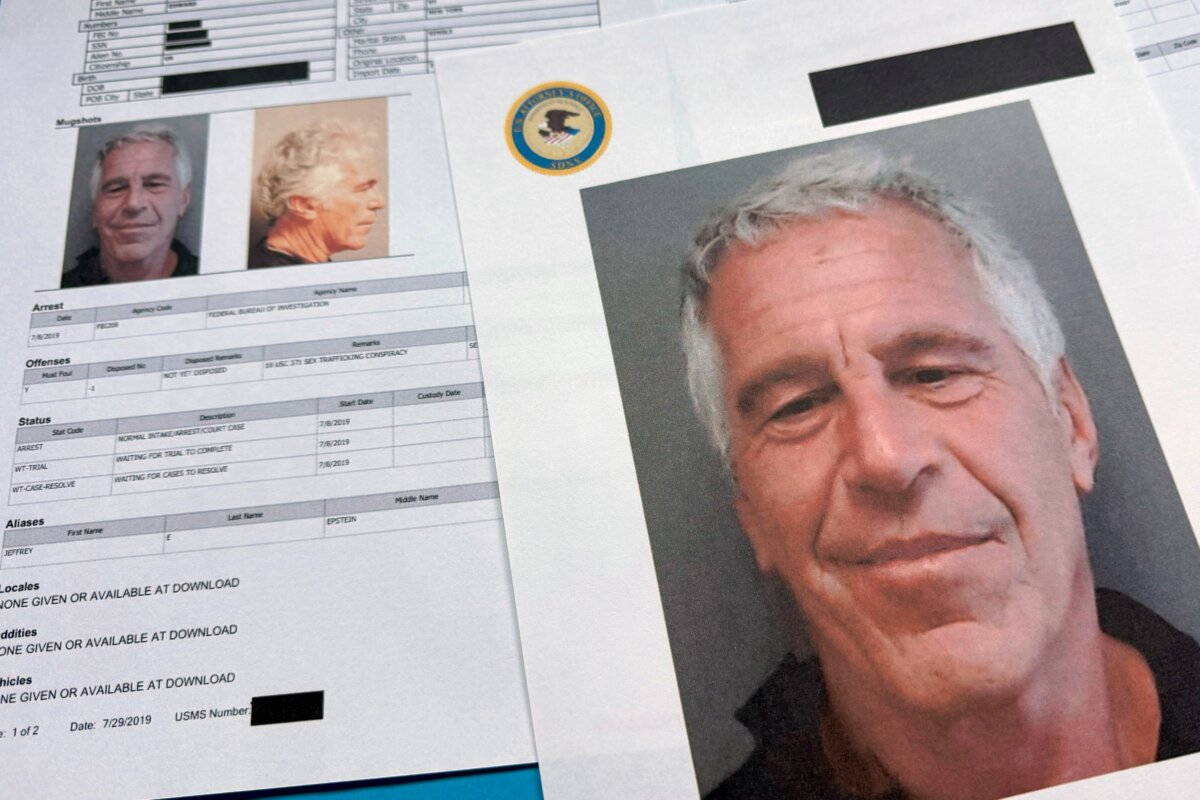
When the Department of Justice released what it describes as the final tranche of Jeffrey Epstein documents under the Epstein Files Transparency Act on Jan. 30—nearly 3.5 million pages in total—the legal narrative barely shifted. No major new indictments emerged. What did change was the social story.
The files resurfaced a world most people never glimpse: the tightly knit network at the apex of politics, finance, royalty, academia, and celebrity. Not court rulings or smoking guns—just proximity. Names appearing together, contacts logged, and shared rooms and flights. The reaction was visceral, not only in the United States but also across the Atlantic.
In Britain, for example, the resurfaced ties—particularly those involving Peter Mandelson and his documented connections to Epstein—triggered a fresh crisis in Labor circles. Newspapers questioned vetting processes, Cabinet ministers distanced themselves from once-routine appointments, and internal revolts bubbled up. Leaders were compelled to explain not crimes but continued associations. The Telegraph captured the mood: a government under pressure as public trust collided with elite social networks, igniting open revolt within the ruling party.
Suddenly, the public could see how small the world of power truly is—how frequently the same names recur, how interconnected elite circles remain, and how rapidly proximity turns into political poison when trust fractures.
Most names that have surfaced in public discussion have not faced charges. Appearance is not guilt. Association is not conviction. But public reaction rarely follows courtroom logic. It functions like a stress test: A photograph, a social tie, and a vetting decision all become a referendum on judgment.
The core question is deceptively simple: How does someone like Epstein embed so deeply in elite networks without setting off alarms? That question extends beyond a single scandal, as history suggests it is far from new.
Most imagine elite corruption as a conspiracy. Reality is usually more banal, and perhaps more dangerous. Elite society operates like a social ecosystem. Invitations, patronage, conferences, foundations, advisory boards, private dinners—these are the mechanisms. Presence becomes currency, access becomes reputation, and reputation becomes power. You don’t have to like everyone in the circle. You just have to circulate. Naturally, one in such circles will have multiple photos of oneself smiling with others at various public and private events. This does not imply guilt.
This circulation creates a paradox: The trust, familiarity, and repeated contact that make elite networks actually function also insulate them. People assume those around them have already been vetted. Reputation turns self-reinforcing. Raising doubt becomes socially expensive—no one wants to be the alarm-raiser in a room of powerful friends, because the cost is enormous.
Blind spots form through comfort. A well-connected figure becomes a bridge; bridges are rarely questioned because questioning them threatens everyone who crosses. The system protects the bridge until it collapses—only then does everyone wonder how it had stood for so long.
The Mechanism of Rot
Elite decay begins with a story that elites, and those who aspire to be, tell themselves. Every stable ruling class develops a mental division: those inside the circle and everyone else. Not codified, not announced, but visible in behavior. The circle becomes the reference point for reality. Problems are discussed, and risks are assessed within them. Moral obligations shrink to their perimeter, and suffering outside becomes abstract.
This is not modern. It is one of history’s most consistent red flags for a society.
In late Rome, aristocratic families governed provinces through tax systems they no longer experienced personally; senators debated fiscal policy while infrastructure decayed. The empire weakened not because elites were cartoon villains, but because they ceased to feel the consequences of their decisions. Extraction continued while reciprocity faded.
In Bourbon France, Versailles became a detached social universe. Nobility vied for proximity to the king while grain shortages ravaged regions. Bread riots were disturbances at the edge of their world, not systemic warnings. The apocryphal “let them eat cake” endures because it captures a deeper psychological truth: Elites no longer grasped the conditions of those they ruled.

Pre-1917 Russia had an aristocracy that was culturally European, French-speaking, and socially insulated—living in salons while industrial misery worsened in cities they rarely entered. The collapse shocked them not because the signs were absent, but because they belonged to a different world.
Late Qing China revolved around court rituals and factional maneuvering as foreign pressure and domestic unrest mounted. Corruption was often institutional self-preservation—protecting networks rather than reforming systems. The state hollowed from within.
Entitlement Drift
Entitlement drift compounds this. Elites rarely wake up as villains. They wake up believing they are necessary: Politicians carry national responsibility, scientists advance humanity, and artists sustain culture. These beliefs are often true. Danger arrives when importance quietly becomes exception—“my rewards should be exceptional,” “normal limits don’t fully apply.”
The shift is rarely conscious. It is slow rationalization—flattery from patrons, access from networks, luxuries reframed as deserved correction. Red flags blur. Boundaries soften. Environments that would alarm outsiders feel normal to insiders, convinced they belong.
Corruption is not always financial. Sometimes it is moral. It rarely announces itself while occurring. Elites wake inside a comforting, lethal narrative: the system is stable, the circle competent, disturbances external. Once a ruling class sees itself as separate, accountability becomes optional. Reputation inside the circle trumps legitimacy outside. The moral map shrinks. Corruption begins looking like normal administration.
The Pressure Cooker
When ruling classes drift too far, resentment accumulates. Institutions absorb strain for a time. Then, suddenly, they don’t.
The French Revolution’s timing matters more than its slogans. Reform was possible for decades before 1789—fiscal restructuring, concessions, and tax modernization were discussed but stalled by elite reluctance to surrender privilege. When change arrived, it was vengeance, not reform. Maximilien Robespierre’s relentless guillotine was pressure converted into machinery.
Russia’s 1917 arc mirrored it: visible unrest, proposed reforms delayed or diluted. Collapse produced not a liberal adjustment but a killing machine. Millions died because incremental change was postponed until radical rupture seemed the only credible path.
In both cases, later generations asked: Could this have been avoided? Not by erasing elites, but by taking earlier responsibility, exercising restraint, and ensuring accountability. When reform arrives early, societies bend. When late, they break. Delayed correction produces extremity, not balance. It consumes systems indiscriminately. Ordinary people—not just architects of decay—stand in the blast radius.
Yet history also records near-misses. Nineteenth-century Britain faced industrial unrest, poverty, and exclusion that could have sparked a French-style rupture. Gradual, contested reforms—expanded representation, labor improvements—renegotiated the social contract and averted collapse. Post-1945 Western Europe, reeling from two near-suicidal wars, built systems and checks not from charity but as what they perceived to be self-preservation.
Modern elite insulation looks different—no Versailles pomp, but institutional drift. COVID-19-pandemic-era policy shifts created perceptions of moving goalposts and dismissed dissent. Globalization delivered top-tier wealth while hollowing out industrial communities—experienced as abandonment.
Conclusion
When citizens conclude that elites profit while others absorb risk, reciprocity frays. The social contract does not self-repair.
Elites are inevitable, and perhaps desirable, in civilizations. The question is whether they remember their function. Power without obligation corrodes legitimacy; power with obligation sustains it. Accountability requires confronting wrongdoing—without cycles of revenge. Without accountability, trust dies. Without forgiveness (or at least restraint), politics becomes permanent civil war.
History’s warning is brutal, and its instruction simple: When elites remain grounded, correction is peaceful. When they detach, correction may become violent. The choice appears in small decisions—transparency, restraint, humility, responsibility. Those decisions can determine whether societies bend or break.
The Epstein files are a mirror. They force every era’s unavoidable question: Will those closest to power treat proximity as privilege—or as duty?
Views expressed in this article are the opinions of the author and do not necessarily reflect the views of The Epoch Times.
 Friends Read Free
Copy
Facebook
Tweet
Friends Read Free
Copy
Facebook
Tweet