

Commentary
British writer Rudyard Kipling’s poem “Mandalay” contains the words “Ship me somewheres East of Suez, where the best is like the worst/ Where there aren’t no Ten Commandments an’ a man can raise a thirst.”
It highlights that even more than a century ago, the great powers found their essential strategic fortunes linked to the place where the Red Sea meets the Indian Ocean.
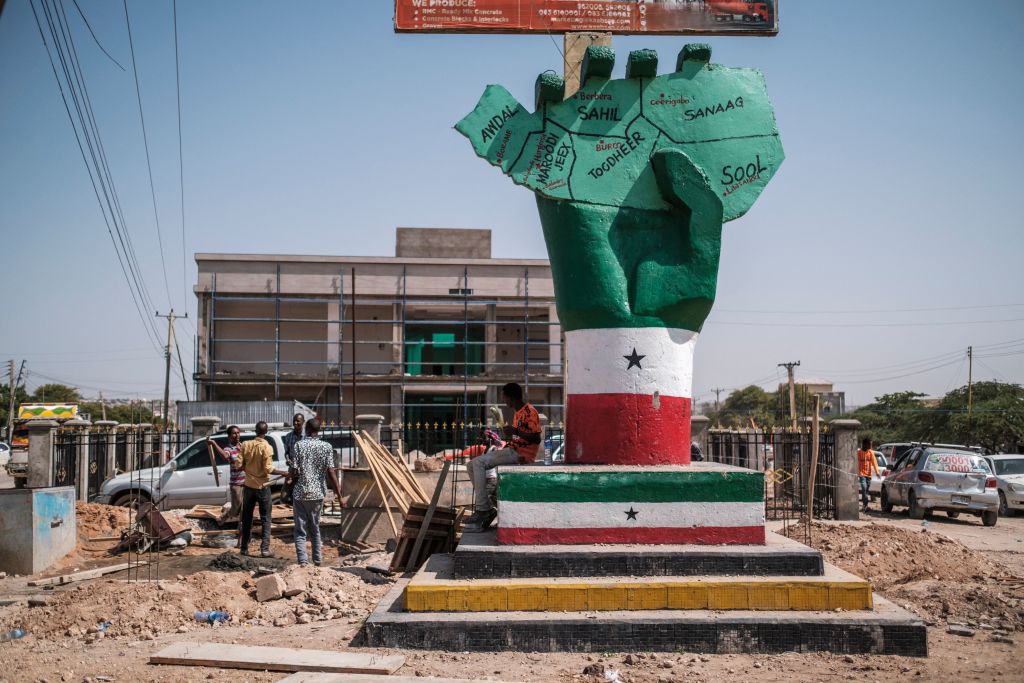
As a result, Israel’s Dec. 26, 2025, formal recognition of the sovereignty of the Republic of Somaliland on the Horn of Africa, just where the Red Sea meets the Gulf of Aden and the Indian Ocean, is part of a profound new era in African and Middle Eastern politics, redefining African and possibly Eastern Mediterranean sovereignty going forward.
The United States, to placate Turkey over the Somaliland situation, could relent and finally provide Ankara with Lockheed Martin F-35A fighters, possibly changing the balance in the Eastern Mediterranean against Israel, Greece, Cyprus, and Lebanon.
Most people are unaware that Somaliland exists or don’t know where it is. They think that it must somehow be related to Somalia and know that Somali immigrants to the United States are at the heart of some scandals and illicit activity. Somaliland is not that Somalia. However, it is next door to it.
In its current iteration—bearing in mind that Israel and Somaliland have discussed mutual diplomatic recognition for several decades—the Israeli move to recognize the Republic of Somaliland strikes at the heart of Turkey’s ambitions to dominate the Horn of Africa and the Red Sea strategic sea lane.
The government of neighboring Somalia, now dominated by Turkey, condemned the Israeli move, as did African Union (AU) Commission Chairman Mahmoud Ali Youssouf and, unsurprisingly, Egypt. Despite Egypt’s recognition of Israel, Cairo is wary of Israel’s potential to dominate the Red Sea–Suez Canal sea lane of communication, challenging Egypt’s regional dominance. Cairo also opposes the restoration of Ethiopia’s territory, which would restore Ethiopia’s influence in the Red Sea. Ethiopia, another neighbor of Somalia and the Republic of Somaliland, also controls the main source of Egypt’s survival, the Blue Nile.
Perhaps the most significant risk in Israel’s move to recognize Somaliland, which has a legitimate right to claim sovereignty under the AU’s rules emphasizing the sanctity of colonial-era borders, is the strain it puts on Israeli–Egyptian relations. Egypt supports strong relations with Israel to protect against Turkish strategic and imperial ambitions, yet Cairo consulted with Ankara and Mogadishu before condemning the new diplomatic accord.
Mogadishu is the capital of Somalia; Hargeisa is the capital of Somaliland.
Somaliland and Taiwan have already exchanged diplomatic recognition; however, neither is a member of the United Nations. Which other states will now recognize Somaliland? The next could well be the United States.
In recent decades, some African leaders said privately that they would be “the second country to recognize Somaliland.” None wanted to be first. Abdirahman Mohamed Abdullahi, the president of Somaliland, has asked Israeli Prime Minister Benjamin Netanyahu to convey to U.S. President Donald Trump Hargeisa’s wish to join the Abraham Accords.
Regional states in northeastern and eastern Africa will need to either commit to their backdoor promises of recognition of Somaliland or continue with the hypocrisy caused by pressures from the Arab League and the AU, both of which have succumbed to pressure from Egypt. Israel’s gesture may have opened the way for the United States to recognize Somaliland, which controls the strategic port and airport at Berbera, Somaliland, on the coast of the Horn, just outside the Strait of Bab-el-Mandeb. Both were occupied during the Cold War by the United States and the Soviet Union.
Meanwhile, the government of Somali President Hassan Sheikh Mohamud has attempted to reassert Somalia’s control over Somaliland, including by alleging that Israel would put military bases in Somaliland and that Israel would relocate Palestinian refugees to Somaliland. Israel and Somaliland rejected those allegations, and, indeed, there was no evidence to support either allegation. Nonetheless, Turkey (and possibly even its ally, Qatar) should be expected to use Somalia as a cat’s-paw to mount military operations against Somaliland. Previous attempts by Mogadishu to militarily overpower Somaliland have ended in disaster for the Somalis.
Somalia, once colonially controlled by Italy, and Somaliland, once British Somaliland, are significantly culturally different from each other and have entirely different bases for their economies, clan structures, and lifestyles. Ethnic and linguistic ties are the total basis of the claims by Mogadishu.
Somaliland joined the Union of Somalia in 1960, five days after Somaliland gained independence from the UK on June 26, 1960, but those few days of sovereignty demonstrated to the Organization of African Unity that it had been independent under the colonial borders, and therefore was entitled to reassert sovereignty when the Union of Somalia failed.
As it did.
The Mogadishu government, by about 1970 and under military leader Siad Barre, began a war against Somaliland that virtually destroyed Hargeisa and other major townships in the region. More than 50,000 Somalilanders were killed by the Somali forces, but with Barre’s death, Somaliland reclaimed its independence on May 18, 1991. Ongoing civil war in Somalia caused a massive refugee flow into Somaliland. Somalia today remains fractured and the Somali government’s writ extends to little beyond Mogadishu.
But in the current situation, Egypt and Turkey have a common cause, despite their mutual distrust.
Both states fear the revival of Israeli influence in the Red Sea; both fear the revival of Ethiopia as a Red Sea power. However, Turkey is engaged with Ethiopia, ostensibly supporting the government of Ethiopian Prime Minister Abiy Ahmed Ali in its civil wars against traditionalists, but ultimately attempting to exert influence over Addis Ababa. Egypt supports anti-Abiy forces inside Ethiopia, hoping to influence control over the source of the Blue Nile in the Ethiopian highlands.
Meanwhile, Saudi Arabia and the United Arab Emirates are at odds in their own attempts to control the Red Sea (critical to the trade routes of both states), and are now also at odds over the fate of Yemen, across the Red Sea and Bab-el-Mandeb Strait from Somaliland, Somalia, Djibouti, Ethiopia, and Eritrea. The Yemen crisis is part of this process.
All the regional states have some claim to Washington’s attention, which makes the possible U.S. moves over Somaliland recognition more delicate.
Control over this hub in the East–West sea route is so critical to global trade and strategic dominance that Trump may just seize what leverage he wants and leave the details to be sorted out later. He may avoid delicacy altogether.
Will he offer Turkey F-35 fighters to calm Ankara? No decision is without unknown consequences.
Views expressed in this article are the opinions of the author and do not necessarily reflect the views of The Epoch Times.
 Friends Read Free
Copy
Facebook
Tweet
Friends Read Free
Copy
Facebook
Tweet


























