
Commentary
One of the founders of the post-British United States of America, Benjamin Franklin, was once asked what the nature of the new nation would be. He answered, “A republic, if you can keep it.”
What, then, is to be the nature of states as they emerge into the new world of the 21st century, after the century of attempted global governance collapses?
It is already shaping up to be a return to state sovereignty—sovereignty in the real sense—if you can keep it. Borders, if you can keep them. The age of self-reliance is returning.
National sovereignty, once again, exists only as long, and as much, as strategic capabilities can protect it. Borders, then, are only inviolate if they can be defended.
Perhaps the most difficult aspect of change to accept is that the world is indeed at a break point and that “great power maneuvering” is reemerging unrestrained, but with a transforming slate of “great powers.”
For all the world’s states, including those seeking to reemerge from colonially defined borders, defenses of sovereignty and sovereign borders may include military and paramilitary frameworks, alliances, treaties, diplomacy, the prestige of deterrence, and offensive operations. But they are no longer “guaranteed” by the international community, if they ever really were. The so-called guarantees of the international community generally included enforced cease-fires to end border violations, resulting in frozen conflicts that were never resolved.
The accelerating transformation of global architecture is closing in on redefinitions of sovereignty, which may in some respects redefine the concept of “secure borders.” Part of the overall transformation is the ending of the era of attempted supranational governance, including the creation of “international law”; we have returned to the reality that never, actually, went away: the theory that “might is right.”
The 20th century saw an attempt to create a matrix of theoretically comparable Westphalian-style nation-states with defined geographical boundaries that were ostensibly guaranteed by the U.N. Charter and, before that, by the League of Nations. It was an attempt at a form of democracy between modern-style nation-states, not a democracy of individuals or even of the clans and historical nations.
In reality, the United Nations model, created in 1945, was to ensure a world of comparable “sovereign entities”—an attempt to make the world into identical, interchangeable units—with identical rules and rights for all. That, in fact, was never achieved, especially when the U.N. Security Council permanent members held veto power.
Many “recognized borders” were never, in fact, ratified or agreed upon. Many colonial boundaries, accepted by decolonization as new national borders encompassing many traditional nations, were not accepted by many of the peoples made captive by them. Traditional systems of governance were destroyed and deemed incapable of revival.
Many of the “sovereign entities” that make up the U.N. have unresolved border or boundary issues or territorial situations that are ambiguous at their peripheries. The Republic of South Africa, for instance, has virtually no agreed land borders with its neighbors. It maintains unresolved land disputes with Eswatini and border commissions have failed to fully address historical claims.
Colonially designated boundaries—lines on maps—between Pakistan and Afghanistan, for example (such as the Durand Line), are not universally accepted by Afghanistan. The boundaries between China and Russia and between their predecessor entities are constantly and actively disputed by both parties. Some nations, or proto-nations such as the Palestinian Territories, have actually refused to accept international borders thrust upon them.
Other captive nations such as those in West Papua (now occupied by Indonesia), are deemed by the U.N. as unworthy of claiming sovereignty. The list of anomalies grows as we examine more closely the artificial states created after World War II—these states were legitimized by the U.N. Although the U.N. passed resolutions calling for Turkey’s withdrawal and declaring the occupation illegal, the issue has remained unresolved for decades.
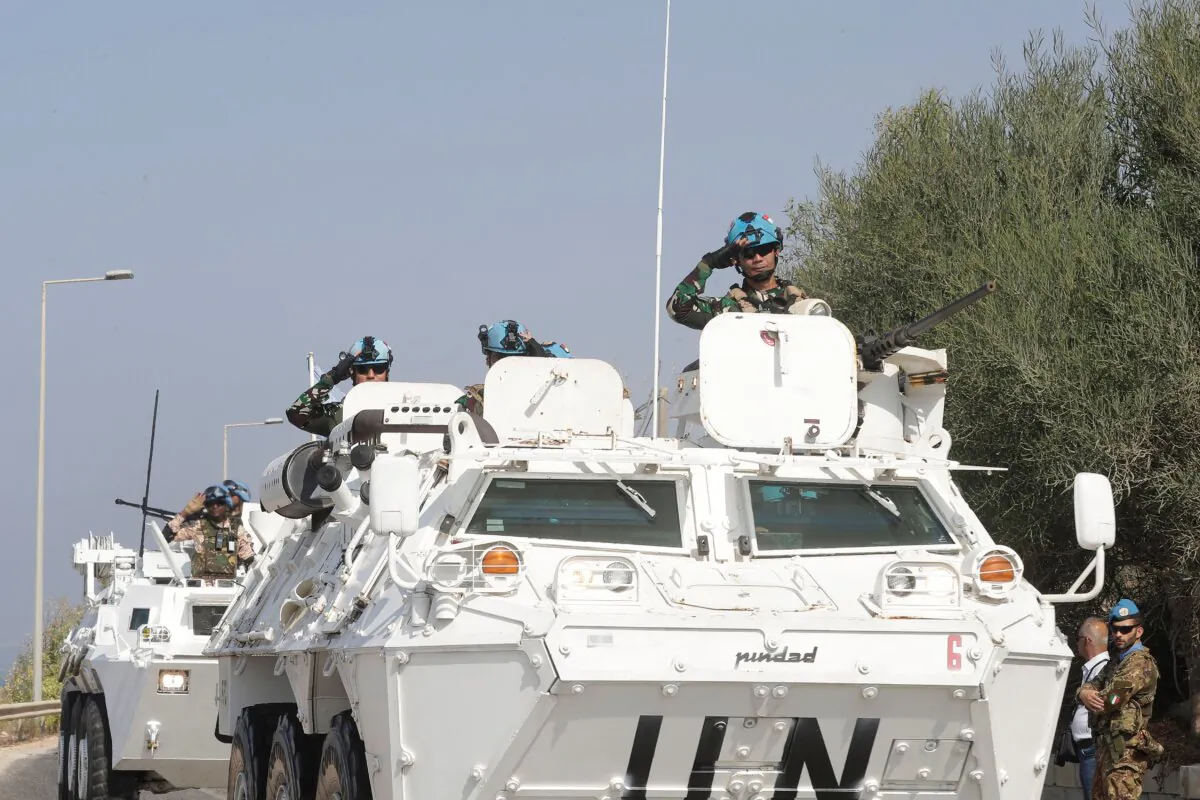
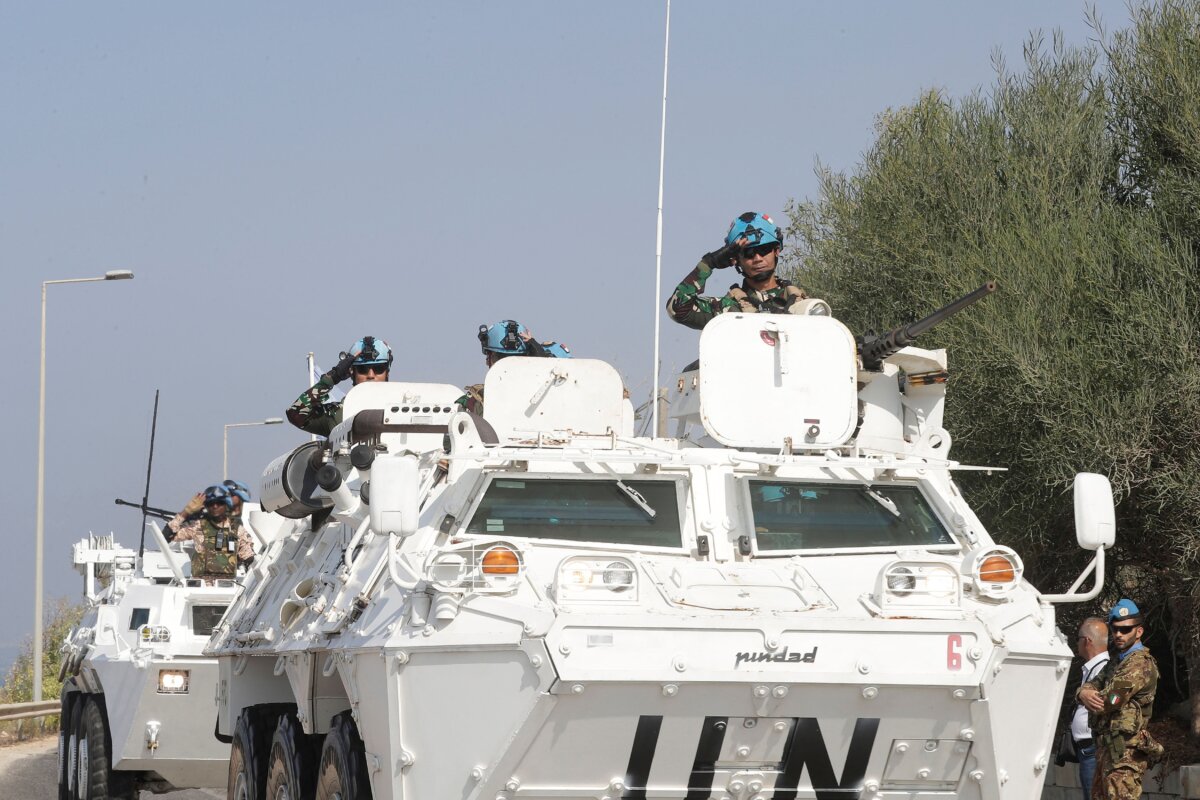
The 20th-century attempt to create “international law” to regulate commerce and arbitrate sovereignty, behavior, and the like becomes unworkable when it becomes clear, as it has become clear, that there can be no enforcement mechanism for the laws. Although the U.N. has often struggled to enforce peace or resolve protracted conflicts, it has achieved cease-fires or stalemates (frozen conflicts) that merely condemn participants to the prison of immobility. So the U.N.’s relevance collapses.
The result of this forced impassivity was that, after the nuclear lessons of World War II, conflict became the “new format” of total war, in which non-military conflict determined the success or failure of states. I outlined this in my 2020 book, “The New Total War of the 21st Century and the Trigger of the Fear Pandemic.” But that total war scenario, underway since the end of the Cold War, is now heading toward its final clash as the United States confronts the People’s Republic of China. The U.N. is nowhere to be seen.
What follows, then, is a world in which raw power, unfettered by supra-governance, reemerges. Already, we see major powers such as the United States and Russia acting in their own interests, regardless of global opinion. That is the beginning. And definitions of “rights” to sovereignty and borders will not transcend the need for societies to be able to actually defend their claims.
Until the next U.N. is attempted.
Views expressed in this article are the opinions of the author and do not necessarily reflect the views of The Epoch Times.
 Friends Read Free
Copy
Facebook
Tweet
Friends Read Free
Copy
Facebook
Tweet