
Commentary
As the U.S.–Israeli operation against Iran enters its fourth week—now roughly three weeks since the major joint strikes began on Feb. 28—the battlefield picture is one of stark contrasts.
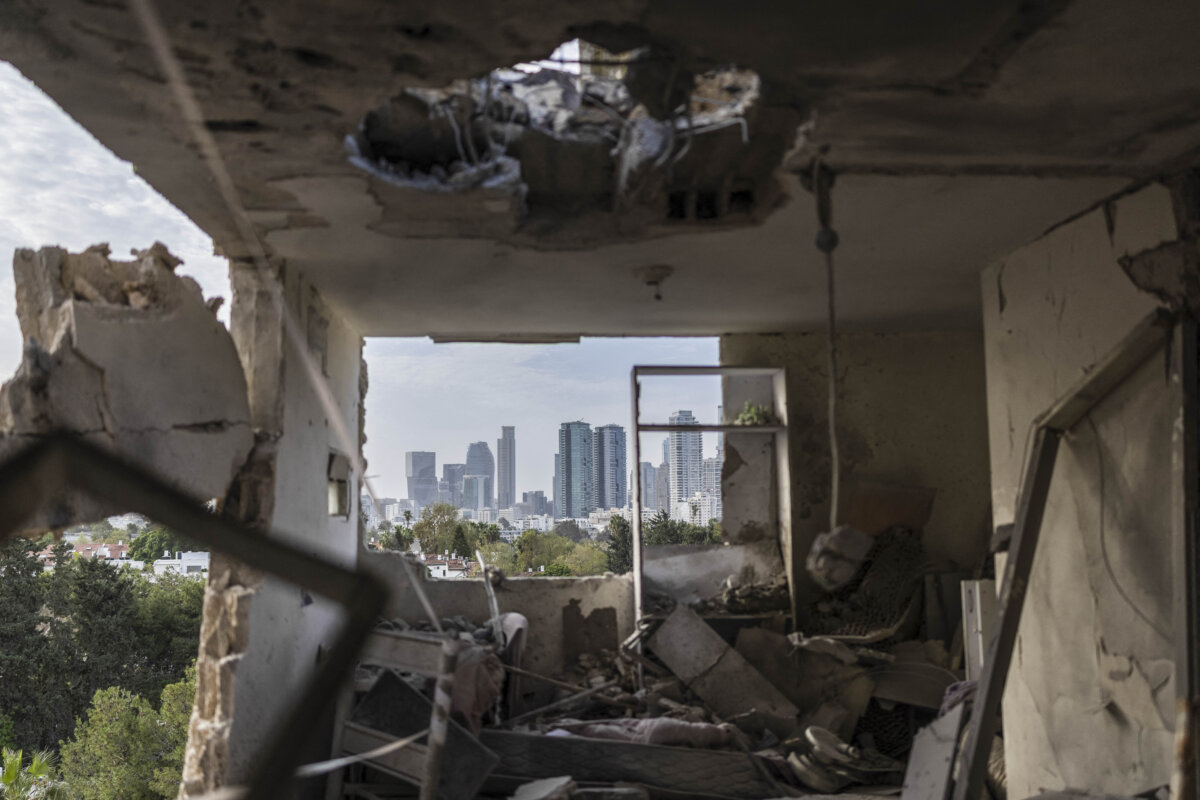
On one side, the Trump administration and some Israeli voices proclaim that the Iranian military machine is on the verge of collapse: the navy gutted, ballistic missile stocks decimated, air force crippled, and key regime figures eliminated in rapid succession. On the other side, reality on the ground in Israel tells a different story: air-raid sirens sounding five to 15 times per day, millions of people rushing to shelters, and no clear end in sight to the attrition.
The truth lies in between, and it hinges on how one defines “success.” Military objectives have never been publicly framed as full regime change by either the U.S. or Israeli defense establishments. The stated goals—widely echoed in statements from leaders and military spokespeople—center on denuclearization, destruction of ballistic missile capabilities, neutralization of naval forces, and elimination of the ability to close the Strait of Hormuz. Achieving these, the thinking goes, would create conditions under which the Iranian people might eventually reclaim their country from within.
By that narrower metric, progress has been dramatic. In just three weeks, joint strikes have destroyed much of Iran’s surface navy, severely limiting its ability to project power in the Persian Gulf. Ballistic missile production facilities, storage sites, and launchers have taken heavy hits; estimates suggest that a significant portion of Iran’s prewar stocks—perhaps 2,000-plus out of an original 2,500 or more—have been neutralized or degraded.
Regime targets—command centers, Islamic Revolutionary Guard Corps bases, and leadership—have been struck relentlessly. One after another, senior figures have been killed, creating a chilling effect: Potential appointees reportedly hesitate, aware that high office now comes with literal targets on their backs.
U.S. Director of National Intelligence Tulsi Gabbard captured the nuance in recent congressional testimony: The regime is “largely degraded” but still functioning, thanks to a deep bench of replacements. The system persists, albeit at reduced capacity.
Tactical successes abound—intelligence-to-strike cycles are operating with precision and speed—yet these have not yet translated into strategic capitulation. Iran has not surrendered, and the Strait of Hormuz remains effectively closed for most commercial traffic. Tankers avoid the route out of fear, driving oil prices higher and global markets into volatility.
Iran’s remaining missile arsenal, although depleted, allows a strategy of calibrated harassment. Launches are now sparse—perhaps 10 or fewer per day in recent barrages—but even small salvos trigger nationwide alerts across Israel. Half the population might be heading to shelters when sirens wail, potentially wearing down civilian resilience.
The use of cluster munitions in many recent strikes adds to the danger, scattering submunitions over wider areas and complicating interception, although the behavioral response remains the same: siren, shelter, hope for the best.
The mixed messaging on goals—denuclearization and capability denial on one hand, hints of regime change on the other—appears deliberate. In wartime, clarity is a luxury; ambiguity keeps adversaries guessing and off balance. Some Israeli planners worry that U.S. President Donald Trump might pull the plug early, leaving late-phase targets untouched. The administration’s surprise element unnerves allies but keeps adversaries guessing.
Both American and Israeli leaders have emphasized the military-limited scope in public, while intelligence operations and rhetoric leave room for broader outcomes. This duality serves a purpose: It pressures Tehran without committing to an open-ended occupation or full overthrow that neither military has been ordered to pursue.
Yet the war’s midpoint brings new urgency. From March 21 to March 22, Trump escalated dramatically, issuing a 48-hour ultimatum via Truth Social: If Iran does not fully reopen the Strait of Hormuz “WITHOUT THREAT” by late Monday, the United States will “hit and obliterate” Iranian power plants, “STARTING WITH THE BIGGEST ONE FIRST!”
Tehran responded defiantly, vowing to completely close the strait if attacked and threatening retaliatory strikes on U.S., Israeli, and Gulf energy infrastructure. The clock is now ticking amid reports of fresh Iranian missile strikes on southern Israel (hitting areas near Dimona and Arad, wounding dozens) and Israeli counterstrikes on Tehran.
Even without this latest brinkmanship, the assessment holds: If hostilities ceased tomorrow, Iran would require years—a very long time—to rebuild lost naval, missile, and production capabilities. The regime’s military posture has been set back a generation in key domains. But the conflict continues precisely because those remaining capabilities, however diminished, still inflict pain and deny closure.
The real question is the end state. Tactical victories are real and impressive, but without a clear vision of what comes after—who governs, how stability is enforced, whether proxies are fully neutralized—the risk is a prolonged stalemate or default reversion to old threats. The Gaza war offers a hard lesson: Absent a declared handover or viable alternative to the current leadership, the default winner is often the disrupted status quo ante.
Resilience is now the currency for all sides. Israelis endure daily bombardments; Americans face midterm pressures and economic fallout from energy disruptions; Iranians navigate blackout risks and internal repression. The Trump administration’s latest threat underscores the push to force a resolution on the Strait of Hormuz, the war’s most immediate global choke point. Whether it breaks the impasse or escalates into broader infrastructure warfare remains to be seen.
Three weeks in, the operation has achieved far more than skeptics predicted—yet far less than some victory claims suggest. The fog of war persists, but the tactical scoreboard tilts decisively against Tehran. The strategic one? That depends on what happens in the days and weeks ahead.
Views expressed in this article are the opinions of the author and do not necessarily reflect the views of The Epoch Times.
 Friends Read Free
Copy
Facebook
Tweet
Friends Read Free
Copy
Facebook
Tweet