
Commentary
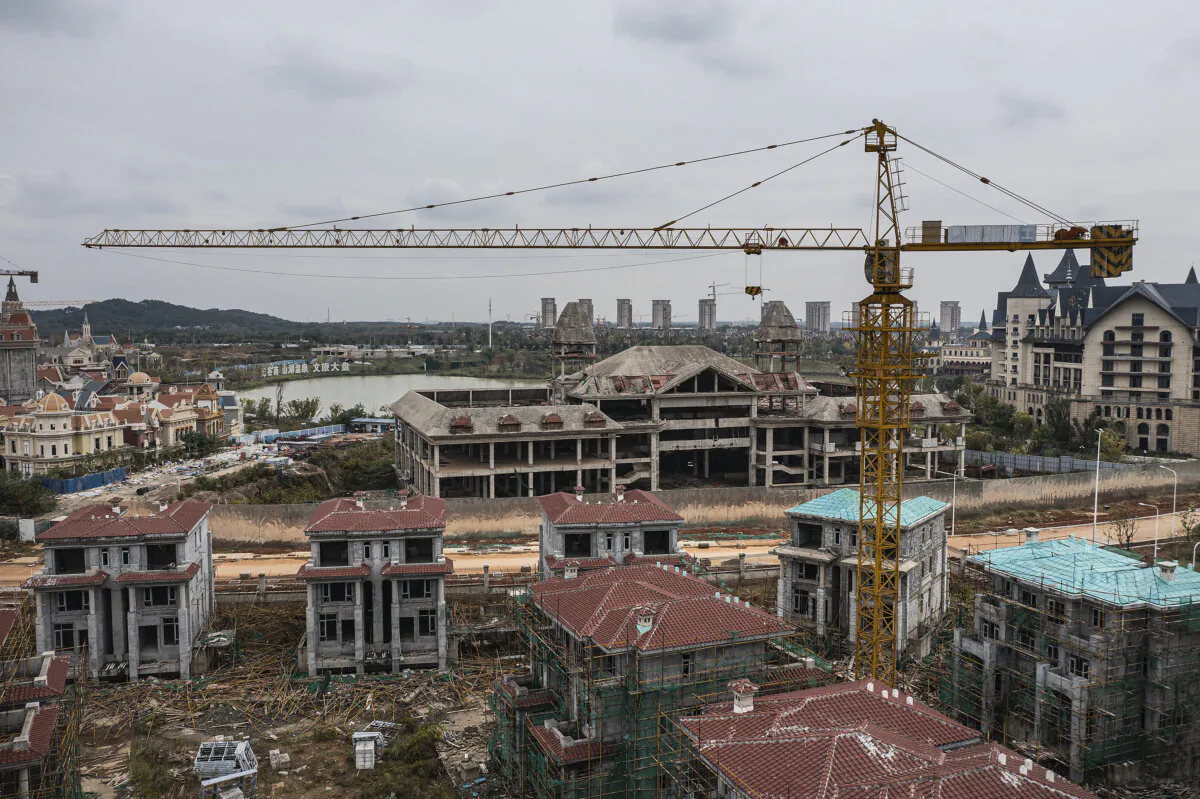
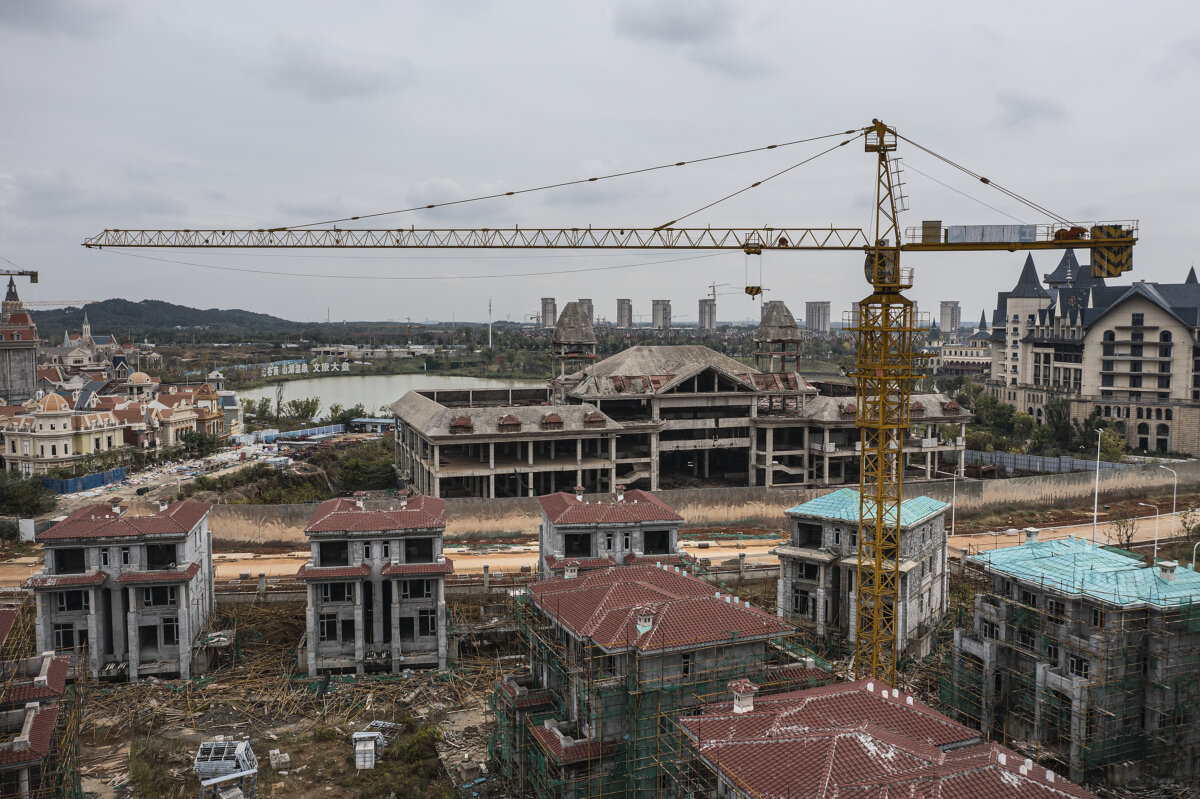
China’s so-called economic miracle isn’t just showing cracks; one of its main pillars is crashing to the ground. When Evergrande, once China’s largest real estate developer, finally went under and was delisted from the Hong Kong Stock Exchange in August, it was the last nail in the coffin for a corporate failure of unrivaled dimensions in the Chinese economy.
Evergrande’s collapse not only exposed a fatal fault line in China’s unrealistic growth model of overdependence on real estate development without market demand to support it but also exposed the failure of the Chinese Communist Party (CCP) to deliver long-term sustainable economic growth, development, and stability to the country.
Now, with falling real estate prices, shrinking demand, stiff economic headwinds from global trading partners, and growing signs of public discontent, the credibility of the CCP is unraveling before the eyes of the Chinese people.
Real Estate: The Crushed Spine of China’s Growth
The collapse of Evergrande is significant because, for decades, real estate development has accounted for up to one-third of China’s gross domestic product. It was a primary source of investment, lending, and revenue for local governments, as well as a source of investing and retirement planning for tens of millions of small businesses, individuals, and families.
But the real estate development pillar is now crumbling.
Real estate investment is plunging. Many regions in China are facing large inventories of unsold housing as buyers back away. This is especially the case in smaller cities, older developments, or projects with delayed or stalled completions. The advanced funding of projects, once a major source of private sector development capital, has been dwindling.
Beijing’s “three red lines” policy, which was intended to stabilize the market and bring confidence back into the real estate industry by limiting leverage among developers, had the opposite effect. It forced Evergrande and other development companies into liquidity crises and, ultimately, bankruptcy, since they could no longer borrow freely.
What’s more, land sales, which have been crucial to funding projects, also started to dry up. Even completed developments remained unsold, unoccupied, and ultimately economically unsustainable. Therefore, some have been demolished.
Ripple Effects: Shadow Finance and Local Governments Lose Big
As one might expect, the Evergrande collapse has reverberated beyond the real estate sector. Developers, including Evergrande, long relied on informal financing, trust products, and presales (buyers paying before completion). When the company failed to deliver for investors, many found themselves with incomplete homes or investments with little recourse.
In many cases, Evergrande’s investors lost huge amounts of money. Millions of families lost their life savings. That threatens China’s “shadow banking” and private financial services industries, which are largely unregulated and risky.
But the impact goes well beyond the investors. Many municipalities depend on land sales for revenue to build roads, schools, and other infrastructure. As developers shrink or default, land transactions drop, leaving local governments strapped. That’s another dimension to the Evergrande aftermath that doesn’t make the headlines in mainstream media but is felt across the nation’s regions.
Foreign Confidence Falls
Another direct consequence of the demise of Evergrande is the loss of confidence in China by foreign investors and businesses. Surveys, such as one from the American Chamber of Commerce in Shanghai, show that foreign companies are increasingly pessimistic about China’s business climate and future outlook.
But that’s not all. Rising tariffs, regulatory unpredictability, and concerns about market distortions from the Chinese regime via industry subsidization and loss of corporate protections also add to the drag on the Chinese economy. Tariffs from other major economies reduce China’s competitiveness abroad just as domestic demand is weak. Combined, these pressures create new imbalances that exacerbate the collapse of China’s real estate sector.
A Loss of Confidence Among the People
All of these challenges have resulted in a disaffected younger generation. Members of this generation see the hard work and sacrifices of their parents come to naught, while the Party in power remains unchallenged despite repeated failures. This generational disaffection is marked by falling marriage rates among young people and a corresponding fall in birth rates, resulting in a devastating collapse in population.
This demographic crisis not only affects the current and future demand for real estate but also has widespread and dire economic implications for the country going forward. Without a stable or growing population, domestic demand decreases, leaving a prosperous future of jobs and high earnings in doubt for those younger than 35.
Surveys are increasingly showing this to be the case. A poll in Guangzhou, China, for example, revealed record-low public satisfaction across several dimensions—private economy, income outlook, employment—but authorities deleted a post about it after it spread on WeChat. That suggests not only underlying discontent but also discomfort with letting it be publicly visible.
In short, the economic picture in China is a credibility hit for Chinese leader Xi Jinping and the CCP. Visible failures such as collapsed real estate projects, unpaid investors, and broken promises are hard to hide. These failures, combined with rising cost-of-living pressures, deflationary risks, youth unemployment, and shrinking economic opportunity, mean that many no longer trust the CCP’s claims and recent forecasts of approximately 5 percent gross domestic product growth.
Views expressed in this article are the opinions of the author and do not necessarily reflect the views of The Epoch Times.
 Friends Read Free
Copy
Facebook
Tweet
Friends Read Free
Copy
Facebook
Tweet