
Commentary
Few phrases in American politics ignite as much heat as “voter ID.”
One side hears a self-evident civic imperative: Ensure the individual casting a ballot is authorized to do so. The other hears an engine of disenfranchisement designed to suppress marginal, low-income, or minority citizens.
Both fears point to real issues, yet both sides often conflate two different things: verifying eligibility and verifying identity.
Eligibility establishes whether an individual has the legal right to participate—confirming citizenship, age, residency, and lack of disqualifying criminal convictions. Identity confirms that the physical person standing at a polling booth or mailing an envelope is indeed the registered person.
How Other Democracies Do It
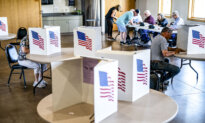
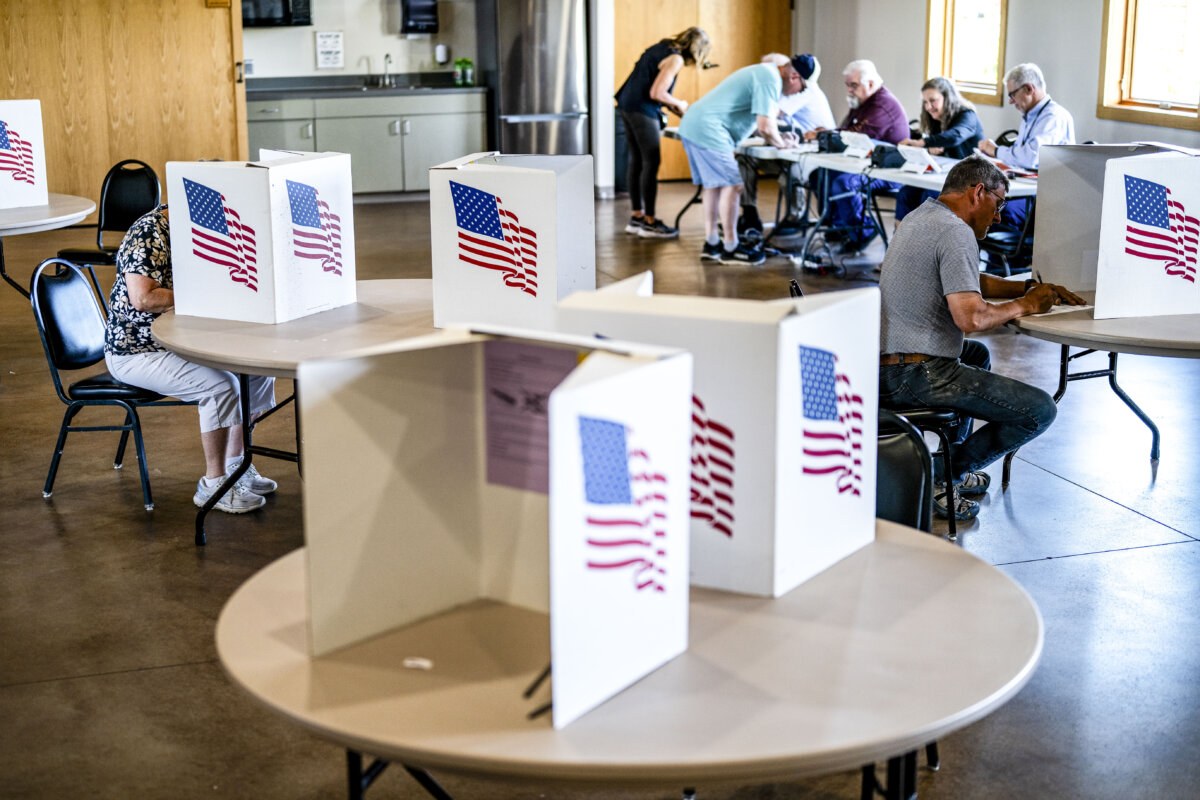
Consider how other advanced democracies handle this. Most do not resolve identity and eligibility at a folding table in an elementary school gym on a cold November Tuesday, but years earlier in an administrative file.
In continental Europe—such as France, Germany, or the Nordic states—and in Israel, the electoral roll is not an ad-hoc registry built through civic drives and motor-vehicle transactions. It is a direct extract of a centralized civil register.
In Israel, for example, the voter list is maintained by the Population and Immigration Authority. When an Israeli citizen presents a national identity card (Teudat Zehut) at the ballot station, the election worker is not ruling on citizenship; that fact was adjudicated when the credential was issued.
Taiwan also runs a rigorous variation of this model. Citizens do not apply to vote; roughly three weeks before an election, local household registration offices compile the rolls directly from residency records. Eligibility is bound to household registration and a minimum voting age of 20. On election day, voters must present one specific credential—the National Identification Card. Absentee and mail voting do not exist.
At the opposite procedural pole sit Australia and New Zealand. An Australian voter can walk into a polling place and receive a ballot without presenting a photo ID or official document. A poll clerk asks for the voter’s name, address, and whether they have already cast a ballot, then checks the name off the register.
This reflects a different administrative perspective. Australians are subject to compulsory enrollment, which verifies identity upstream using passports, driver’s licenses, or citizen witnesses. The Australian Electoral Commission systematically updates the register using external governmental data, achieving enrollment rates exceeding 97 percent.
Australia pairs this with compulsory voting, enforced by modest fines. Because nearly everyone shows up, attempting to impersonate another voter carries an immediate operational risk: The legitimate elector is almost certain to arrive and claim their place in line.
New Zealand follows a similar logic, verifying identity at mandatory enrollment while running a simple, reconciled mark-off on election day.
Canada does not run a single national photo rule; it runs a mix of ID, a voter information card plus ID, or vouching, on top of a national register built from other government data. The UK only recently required photo ID at polling stations, after a century of not doing so.
The pattern we can see in both models is that identity lives in the pipeline to the elections, and it is usually bound to nationality, either on a card or on a roll.
The American Exception
The United States possesses neither a universal national identity card attesting to citizenship nor a unified population register that serves as an electoral roll. Instead, American election administration is fragmented across 50 state codes and more than 10,000 local jurisdictions.
Critics often dismiss this fragmentation as backward incompetence. In reality, it is the result of deliberate institutional design rooted in enduring constitutional traditions.
First, federalism. The Framers explicitly left the times, places, and manner of holding elections to the states. A single national citizen registry would require standing up a centralized federal authority empowered to define the boundaries of the political nation—a concentration of power the American system was constructed to resist.
Local control acts as a structural firewall: a compromised software patch, an administrative error, or a corrupt local official cannot manipulate a single master national database because no such master database exists.
Second, the historical American aversion to a surveillance state. A national identity document powerful enough to guarantee voting eligibility would inevitably become an internal passport—demanded for employment, domestic transit, banking, and interactions with law enforcement.
The resistance to a national identity card is not a modern conspiracy theory; it is a cross-ideological civil-libertarian instinct that spans generations. Libertarians on the right fear federal monitoring; progressives on the left fear mission creep that facilitates state profiling and deportation raids.
Because Americans chose to withhold those tools from the state, everyday documents remain imperfect compromises. The primary credential held by Americans—the state driver’s license—was created to certify driving privileges.
While the REAL ID standard mandates verification of citizenship or legal presence, many states issue standard driver’s licenses to non-citizens. Passports conclusively establish citizenship, but tens of millions of citizens do not have one. A birth certificate confirms origin but does not include a photograph.
When a state mandates photo ID at the polling place, it asks a local poll worker to verify in 30 seconds what foreign registries verify upstream. Conversely, when critics cite Australia to argue that in-person ID checks are unnecessary, they ignore the compulsory enrollment, civic data sharing, and near-universal turnout that make Australia’s honor-system polling booths viable.
This is aggravated by the American electoral architecture. If presidential contests were won by 10 percentage points, administrative friction would remain a secondary concern. But under the Electoral College, 48 states and the District of Columbia award electors on a winner-take-all basis.
In modern cycles, national control routinely hinges on thin margins across a handful of battlegrounds: 11,779 votes in Georgia in 2020, 10,457 in Arizona, and roughly 20,600 in Wisconsin.
In a state where 5 million votes are cast, a mere 1 percent of the electorate represents 50,000 citizens—more than enough to overturn a national outcome. A marginal failure on either side becomes potentially explosive. If ineligible voters or duplicated names slip through unmonitored rolls, the integrity of a razor-thin result is legitimately compromised.
Yet if stringent credential rules disenfranchise the estimated 1 percent to 2 percent of voting-age citizens lacking government photo ID—or the roughly 10 percent who lack immediate access to documentary proof of citizenship—the resulting government is similarly compromised. National averages are irrelevant; in a knife-edge state, small shifts could decide the presidency.
Understanding Reform
In our context, American elections rely on an administrative pipeline with four distinct joints.
-
Registration: This is the gate for eligibility. Verifying citizenship here prevents ineligible additions, but requiring physical proof (such as passports or birth certificates) risks excluding millions of eligible, low-income, or rural citizens who lack immediate documentation.
-
In-Person Balloting: This is the gate for physical identity. Requiring a photo card prevents in-person impersonation, but without universally accessible, cost-free state credentials and robust provisional curing, it locks out legitimate voters who do not drive.
-
Mail Balloting: Mail envelopes have signatures and barcodes, but no human face. Demanding strict identifier matching or notary seals can suppress remote access, while abandoning verification altogether creates an asymmetrical vulnerability.
-
Roll Maintenance: Stale registries allow invalid names to linger across moving cycles. Systematic interstate list matching (using databases such as ERIC) removes obsolete records. But aggressive, poorly calibrated purges risk canceling lawful registrations without adequate notice.
There seems to be no legislative silver bullet. Consider, for example, the current debate surrounding federal proposals such as the SAVE America Act. While commonly described in headlines as a “voter ID bill,” its core mechanics actually bypass the polling booth to target Joint One (registration eligibility) and Joint Four (list maintenance).
By demanding documentary proof of citizenship—such as a passport or birth certificate—to register for federal contests, the legislation attempts to lock the eligibility gate upstream. Yet because the United States lacks a unified citizen register, it immediately encounters decentralized reality: Millions of eligible citizens do not have those papers in a drawer, standard driver’s licenses do not certify citizenship, and married women frequently face name mismatches between birth records and legal IDs.
America’s decentralized architecture is not an accident. It is one of the republic’s extraordinary features, designed to disperse power and protect liberty. But running an 18th-century decentralized system in a 21st-century low-trust society creates friction.
So the nation is left with the system it chose, with its trade-offs. Practical improvements can and should be made, although they may be more modest than the immaculate solutions some seek.
Until Americans either rebuild the civic trust they have lost or accept the European identity state they have long resisted, the voting booth may remain an imperfect compromise.
Views expressed in this article are the opinions of the author and do not necessarily reflect the views of The Epoch Times.
 Friends Read Free
Copy
Facebook
Tweet
Friends Read Free
Copy
Facebook
Tweet