
Commentary
On June 2, after a two-day special session, the Florida Legislature did something most statehouses only talk about: It voted to put a sweeping property tax cut before the voters. The House approved the proposed constitutional amendment 75–26, and the Senate approved it 30–9. In November, Floridians will decide whether to write it into their constitution, which is a step that requires 60 percent approval, a deliberately high bar. They can easily clear it.
The amendment’s centerpiece is straightforward. Florida’s homestead exemption is the slice of a primary home’s value shielded from non-school property taxes, and it would rise from $50,000 to $150,000 in 2027 and to $250,000 in 2028, with inflation adjustments thereafter. School taxes are explicitly left untouched, so the classrooms that worry parents most are held harmless.
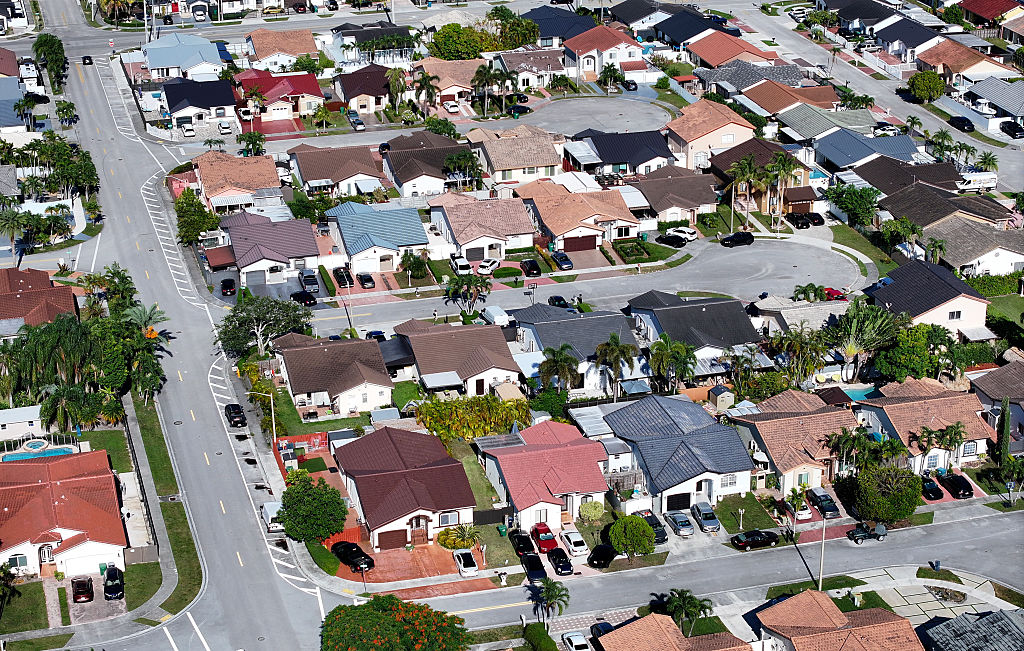
That distinction matters, because the $50,000 exemption has become a relic. When it was set, it covered a meaningful share of a typical Florida home. After years of double-digit appreciation, it shields almost nothing: A $400,000 home today is taxed on 87.5 percent of its value. Raising the exemption to $250,000 simply restores the protection to roughly what an earlier generation of homeowners enjoyed, and it brings far more modest homes largely or entirely off the rolls.
The more important story, though, is on the other side of the ledger. Florida’s local governments have not been starved. They have feasted. According to the James Madison Institute, the assessed value of all property in the state grew by 341 percent between 2000 and 2024. Over the same period, population rose by 45.6 percent and inflation by 70.7 percent, resulting in a combined increase of about 116 percent. Collections, in other words, have run at nearly three times the pace that population and prices can justify. Florida Gov. Ron DeSantis frames the surge the same way, noting that local property tax revenue “has nearly doubled in the past seven years” and is projected to reach $83 billion by 2032. Because a stable millage rate applied to a ballooning tax base yields ever more revenue, cities and counties have enjoyed an automatic raise year after year, without ever casting a politically accountable vote to lift rates. The amendment resets that ratchet.
The amendment also disciplines what remains. The measure directs the local property tax dollars still collected to core functions of public safety, including law enforcement, fire, and emergency medical services, basic infrastructure, stormwater education and management, and constitutional offices such as supervisors of elections, tax collectors, and property appraisers. This is limited government in the literal sense: revenue tied to the services residents actually expect from a county or city, not to whatever spending happens to expand to fill an ever-growing budget.
Opponents are already sounding alarms. A House staff analysis estimates that the change would reduce revenue to non-school governments by $4.6 billion at first, rising to roughly $8.4 billion per year. Local officials warn of cuts to services. But that framing assumes that the current trajectory is the rightful baseline. It is not. Much of that $8.4 billion is the very overcollection described above. It is money extracted because valuations soared, not because residents voted for larger government. Florida Chief Financial Officer Blaise Ingoglia, whose office has audited local books, argues that the reductions are absorbable. The honest question is not whether governments will have less than they had projected, but whether they were ever entitled to that windfall in the first place.
Here Florida can again be a model, as it has been on entrepreneurship, tax policy, and budget restraint. State and local spending nationwide routinely outruns population growth plus inflation, financed by the same silent property-value escalator. A constitutional cap that returns the surplus to homeowners and confines what remains to essential services is a template that any state with runaway local budgets could adopt. It is also a fitting way to mark the nation’s 250th anniversary: reaffirming that a citizen’s own home should not be perpetually rented back from the government. Florida Lt. Gov. Jay Collins puts it more bluntly. “If the government can take it, you don’t own it,” Collins said in a 2025 interview.
Sixty percent is a steep threshold, and the campaign against the amendment will be well-funded and emotionally framed around firefighters and teachers, even though schools are protected and public safety is a named priority. Voters should look past the framing to the arithmetic. A $250,000 homestead exemption, paired with a hard limit on what local governments may do with the rest, is not a raid on essential services. It is a long-overdue correction to a system that quietly taxed Floridians more every year while asking their permission for none of it.
Views expressed in this article are the opinions of the author and do not necessarily reflect the views of The Epoch Times.
 Friends Read Free
Copy
Facebook
Tweet
Friends Read Free
Copy
Facebook
Tweet