
Commentary
It was July 1, 1991—more than 34 years ago—when then-President George H.W. Bush announced his choice to succeed Thurgood Marshall on the U.S. Supreme Court.
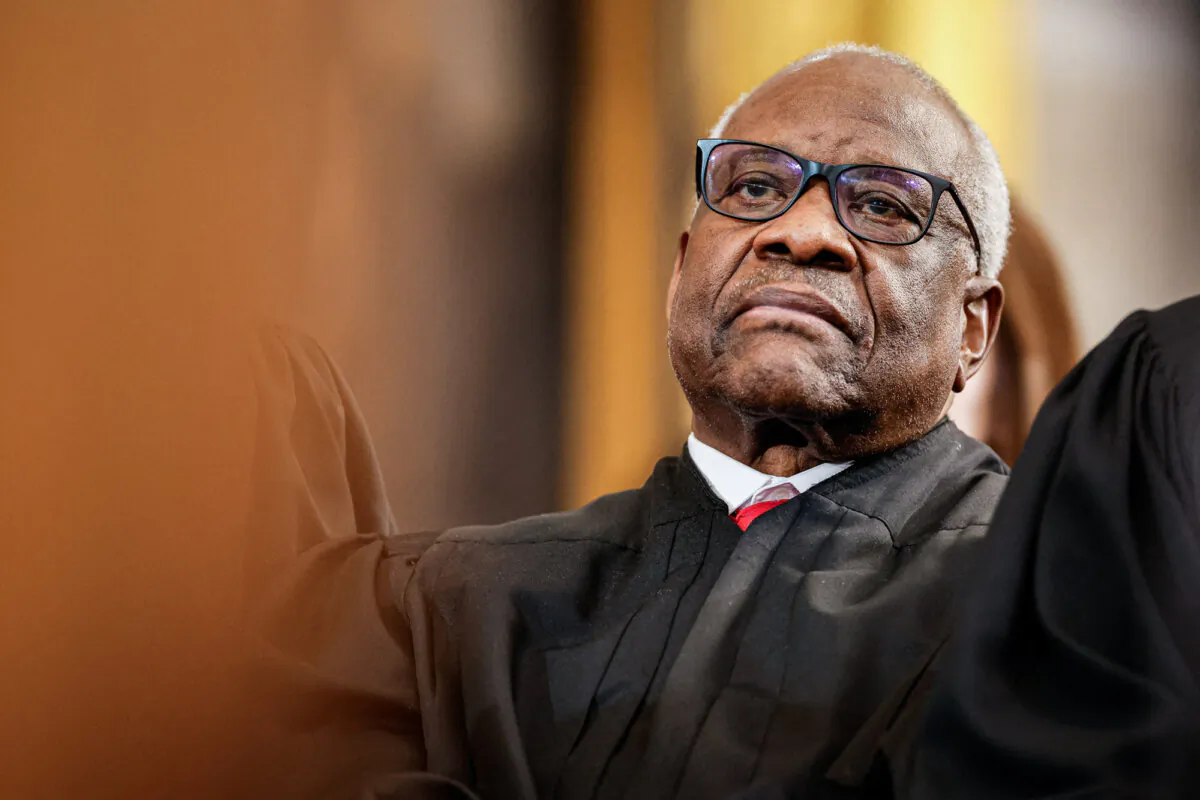
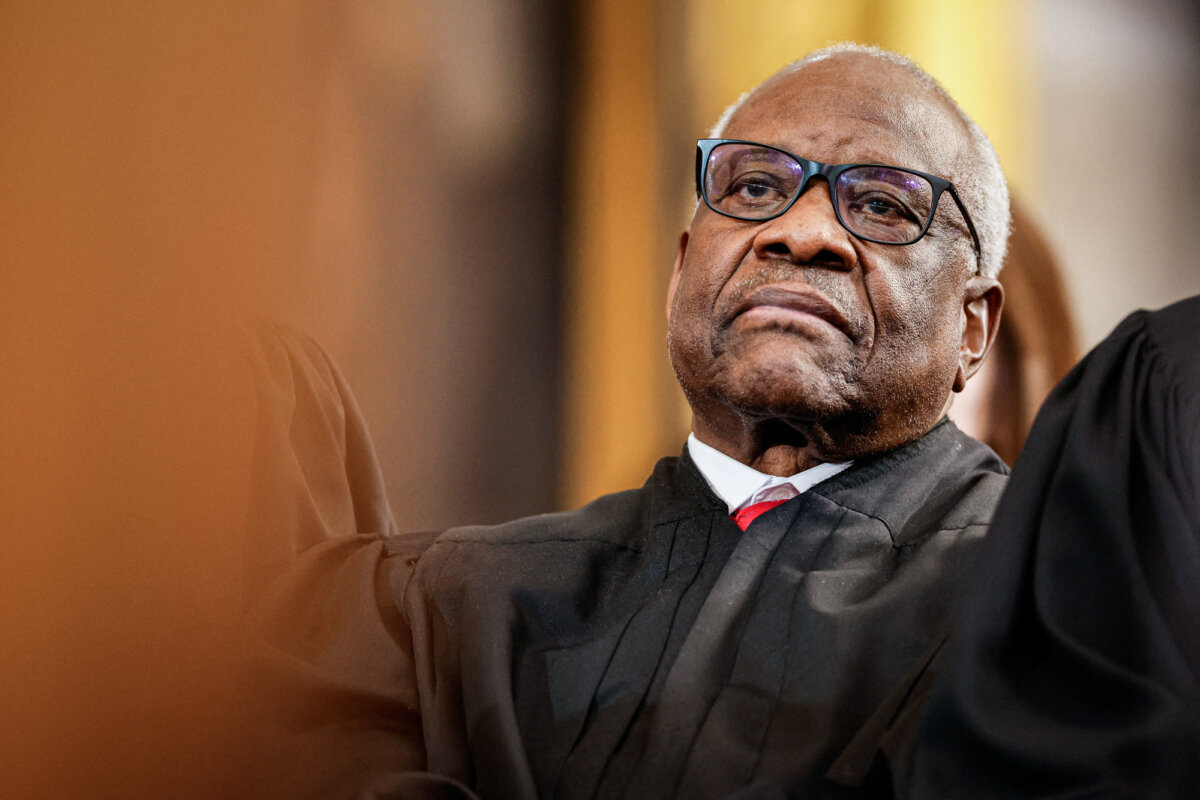
His choice was a then-relatively conservative middle-aged black man who had risen from abject poverty to service as a judge on the prestigious U.S. Court of Appeals for the D.C. Circuit. The jurist’s name was Clarence Thomas.
The howls from those who had long supported more progressive justices on the Supreme Court could be heard almost immediately.
Fighting his nomination, just as they fought Robert Bork’s four years earlier, with every trick they could conceive, they almost sank his chances. They knew and feared that Thomas, because of his relative youth, intellectual rigor, and belief in originalism, would be a transformative justice for decades to come.
And, in this case, they were right.
Now 34 years later, Thomas has become the fifth-longest-tenured justice on the high court, and in less than five months, he will be the second-longest-serving justice.
While he has not always been on the winning side of every decision, he has played a critical role in shaping the court back to the original intent of the Founding Fathers, as an institution that interprets—instead of makes—the law.
One of my favorite memories of Thomas is his 2016 commencement address to graduates at Hillsdale College in Michigan. While many speakers use commencement addresses to boost graduates’ confidence with lofty platitudes about following one’s dreams or believing in one’s potential, Thomas chose to go a different route.
He chose to talk about the importance of personal responsibility, instead of upward mobility.
Thomas called upon the graduates to live with integrity and responsibility—virtues often expressed in small and unrecognized ways, such as being a good neighbor, a dedicated employee, a committed churchgoer, and a faithful spouse—a person who puts the needs of others above their own.
In the conclusion of his speech, the justice said that instead of trying to change the world, students should begin to practice responsibility, dignity, and gratitude in their lives. Instead of fixating on implementing sweeping social changes—as the high court did before Thomas joined it—from the top down, students should first help those closest to them—their friends, neighbors, children, and communities.
He said: “As you go through life, try to be a person whose actions teach others how to be better people and better citizens. Reach out to the shy person who is not so popular. Stand up for others when they’re being treated unfairly. Take the time to listen to the friend who’s having a difficult time. Do not hide your faith or beliefs under a bushel basket, especially in this world that seems to have gone mad with political correctness.”
As Thomas noted, when one lives such a life, the lives of others can be positively transformed—through the exhibition of a humble spirit rather than the issuing of a judicial decree.
Those who have met Thomas or have spent any amount of time with him know that he practices what he preaches. His hearty laugh, his interest in the well-being of his law clerks, and his genuine warmth when meeting people for the first time show the true heart of the man who rose from the humblest beginnings in poverty-stricken Pinpoint, Georgia, to now being one of the longest-tenured justices in Supreme Court history.
Because of his perseverance, gleaned undoubtedly from his dedication to escaping from poverty and succeeding in life, much of the legacy he inherited—a court hostile to religious freedom, sanctity of human life, and constitutional originalism—has been reversed.
Under his watch, people of faith now have greater access to public facilities, schoolchildren can be part of faith-based clubs on campus, and states can now take steps to protect the most innocent of us all—preborn children—from certain death.
All these decisions are part of the legacy of Justice Clarence Thomas—a man who believes in personal responsibility, integrity, and freedom—values that he continues seeking to instill in the next generation of conservative leaders, as evidenced by his comments at Hillsdale College.
So to commemorate the 34th anniversary of his ascension to associate justice of the U.S. Supreme Court, it is my hope and prayer that he will continue to serve as a light to others for years still to come—and, someday, be the longest-tenured justice in history.
Views expressed in this article are the opinions of the author and do not necessarily reflect the views of The Epoch Times.
 Friends Read Free
Copy
Facebook
Tweet
Friends Read Free
Copy
Facebook
Tweet