Commentary
A Florida couple went through in vitro fertilization with the same hope that drives every family into that process. They wanted a child. After years of effort, they got pregnant. When their baby was born, something didn’t align. What they were seeing did not match what they expected.
That instinct led to testing, and the results confirmed the unthinkable. The child they brought home was not genetically theirs. The embryo that was meant for them had been misplaced, and to this day, they do not know where it went.
In California, another couple had a similar but even more complicated experience. Two families went through IVF at the same clinic. Both mothers carried pregnancies to term. Both gave birth. And both went home with the wrong baby.
Eventually, those families met and made an unthinkable decision. They gave the babies back to their biological parents. They each walked away from the child they had already come to love and stepped into a different kind of parenthood with their genetic children. It is hard to imagine a more emotionally complex situation.
These stories stop people in their tracks because they feel like something has gone terribly wrong. The system failed. A mistake was made. A child was placed in the wrong womb.
These are the cases we hear about, the ones that force themselves into the open because something is visibly out of place. They lead to testing, to questions, to answers. But not every situation presents itself so clearly. If discovery depends on something being obvious, then it is worth asking how many are never discovered at all.
As unsettling as these cases are, they are not the only question worth asking.
The real question is not only what happens when a wanted child is born to the wrong couple. The deeper question is what happens to all the children who are never born at all.
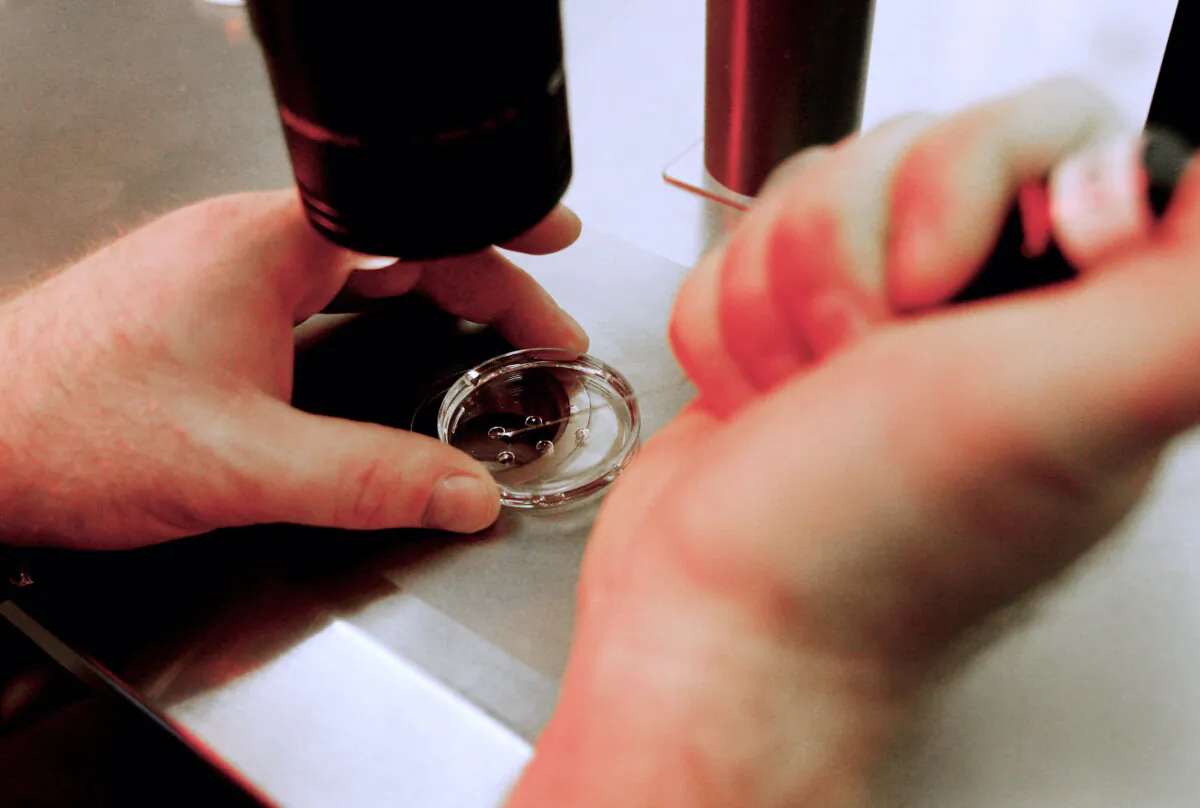
In the United States, there are more than a million frozen embryos sitting in storage. Many of them were created with intention and hope. Families went through procedures, paid significant money, and endured emotional strain to create them. But once those families have the number of children they want, the remaining embryos are often left behind.
Some are kept in storage indefinitely. Some are eventually discarded. Some are donated. But a large percentage exist in a kind of suspended state, neither moving forward nor being fully let go.
For those who believe that life begins at conception, this raises a question that is difficult to ignore. If an embryo is a life, then what does it mean to place that life in a freezer, paused without a timeline, without a plan, and often without resolution?
We live in a time when we have gained the ability to create life outside the body, to store it, to move it, and sometimes, as we have seen, to mix it up. We have mastered the mechanics, but we are still struggling with the meaning.
When does life begin? When does it matter? And when do we take responsibility for it?
These are not new questions, but technology has forced them into a new context. It is no longer theoretical. It is sitting in storage facilities across the country—labeled, cataloged, and waiting.
Some will say the embryo is not yet a person. Others will say it is already a life with inherent value. Still others will avoid the question altogether, choosing not to decide.
But the embryos remain.
They are not headlines like the mix-ups that make national news. They do not come with dramatic courtroom cases or emotional reunions. They exist quietly, out of sight, in a system that few people think about once their own journey is complete.
If we are going to have a serious conversation about life, about family, and about the role of technology in both, then we cannot stop at the stories that shock us. We have to be willing to look at the ones we have normalized.
We have learned how to create life in a lab. The question now is whether we are prepared to fully reckon with what that means.
Views expressed in this article are the opinions of the author and do not necessarily reflect the views of The Epoch Times.
 Friends Read Free
Copy
Facebook
Tweet
Friends Read Free
Copy
Facebook
Tweet