
Commentary
Across history, political movements have risen more from longing than from logic. Each generation faces a moment when faith fades, meaning erodes, and something new rushes in to fill the void.
Today, that longing has found a modern language, one spoken in the vocabulary of compassion, justice, and equality. It’s the language of socialism, reborn not as an economic theory but as a moral revival.
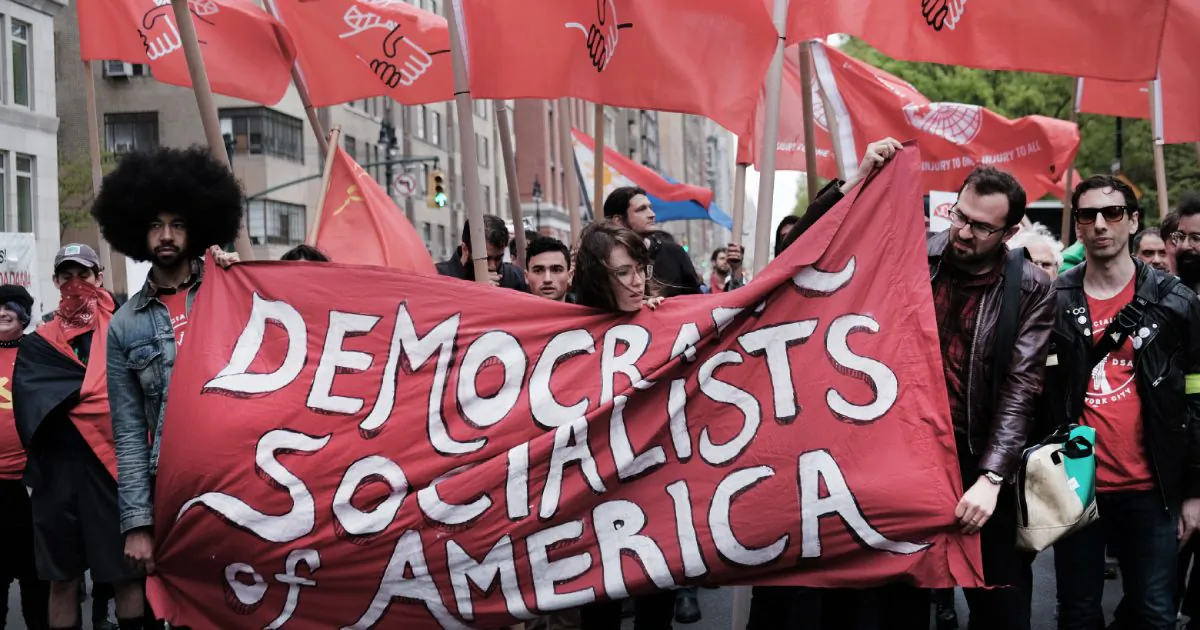
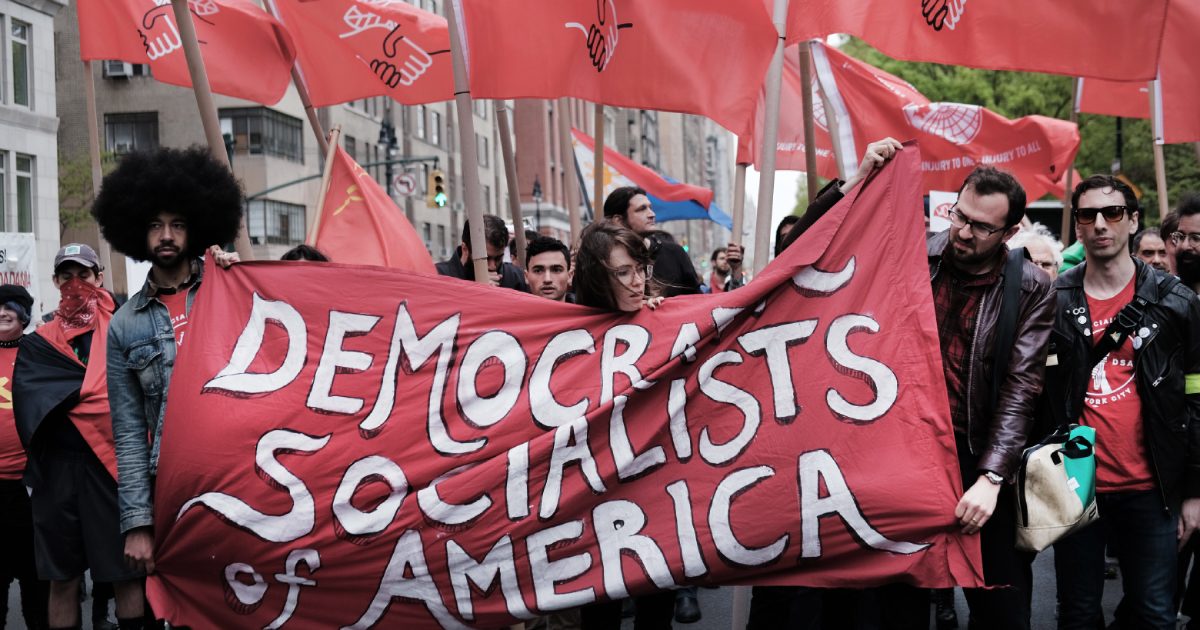
Its symbols are familiar: the raised fist, the five-pointed red star, slogans of working-class solidarity. Yet their meanings have been reversed. What older Americans remember as the insignia of oppression, younger voters now see as signs of empathy and care. For one generation, socialism recalls breadlines and tyranny; for another, it offers belonging and moral purpose. That reversal tells us something profound about the age we live in: The battle lines of politics have moved from economics to ethics.
The Democratic Socialists of America (DSA), the nation’s largest self-described socialist organization, has become the primary vessel for this moral reawakening. It isn’t a traditional party but a movement, one that runs candidates under the Democratic banner while seeking to transform the moral imagination of American life. Its goal is not merely to win elections but to convert hearts and make socialism feel less like rebellion and more like righteousness.
In its own publications, the DSA celebrates “lighthearted, targeted communications” that blend humor, conviction, and youthful optimism to reach working-class voters. It presents not technocrats but missionaries who are confident, cheerful, and morally certain. While traditional political parties trade in negotiation, the DSA trades in conviction. It organizes, proselytizes, and moralizes. More than just offering programs, it provides purpose. That, more than any policy, explains its growing appeal among the young.
Every generation inherits a kind of despair. For those born after the Cold War, despair wasn’t bombs or poverty, but meaninglessness. Anxiety and loneliness have reached record highs, and trust in institutions has mostly collapsed. This generation has grown up in an economy that feels rigged and a culture that feels hollow. For many, movements such as the DSA now fill the role that faith and family once played, providing a community with moral certainty and a sense of mission.
According to Gallup, Americans’ confidence in capitalism has fallen to its lowest level on record, with barely half of adults now viewing it positively. Support for socialism, meanwhile, remains steady but strongest among the young. While most Americans still value free enterprise, their trust in big business has eroded amid rising costs and widening inequality. The rise of socialism, then, is less a vote for state control than a vote of no confidence in capitalism’s moral credibility.
Karl Marx once wrote that religion is “the sigh of the oppressed creature, the heart of a heartless world.” He saw faith as both a symptom and a solace—a way for suffering people to endure a broken reality. Ironically, his followers built a movement that filled the very role that he tried to dismantle. Socialism has become not only political but moral, promising redemption through collective struggle.
The DSA’s core declaration—“We believe that working people should run both the economy and society democratically to meet human needs, not to make profits for a few”—reads more like a creed than a political platform. Even its Religious Socialism project admits that millions of Americans who call themselves “spiritual but not religious” are seeking new frameworks for meaning. They preach that socialism can fill that void—not as Marx’s “opium of the people” meant to soothe pain, but as moral dynamite meant to blow away the old order.
That helps explain why socialism endures after every failure. You can disprove a policy but not a promise of salvation.
Older Americans respond the only way they know how: by reminding the young of history’s cost. They recite the body counts of communism, the millions who perished under regimes that promised equality and produced terror. But facts can’t feed a spiritual hunger. Today’s youth aren’t rejecting history because they’re ignorant of it. They’re rejecting it because they feel detached from it. Their struggle goes deeper than politics; it’s a search for meaning itself.
That’s why socialism’s revival feels less like a campaign and more like a conversion. It tells a restless generation that they can be righteous again, that if they share enough, protest enough, care enough, the world will finally be fair.
Yet another revival is quietly rising alongside it. Religious devotion is growing again among young Americans, particularly young men. They say they are drawn not to institutions but to discipline, virtue, and community—the very things missing from modern life. The same hunger that drives some toward socialism is leading others back to faith. Both recognize the world’s moral collapse. One begins with the transformation of the self, the other with the transformation of society. One teaches repentance and forgiveness; the other teaches resentment and control. One redeems the soul, while the other reengineers the world.
This generation is the most educated, most connected, and yet the most manipulated in human history. Social media rewards moral certainty and punishes reflection. The same corporations that young activists condemn for greed are training their moral instincts, click by click. In that sense, the new socialism is less a rebellion against the system than a product of it. It is a moral algorithm built on human longing.
It’s easy to scold the young for being naive. It’s harder to see their sincerity. They are not drawn to socialism because they hate freedom, but because they fear emptiness. They want virtue without hypocrisy, compassion without corruption, meaning without manipulation. If older generations hope to reach them, they must answer that moral longing not with warnings, but with witness.
As Milton Friedman once wrote, “The battle for freedom must be won over and over again.” In past centuries, freedom was fought for on battlefields and in parliaments; today, it’s fought in the mind. Yesterday’s tyrants controlled territory, and today’s control attention. That battle is more than economics; it’s spirituality.
In this generation, the struggle is not between nations, but between stories—over who defines truth and what gives life meaning. We need to defend freedom not only with arguments but also by showing that a free life can also be a moral one.
The youth of today are once more searching for heart in a seemingly heartless world. The task before us is not to ridicule their search, but to help them find it where it has always endured: not in the state, not in the system, but in the human soul.
Views expressed in this article are the opinions of the author and do not necessarily reflect the views of The Epoch Times.
 Friends Read Free
Copy
Facebook
Tweet
Friends Read Free
Copy
Facebook
Tweet