

Commentary
You can’t have a market without prices, which is a major reason why healthcare is such a mess.
Nobody knows what anything costs, even though the vast majority of medical services are not emergencies. In President Donald Trump’s first term, he took this problem on by mandating that hospitals that participate in Medicare and Medicaid (all of them do, of course) post their prices. But compliance was poor, and under President Joe Biden, there was little enforcement.
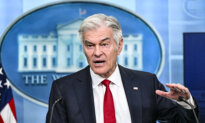
That is finally changing, with Centers for Medicare and Medicaid Services Administrator Mehmet Oz taking point and issuing federal warning notices or corrective action plan requests to at least 519 hospitals since April for hiding what they charge patients. Penalties can hit $2 million per year. Good start.
Trump signed the original price transparency executive order back in 2019. Biden inherited it and let hospitals ignore it for four years. A 2024 federal audit found that only 46 percent of hospitals required to comply were actually doing so. Biden’s response was essentially a shrug. Once he came back into office, Trump not only signed another executive order but also made it clear that fines are coming.
The noncompliance list recently published by The Associated Press is striking. Texas leads the nation with 42 flagged hospitals. California has 38, and Indiana—despite its far smaller population—has 34. Major hospital systems such as Ascension and Universal Health Services lead the way with 25 and 17 noncompliant hospitals, respectively.
The hospitals hiding the ball on prices are playing a dangerous game that could leave us all worse off, because while transparency gains momentum on the federal level, the alternative approach advancing in some states is outright price caps on hospital services pegged to Medicare rates.
Indiana has adopted a 260 percent cap and Michigan 200 percent for health plans and 150 percent for cash payers. Similar laws are advancing in several other states. If they don’t like transparency, they’ll really hate outright price controls. But so will patients, because instead of getting greater choice and competition, we’ll get waiting lists and lower-quality care.
Indiana’s pursuit of price controls is especially misguided because the legislature justified the cap based on some of the worst data in the country. Indiana is the third-most noncompliant state in the country on federal transparency requirements, with roughly one-third of its acute care hospitals on the federal warning list. The arbitrary rate cap was formulated based on a dataset that excludes one-third of the market.
The right way to decrease prices while increasing quality is to reduce barriers to entry by slashing regulation, boost health savings accounts so patients control their own healthcare dollars instead of having them go directly from employers or the government to insurance companies, and, most importantly, enforce price transparency rules.
We need a functioning market with real prices. Not price controls. Especially not price controls informed by inaccurate price data.
The federal government’s own watchdogs confirm that the transparency system is not currently working. The Government Accountability Office has said that the Centers for Medicare and Medicaid Services still does not have confidence that the posted price files are complete and reliable. Independent research has found that fewer than half of reported negotiated rates match within even 10 percent across sources, and many diverge by more than 50 percent in ways that defy basic economic logic.
Even with better enforcement, the current data may not be sufficient. Texas is a striking example. Texas has its own hospital transparency law, and the state says it monitors compliance by reviewing complaints, auditing hospital websites, checking analyses of noncompliance, and confirming required submissions. State officials can issue deficiencies, demand correction plans, and assess penalties. Yet Texas still tops The Associated Press’s list, with 42 hospitals flagged for federal warning notices or corrective action demands.
Posting a number to a website and that number reflecting what actually gets paid are two completely different things. To make sure that policy matches reality, states need more information, such as claims data. That is the final payment after insurers have applied their edits, bundling rules, and coding adjustments. It reflects what was actually spent, not an opening bid posted to satisfy a federal checklist.
Trump is right to come down hard on hospitals that hide their prices. States should understand that the goal is prices—not price controls—and focus their own efforts on making sure that their data match reality.
Reprinted by permission from The Daily Signal, a publication of The Heritage Foundation.
Views expressed in this article are the opinions of the author and do not necessarily reflect the views of The Epoch Times.
 Friends Read Free
Copy
Facebook
Tweet
Friends Read Free
Copy
Facebook
Tweet