
Commentary
Our ability to influence the fate of the nation seems to diminish daily. Who will listen? What is the price we pay for speaking out?
In short, does what we do make a positive difference in the life and history of our society? At what stage do we question what we may think are illogical or counter-productive orders or perceptions of a situation?
At what point does questioning itself become counter-productive? Is it always, as U.S. Navy Commodore Stephen Decatur said in the 19th Century: “Our country! In her intercourse with foreign nations may she always be in the right; but our country, right or wrong!”? When can we, as individuals, decide whether we are part of the process, or part of the decision-making leadership?
There is, within formal military or policy bureaucracies of a nation-state, the assumption that the uppermost leadership has access to broader, perhaps highly classified intelligence and contextual material than we can know. Therefore, we must accept leadership decisions and follow orders to implement them. The fate, sometimes, for following bad orders, or orders which we can clearly see are flawed, is that at least the nation holds together and, hopefully, prevails in its strategic actions.
The angst and loneliness of the informed, intelligent officer is that he or she must weigh whether, or when, to risk an important position or an entire career by questioning authority. Discipline and unit cohesion are highly dependent on the combined, even instinctive, willingness to follow orders and obey doctrine. That can all be lost if questions—perhaps questions based on insufficient information—are raised at an inappropriate time and place.
So is there a place for “professional questioner” within the strategic apparatus of any state? At a tactical or theater level it is often too late to question strategy, and solid, disciplined tactical implementation of strategic command instructions may save even a bad situation. But does the tightly controlled, career-long development of absolute obedience to the process of policy implementation lead to senior officials who are expected to be absolutely open to creative interpretation of longer-term and geopolitically broader perspectives?
Usually not.
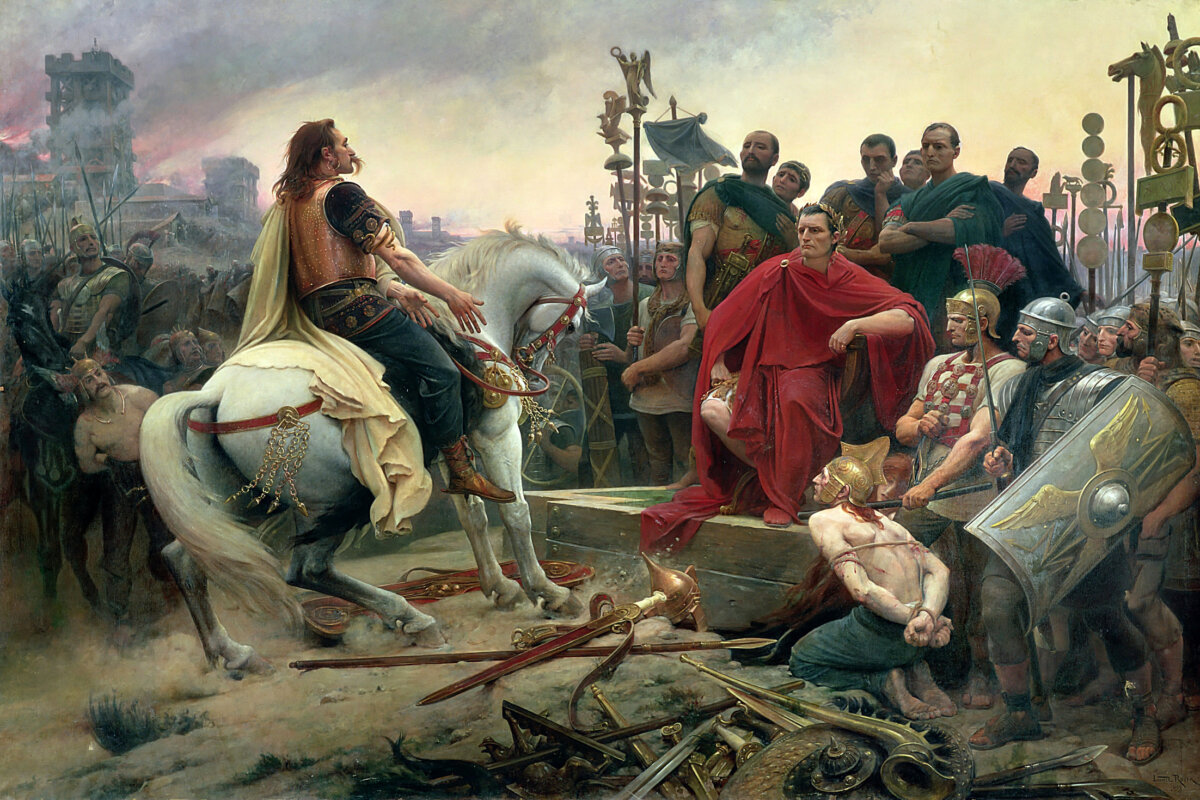
It is instructive that “weekend warriors”—reservists, national guard officers, and, in the days of sail, long-deployed sea captains—can often (perhaps almost invariably) make more creative and daring initiatives in the military spectrum than can be made by career officers locked into a headquarters bureaucracy. Look at Vice-Adm. Lord Nelson in the Anglo-French wars, Gen. Sir John Monash in World War I, or Julius Caesar on the battlefield: they epitomized the clarity of open minds facing complex conflict terrain. They made bold decisions and could be seen in direct comparison to their less visionary companions in arms. But each was unique.
At various stages of their career, they faced hostility, peer-condemnation, and challenges which could have denied their places in history. How many others, in fact, were sidelined or discarded into ignominy or emptiness when they may have made invaluable contributions to the fate of their nations and humanity, only to be suppressed by “the process” of conformity or a challenge to higher ego?
The most difficult challenge is not to view situations with greater contextual and historical perspective—and, indeed, to see evolving patterns of strategic trends—but to convey those interpretations to policymakers to whom such observations may be invaluable. What is evident is that each path to influence policy is different.
In other words, how do we even reach and influence the leadership of our society, even after we have labored to prepare the perfect case?
A singular leader, who gathers all decision-making into his or her person, may either be the most receptive to new thinking, or the least receptive. Similarly, a collective policymaking apparatus, or one diversified through various arms of government somehow achieving consensus, may be easiest to influence, one cog at a time over a period, or it may be so amorphous as to be forever impervious to urgent observation or action.
All this begs the question as to when someone in the long and opaque chain of command is sufficiently convinced that his or her voice is being stifled or overlooked that resignation and “going public” is the only way to gain recognition of a critical argument. It was said during some recent U.S. administrations that it was unfair to expect a senior officer to question orders or to refuse to challenge higher national authority because to do so would jeopardize his or her career.
But why should anyone in the chain of command stay silent at the risk of the lives of those under their own command, merely to keep their jobs? If such an officer is entrusted with committing troops, or his nation, to conflict and the risk of many lives, should that officer not also be prepared to sacrifice a career in defense of those in his care? Better a noble and impoverished banishment than to risk lives and the nation to poor or incompetent decisions.
At the end of it all, however, are the nagging questions: Is this the time and is this the cause to challenge conventional thinking? Is anyone out there listening, anyway? Will a principled stand make any difference in history? Or will a principled stand, maintained with persistence and courage, actually transform history for the better?
And can we ever know the enduring outcome of our actions?
Only adherence to unfashionable individuality and internal standards can be the guide: honor, nobility, character, courage, identity—all that can be described, as Niccolò Machiavelli did, as virtù—are attributes which we must acquire for ourselves, as individuals, through the greatest introspection and study.
Views expressed in this article are the opinions of the author and do not necessarily reflect the views of The Epoch Times.
 Friends Read Free
Copy
Facebook
Tweet
Friends Read Free
Copy
Facebook
Tweet