
Commentary
Well, after a long build-up of threats, anti-Semitic demonstrations, acts of vandalism, and several foiled terrorist plots (Canada, the United States, Germany, Poland, etc.), the inevitable happened.
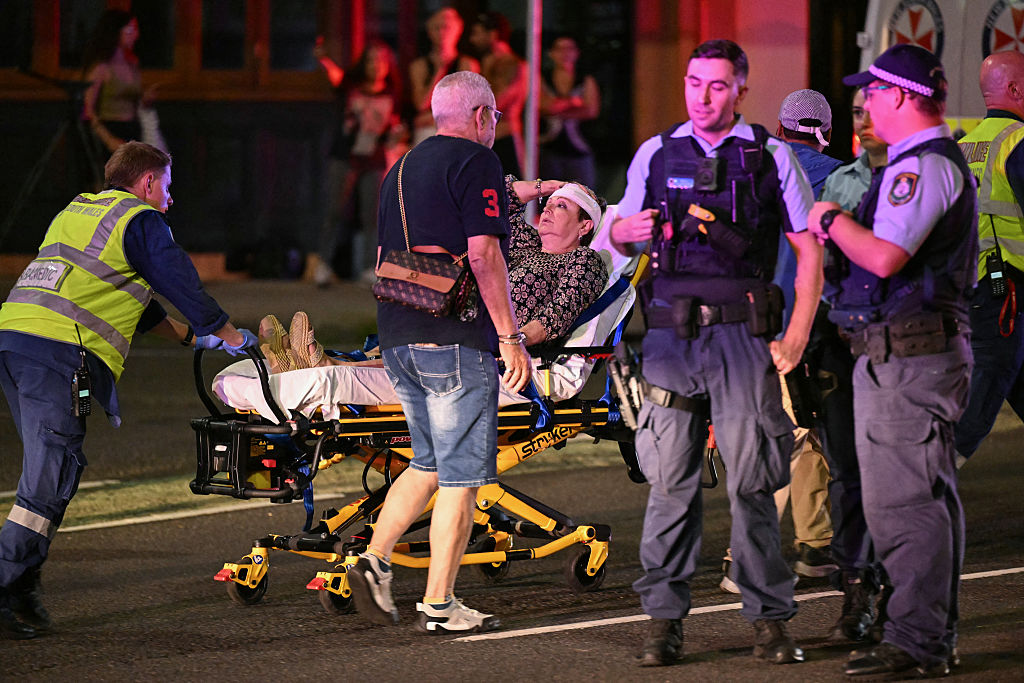
We have seen the first, and probably not the last, mass casualty attack targeting Jews in the post-Gaza period (stemming from the heinous Hamas action against Israel on Oct. 7, 2023, in which more than 1,200 people were killed, and subsequent Israeli military response in Gaza from where Hamas planned their operation). I am referring of course to the shooting of dozens of Australians marking Hannukah at Bondi Beach, a popular locale just outside Sydney. The death toll at the time of writing stands at 15, with another 40 injured.
The gunmen were a father-son team who had pledged allegiance to the ISIS terrorist group and had ISIS flags in their car. The father was born in India while the son was native Australian. Interestingly, the latter had been investigated by the Australian Security Intelligence Organisation (ASIO, the equivalent of CSIS in Canada) as far back as 2019 but deemed at the time not to pose an immediate threat.
There are so many questions surrounding this incident. Why did the father of a known radical have firearms? Why did ASIO conclude the son did not need to be monitored further? Why did the duo travel to the Philippines before the attack and with whom did they meet? If there were jihadis too, what assistance did they provide (training, planning, finances)?
These unknowns notwithstanding, we can still draw some general conclusions about the attack and what it says about Australia’s (and by extension the West’s) approach to terrorism in general.
The first point, and by far the most important one, is what the attack says about ISIS. Despite the views of many, ISIS was never “defeated.” Yes, its self-styled “caliphate” was destroyed many years ago, but the terrorist organization as well as its many so-called provinces in Africa, the Middle East, and Asia carry out attacks on a near daily basis and have been doing so for half a decade.
In addition to ISIS itself, we have seen a large number of attacks planned and/or perpetrated by those described as “ISIS-inspired.” This term seems to indicate individuals or small cells which pledge allegiance to the group and carry out actions in its name, often with ISIS flags as props (as happened in Sydney). These actors may have had no actual contact with ISIS but seem to want to represent it.
For its part, ISIS is only too happy to celebrate death and destruction as both serve to promote its brand. The Bondi Beach slaughter may be either or both, depending on what may be revealed about the trip to the Philippines (the Philippines has already denied that any “training” of the father-son team took place on its soil).
This mass killing should also put to rest the notion that attacks in the West are on the wane. Over the past year alone, there have been incidents in New Orleans, France, the UK, Germany, and elsewhere, most of which were tied in some way to ISIS, as well as a large number of foiled plots (including a recent one in Poland) thanks to the efforts of security intelligence and law enforcement agencies.
Furthermore, all these plots illustrate clearly that Islamist terrorism remains, by far, the most serious threat to global public safety. Despite all the talk about the (re)rise of the far right (neo-Nazis, white supremacists, nihilists, etc.), those who subscribe to that dog’s breakfast of ideologies have yet to commit in any sustained manner actions on a scale similar to that of jihadis. That indeed may change, and these movements need to be monitored, but not at the price of turning attention and resources away from Islamist extremists.
Curiously, the West appears to want to be “done with” the jihadist threat. Governments are hesitant to talk about it—in Canada you cannot even use the phrase “Islamist terrorism”—under the misguided belief that any discussion is somehow “racist” or “Islamophobic” in nature. When combined with the latitude given to “pro-Palestinian” demonstrations and occupations across the Western world, this contributes to a boldness and confidence that moves from protests to violent action. Bondi Beach is merely the latest manifestation of this development.
“Experts” continue to dismiss terrorist acts as the work of mentally ill actors who were “wronged” by Western societies and whose actions are a logical outgrowth of colonialism and Western prejudice. By failing to categorize these individuals and groups accurately, we are not only silently encouraging them to plan and execute acts of terrorism, but leading to alienation of whole societies where the crimes of a few unfairly cast a shadow over law-abiding citizens and neighbours. The Sydney massacre will most likely invite retributive action by other ideologically driven individuals and organizations, which in turn will encourage more tit-for-tat attacks.
We need to call this what it is: jihadi or Islamist terrorism that threatens public safety across the West. We need to stop ignoring it, excusing it, and pretending that it will go away. It will not, if recent trends are to be followed. Western governments and societies have a choice to make: face the threat or face the consequences.
Views expressed in this article are the opinions of the author and do not necessarily reflect the views of The Epoch Times.
 Friends Read Free
Copy
Facebook
Tweet
Friends Read Free
Copy
Facebook
Tweet