
Commentary
Imagine American power as a ferocious guard dog, held on a short, strong leash. Within the arc of that leash, no one with malintent survives. History has shown this ferocity time and again: rapid, decisive operations that leave adversaries reeling.
But outside the arc? Rivals might feel invincible. The dog barks loudly and growls, yet rarely charges with full force. Adversaries test boundaries, probe weaknesses, and convince themselves that American power has limits—permanent ones.
What they keep forgetting is this: A leash is not a permanent thing. It is held in the hands of the incumbent president of the United States. At any moment, he can lengthen it dramatically, extending America’s reach further into hostile territory. Or he may simply “let slip the dogs of war.”
This illusion—of a permanently restrained America—has shaped how both foes and allies have perceived U.S. power for years, and also how America has sometimes perceived itself. And nowhere, in recent times, is that dangerous miscalculation playing out more starkly than in the escalating conflict with Iran.
A Chronology of Illusion
The pattern already emerged in President Donald Trump’s first term. In 2018, he withdrew the United States from the Joint Comprehensive Plan of Action (JCPOA) nuclear deal. Many analysts, diplomats, and European leaders dismissed it as bluster—he would not actually tear up a multilateral agreement and reimpose crushing “maximum pressure” sanctions. He did. Iran felt the economic pain but adapted by buying time through proxies and patrons.
Then, in January 2020, after Iranian-backed militias killed an American contractor and attacked U.S. forces, Trump ordered the drone strike that assassinated Qasem Soleimani, the powerful commander of the Quds Force of the Islamic Revolutionary Guard Corps (IRGC). Skeptics insisted he would never risk direct escalation by killing a top Iranian leader on foreign soil. He did. Earlier that year, Trump had also authorized the daring raid that killed ISIS leader Abu Bakr al-Baghdadi in Syria—another high-risk operation many doubted he would greenlight.
In June 2025, Israel struck Iranian nuclear and military sites, triggering the Twelve-Day War. Many insisted Trump would keep America on the sidelines to avoid a new Middle East entanglement. Instead, the United States directly intervened, conducting strikes on key nuclear facilities. A fragile cease-fire followed, but the episode proved that the leash could be extended when red lines were crossed.
By early 2026, mass protests erupted across Iran over economic collapse and repression. The regime responded with savage force—mass killings that reportedly claimed tens of thousands of lives. As citizens braved the streets, Trump publicly declared: “Keep protesting … help is coming.” Many dismissed it as empty rhetoric, expecting no real follow-through after the worst clampdowns. Yet the cycle escalated.
On Feb. 28, 2026, the United States and Israel launched Operation Epic Fury—major strikes targeting nuclear sites, missile facilities, command centers, and leadership.
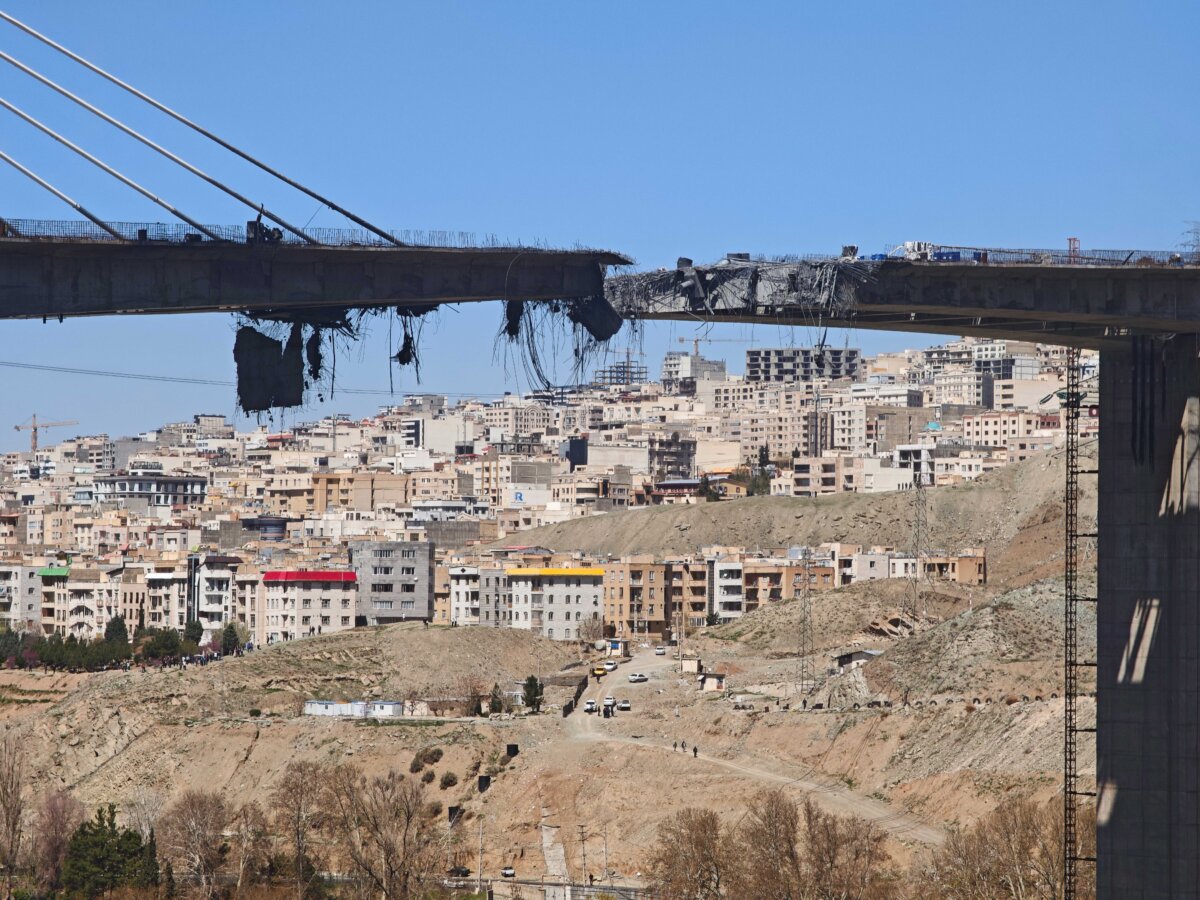
Now, in this phase, with core capabilities degraded but the Strait of Hormuz still contested, Trump has issued explicit threats against civilian-enabling infrastructure: power plants, oil fields, bridges, and desalination facilities. Once again, many voices claim it is just talk. But the above pattern suggests betting against the leash lengthening further is a risky wager.
The Questions Being Tested
At the heart of this moment lie two critical uncertainties that Trump appears to be stress-testing with rolling deadlines, calibrated strikes, and increasingly explicit threats.
First: Are the Iranian figures at the negotiating table willing to strike a genuine, long-term strategic deal? Or is this merely another hudna—a temporary truce to be broken the moment the balance of power shifts?
Iran’s track record points strongly toward the latter. Past agreements delivered tactical pauses while the regime advanced missiles, proxies, and its nuclear program. For Tehran, mere survival against the “Great and Little Satans” has long counted as victory.
Second—and more decisive: Even if some faction or person is willing, are they able to enforce such a deal across the entire regime?
The Islamic Republic has never been monolithic, but the Feb. 28 decapitation strikes have made enforcement far harder. Supreme Leader Ayatollah Ali Khamenei was killed in the opening wave of Operation Epic Fury, along with senior clerics and commanders. His son, Mojtaba Khamenei, was formally named the successor, yet he remains largely invisible—reportedly injured and sidelined. Real power seems to have shifted to the IRGC.
The IRGC now operates as the dominant force: it runs a parallel military council, controls key economic assets, directs proxy networks, and has blocked appointments by the elected government. President Masoud Pezeshkian and civilian officials are increasingly marginalized. Command and control has also been degraded by strikes on leadership bunkers and communications nodes, leading to slower coordination and greater risk of independent actions by IRGC elements.
This fractured structure potentially creates a dangerous dynamic. Even if negotiators signal concessions on nuclear rollback, proxies, or the Strait of Hormuz, the IRGC can ignore, delay, or undermine them. Unified, verifiable compliance has become both more difficult and more necessary. While Trump says talks are “going very well” amid Iranian denials, the leash seems to be deliberately being lengthened to surface the true answers.
Conclusion
Today, the April 6 deadline for power-plant strikes looms. If Iranian negotiators cannot—or will not—deliver verifiable concessions on nuclear rollback, proxies, missiles, and the Strait of Hormuz, the future of Iran may suddenly matter far less than breaking the regime’s ability to threaten vital interests.
Of course, our analysis may be wrong; or external circumstances, such as a major event elsewhere, could prompt a more cautious course of action by the United States—or the reverse. But the proverbial dog has already bitten deeper than many expected. Whether it charges further, bringing power grids, oil infrastructure, and key logistics to ruin, may depend on whether Tehran finally understands that the leash is held by a U.S. president willing to extend it.
Views expressed in this article are the opinions of the author and do not necessarily reflect the views of The Epoch Times.
 Friends Read Free
Copy
Facebook
Tweet
Friends Read Free
Copy
Facebook
Tweet