
Commentary
Why is the presumably imminent—but long-delayed and hard-fought-for—independence of a small South Pacific autonomous region, Bougainville, fraught with resistance, superpower competition, and potential further unrest?
Bougainville is likely to become a sovereign, independent state in 2027. If the Parliament of Papua New Guinea (PNG) fails to ratify that independence, then violence is likely to resume, and the South Pacific region will be subject to major power attempts to influence the situation.
All external powers will be forced to choose between mollifying PNG, the current suzerain of Bougainville, and supporting the geographically important but much smaller Bougainville state. None of the major powers—whether it be the People’s Republic of China (PRC), Australia, New Zealand, the United States, or Indonesia—wants to be forced into making a choice.
Perhaps, as the laborious process of independence for Bougainville unfolds, it may reopen the question of independence for another regional state trapped in the same quagmire: West Papua, now occupied by Indonesia.
Independence for West Papua and Bougainville has been thwarted because both territories have been too economically valuable to their post-World War II sovereign overlords, Indonesia and Papua New Guinea, respectively.
In the case of West Papua, which has been engaged in decades of armed insurrection against Indonesia, the conflict stems from the fact that it provides significant revenues from gold and other mineral deposits to both the Indonesian treasury and to investors (mainly through Freeport Indonesia, part of Freeport McMoRan, the largest mining company in the United States). In the case of Bougainville, gold and copper mining there have historically provided a major part of the PNG economy.
West Papua—geologically, ethnically, and geopolitically—was never part of the Indonesian archipelago and was subsumed by Indonesia after World War II simply because it, like the main Indonesian islands, had been governed colonially by the Dutch.
Bougainville, although separate from modern Papua New Guinea, was “lumped” into post-World War II PNG because it had, for much of the 20th century, been governed by Australia.
Most importantly, the United Nations has not supported a real debate on independence for either former colony, largely because the economic pressures from the current suzerain powers are too great.
In the case of the impending Bougainville independence, China could, in principle, benefit from the squabbling that would result from a failure of the PNG Parliament to ratify Bougainville’s long path to independence. And, indeed, the Parliament in Port Moresby may do that in June, despite the long emotional ties PNG has had to Bougainville and the economic importance of Bougainville to PNG. Even that parliamentary ratification vote could be delayed until September, but patience is wearing thin in Buka, the current capital of the Autonomous Region of Bougainville.
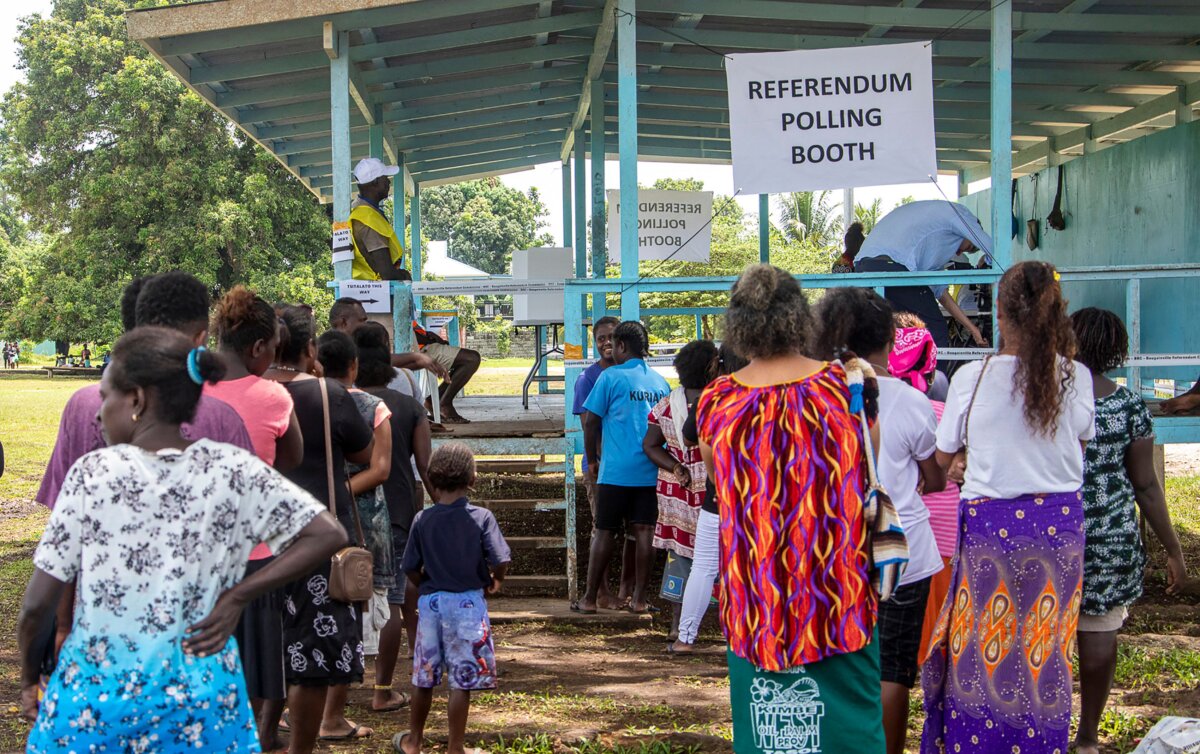
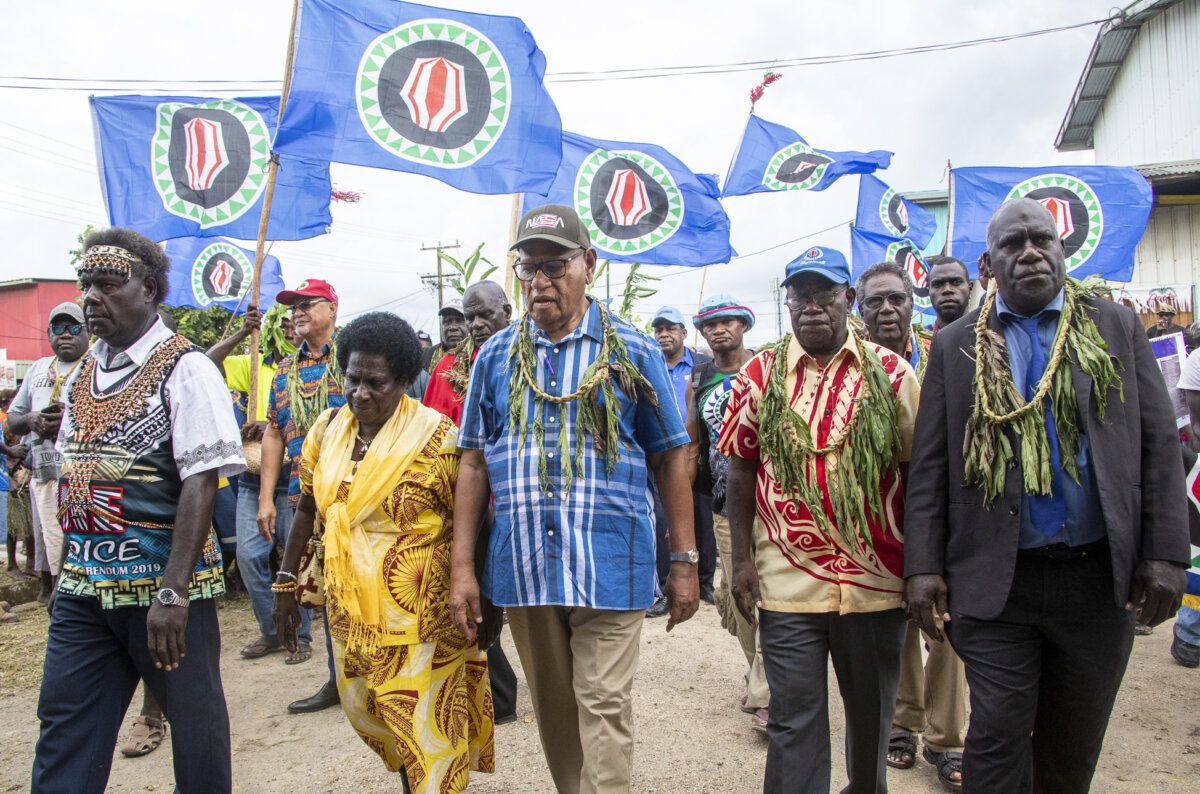
Bougainvilleans, between Nov. 23, 2019, and Dec. 7, 2019, voted overwhelmingly for independence from PNG: 98.31 percent of voters (initial reports said 97.7 percent) supported it, with a voter turnout of 87.38 percent of registered voters. But it was conditional: The PNG Parliament was obliged to ratify the results (or reject them) and promised to debate this situation by June 25, 2026. That date is already slipping.
Nonetheless, the president of the Autonomous Bougainville Government (ABG) (since 2020), Ishmael Toroama, has said that Bougainville would declare independence on Sept. 1, 2027, regardless of Port Moresby.
A unilateral declaration of independence could presage a revival of the civil war (1988–1998; the most violent conflict in the Pacific region since World War II), in which some 20,000 lives were lost (some estimates indicate a lower death toll) in an island territory of (now) only some 300,000 to 367,000 people. After the destruction of the capital, Arawa, during the civil war, the seat of government for the region was moved to the island of Buka, but it is probable that, post-independence, the capital would be restored to Arawa.
Given that the Bougainville territory is significantly offshore from mainland Papua New Guinea, the question is why Port Moresby would delay granting Bougainvilleans independence?
The answer is primarily economic.
At its operational peak from 1972 to 1989, the Bougainville copper and gold mine (the Panguna mine), operated by Bougainville Copper Ltd. (begun by Australian miner Conzinc Rio Tinto), accounted for approximately 44 percent to 45 percent of Papua New Guinea’s total exports. The mine also contributed about 17 percent of Papua New Guinea’s national tax revenue during that period.
The civil war ended the copper exports, but the Autonomous Bougainville Government has made it clear that it would restart copper and gold mining, bringing in some 30 percent to 40 percent of the shareholding of the mines into foreign investor hands. Significantly, copper prices have been riding high, at about $12,600 per metric ton in 2026, but were expected to decline slightly in 2027 or later in 2026.
Many factors, including the U.S.–China confrontation and the Strait of Hormuz fighting, could influence downstream pricing, but Bougainville could nonetheless attract significant investment and export revenues from the restart of the copper and gold mining there.
In recent history, Bougainville, made up of Bougainville Island and Buka Island, is geologically part of the Solomon Islands archipelago, which lies southeast of Bougainville, with an area of 3,623 square miles (9,384 square kilometers). The neighboring Solomon Islands became sovereign as a constitutional monarchy and parliamentary state. Both had been administered by Germany until 1914, when the outbreak of World War I ended that administration, after which Australia gained control, later under a League of Nations mandate.
On Jan. 2, 1976, the Solomon Islands became self-governing, and on July 7, 1978, the Islands gained independence, while Bougainville remained part of PNG because of historical chains of control that saw the area divided between early (19th century) German and British colonial overlordship.
Ethnically and linguistically, Bougainville and the PNG share distinct characteristics in their populations, each with strong Australo-Melanesian historical ethnic backgrounds. But Bougainvilleans speak of ethnic commonality with the Solomon Islands, each described in general terms as Melanesian. Local Bougainvilleans highlight visible skin color differences between people from the Solomon Islands chain and those from the PNG mainland. Bougainville (and, for that matter, the Solomon Islands) and PNG each speak English and a variation of New Guinea pidgin—apart from local dialects—which, in the case of Bougainville, is Tok Pisin. English and Tok Pisin are the widely used official languages of the area.
Testing the ABG’s patience in ratifying independence may occur, given that the PNG government and its leaders are renowned for postponing decisions, often at the state’s economic expense. So the issue of independence ratification could be pushed overtly by the ABG government, especially as Toroama, 57 (founder of Bougainville People’s Alliance Party), is a former leader of the Bougainville Revolutionary Army (BRA) and sustained injuries in that war. In 1999, he became the BRA chief of defense, and in that position, he became one of the signatories to the Bougainville Peace Agreement and then part of the reconciliation process. He later became a cocoa farmer.
The BRA was a formidable force, and it did not entirely disappear with the 2001 Peace Agreement. Not all BRA members agreed to the Peace Treaty and boycotted it and have held out in an official no-go zone, protected by members of the Meekamui Defense Force, currently commanded by Moses Pepino. Even today, the BRA and its successors remain contentious within Bougainville, and the BRA and other armed groups were accused of being partisan representatives of various regional clans, rather than of the entire Bougainville population.
Today, however, apart from the shadow diplomacy of the PRC, there are few players—including those within Bougainville—who would seek recourse to a revived armed conflict to enforce independence.
Both Papua New Guinea and the Solomon Islands are within the Commonwealth and have parliamentary governments under the British Crown (represented by a governor-general). Bougainville currently has a parliamentary form of government but is headed by a president. So the question is open as to whether it would remain in the Commonwealth (it probably would), but would it become a republic or remain a constitutional monarchy?
In the event of a troubled independence, Australia would reluctantly be forced to provide peacekeeping elements to the area, but it is probable that the Pacific Islands Forum would attempt a strong mediation process.
The PRC was rebuffed in late January, when Chinese miner CMOC sought to become a partner in the reopened Panguna mine—which would mine gold in addition to copper—and was rejected by the ABG, which told the Panguna management to strike a deal with an Indian company, Lloyds Metals. A non-binding deal in early April gave Lloyds 90 days to undertake studies.
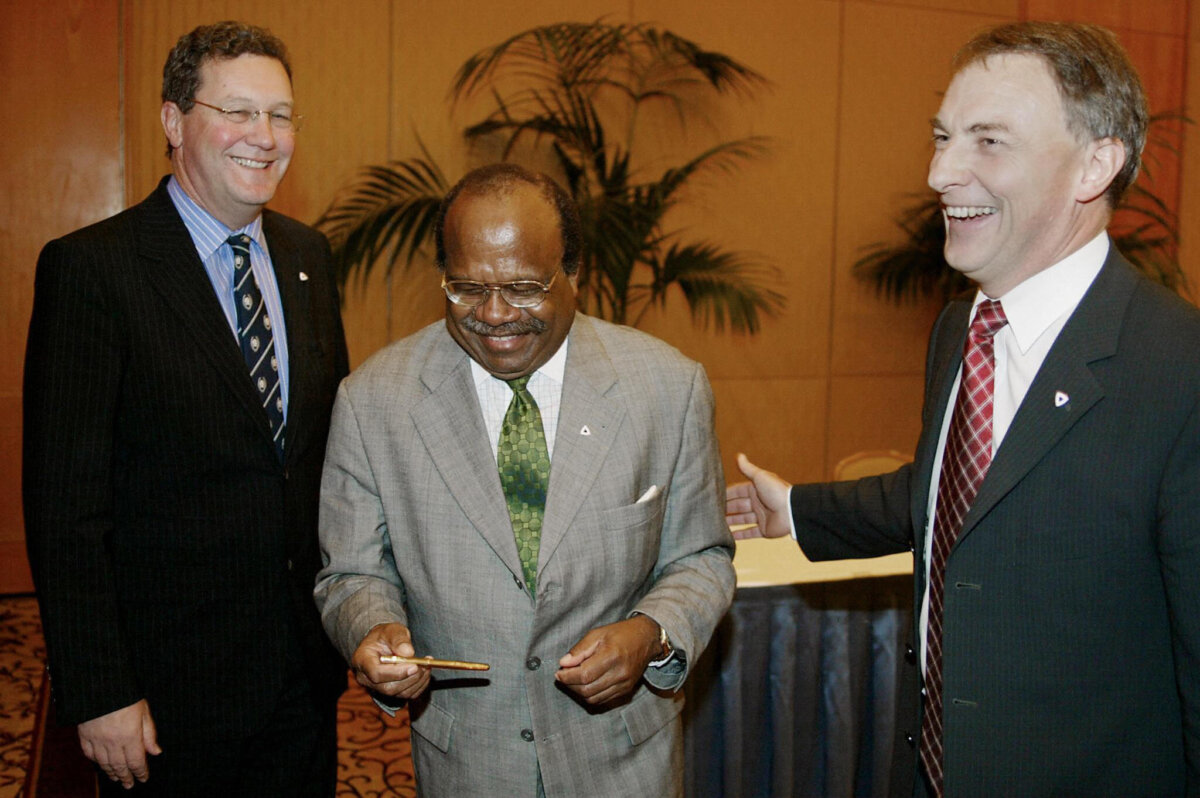
Australia was one of the signatory witnesses of the 2001 Bougainville Peace Agreement and, as a result, has been a key financial supporter of the ABG to the tune of some AU$30 million ($20 million) per year for education, infrastructure, and health programs. Also, New Zealand, which is integrating much of its defense force operations with Australia, would automatically become engaged if Canberra decided to commit to helping police a transition from oversight by Papua New Guinea to full independence.
Australia and New Zealand, too, would almost certainly commit strongly to helping transform Bougainville’s security forces into a new national armed forces, but it is likely, if the People’s Alliance Party of Fijian Prime Minister Sitiveni Rabuka survives the next elections—to be held sometime between June 24, 2026, and Feb. 6, 2027—would push the Pacific Islands Forum or Fiji unilaterally into providing guidance in creating the new Bougainville defense force.
Whatever happens, the independence of Bougainville will be strategically critical, as the region was seen to be during World War II, particularly when Australian, New Zealand, and U.S. troops fought Japan for control of the Solomon Islands peninsula, as well as for Papua New Guinea, as the critical southern starting point for control of the Western Pacific.
The situation, however, is now far more complex than it was during World War II, quite apart from the regional hegemonic competition between the United States and PRC. The economic interests of investor states and local post-colonial governments are likely to be the driving factor in determining the fates of Bougainville and West Papua. And the U.N. has already made its position clear: It will not support meaningful debates on the issues.
Views expressed in this article are the opinions of the author and do not necessarily reflect the views of The Epoch Times.
 Friends Read Free
Copy
Facebook
Tweet
Friends Read Free
Copy
Facebook
Tweet