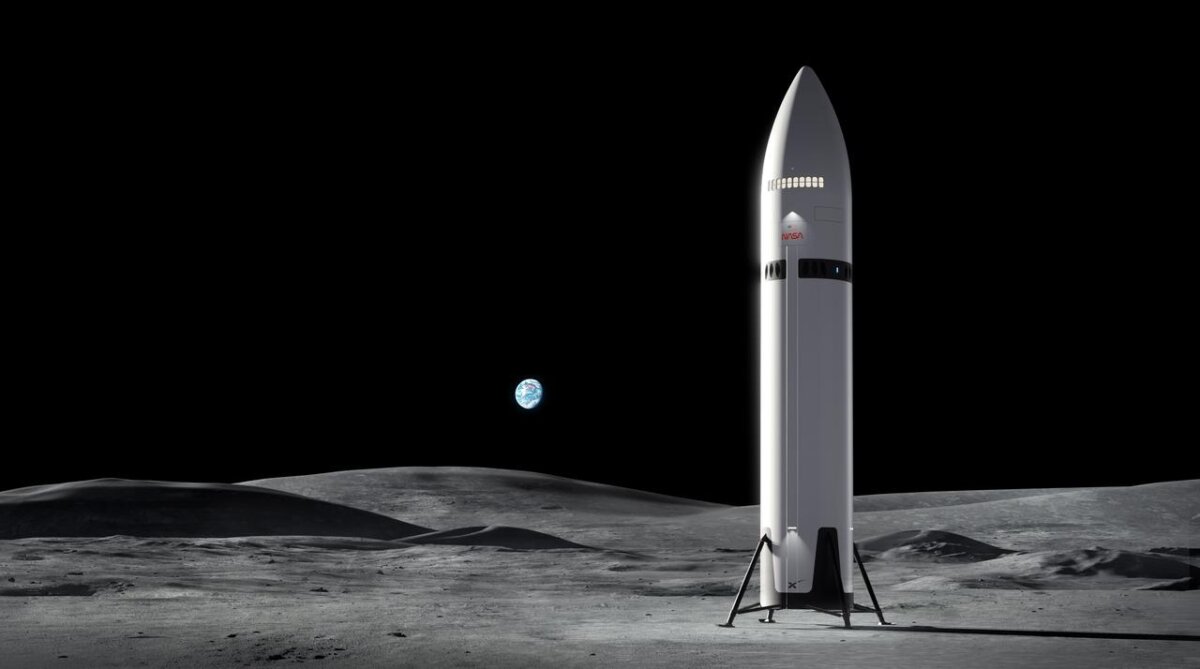

Elon Musk announced that he will be turning SpaceX’s immediate focus away from Mars and toward an effort to establish a city on the moon.
“SpaceX has already shifted focus to building a self-growing city on the Moon, as we can potentially achieve that in less than 10 years, whereas Mars would take 20+ years,” the SpaceX owner said on the social media platform X.
He clarified that the greater mission of his spacefaring company to “extend consciousness and life as we know it to the stars” remains the same, but he noted that the moon was far more accessible than the Red Planet, and expanding civilization on Earth’s closest neighbor would be faster.
“It is only possible to travel to Mars when the planets align every 26 months (six month trip time), whereas we can launch to the Moon every 10 days (2 day trip time),” he said. “This means we can iterate much faster to complete a Moon city than a Mars city.”
That being said, SpaceX would still continue to pursue ambitions to build a city on Mars. Musk said he anticipates that to begin in about five to seven years.
Musk’s decision further aligns his company with goals mandated by Congress, which were not just to beat communist China back to the moon by 2030 but to establish a human presence either on the lunar surface or in lunar orbit by 2028.
That mandate was made clear to Jared Isaacman as he appeared before members of the Senate on his way to becoming NASA’s latest administrator. President Donald Trump has also expressed his vision for the United States to return U.S. astronauts to the moon and secure the first manned landing on the surface of Mars. Isaacman expressed confidence that both goals could be pursued simultaneously, while meeting Congress’s deadline.
SpaceX is well underway with its lunar projects. Its human lander system, a Starship variant specifically designed to land astronauts on the lunar surface, was picked by NASA for Artemis III—the first crewed landing mission in more than 50 years, slated to launch by 2028.
However, slow progress with SpaceX’s Starship and super-heavy booster sparked then-acting NASA Administrator Sean Duffy to reopen competition for the Artemis III spot, giving Blue Origin and its Blue Moon lander an opportunity to compete for the honors. Isaacman supported that decision.
Musk has expressed confidence that SpaceX’s lunar lander will win the race and be ready in time.
In the meantime, NASA’s first push back to lunar space, Artemis II, is currently slated for launch in early March.
 Friends Read Free
Copy
Facebook
Tweet
Friends Read Free
Copy
Facebook
Tweet