Department of State warned about the Chinese Communist Party's strategy of military–civilfusion, which eliminates “barriers between China’s civilian research and commercial sectors, and its military and defense industrial sectors.”
Department of State, the Chinese regime’s military-civilfusion strategy eliminates “barriers between China’s civilian research and commercial sectors, and its military and defense industrial sectors.”
The Pentagon blacklisted DJI as a Chinese military company in 2022, noting that the Chinese regime requires all Chinese companies to allow it to use them as part of its military-civilfusion strategy.
State Department states on its website that China wants to become the first nation to transition to “intelligence warfare” via military-civilfusion, a strategy that includes theft to acquire advanced technologies, which include big data.
According to the Department of State, the CCP's military-civilfusion strategy eliminates "barriers between China's civilian research and commercial sectors and its military and defense industrial sectors."
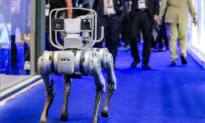
The lawmakers pointed out that Unitree has also taken part in military-civilfusion programs and operates from a military-civilfusion hub in the city called Hangzhou High-Tech Zone.
The U.S.
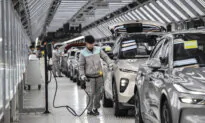
John Moolenaar (R-Mich.), chair of the committee, said CATL is “a key player in China’s military-civilfusion strategy,” which poses risks to U.S. investors and the national security of the United States.
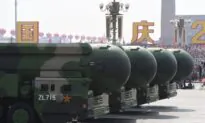
"If fully evaluated, Beijing's expenditures via military-civilfusion and dual-use technology investments prove even the much larger $711 billion figure underestimates China's military investments," the report reads.
In other words, Friedman concluded that the Pentagon had presented enough evidence to call DJI a “military-civilfusion contributor” to China’s defense industrial base.
He described defense spending as a rigid expenditure tied to regime security, deterrence in the Taiwan Strait, military–civilfusion in technology, and competition with major powers.
The lawmakers also raised concerns over Beijing's "military-civilfusion" strategy, under which there is no separation between civilian products and industries and military research and development.
Kruly, who is handling the case, stated that Beihang University is known for supporting the Chinese regime’s “military-civilfusion” strategy, which involves Beijing advancing its military modernization by harnessing civilian-developed research and technology
He said the Chinese regime’s strategy of “military-civilfusion” was to blame, as it requires civilian companies in China to directly contribute to the regime’s military and intelligence activities.
Other names for this type of warfare include asymmetric, death by a thousand cuts, hybrid, military/civilfusion, unconventional, and war by other means.
In 2017, Jin was promoted to executive deputy director at the Office of the Central Military Civilian Integration Development Commission, guiding the implementation of Beijing's military-civilfusion strategy aimed at enhancing communist China’s military
"Chinese law not only facilitates military-civilfusion, it mandates cooperation between Chinese companies and state security agencies," the foundation said.
One of these is the China-made Ascend 910C AI chip by Huawei—a Chinese company that focuses on dual-use technology under the Chinese Communist Party's national strategy of “military-civilfusion” to bolster technological advancements for its People’s
Commentary
Under China's "military-civilfusion" (MCF) strategy, its vast commercial shipping fleet can substantially augment the People's Liberation Army's (PLA’s) sealift capabilities, especially for large-scale operations such as a potential Taiwan
Raja Krishnamoorthi (D-Ill.) said the seven firms are likely contributors to the People’s Liberation Army (PLA) under China’s military-civilfusion (MCF) strategy.
Military-civilfusion remains central to the CCP’s strategy, enabling private-sector and academic AI breakthroughs to be directly absorbed into military research and weapons development.
While U.S. academic culture is an open one that values research sharing for purposes of information integrity and advancement of the common good, the Chinese regime dictates a "military-civilfusion" strategy wherein all advancements are subject to the
It is integrated into the Chinese regime's military-civilfusion, where civilian companies and research institutes are utilized for military purposes. It also hosts defense laboratories.
Citing the Chinese regime's military-civilfusion strategy, they argued it should be fully expected that the H20—and the AI models it enables—will be used for military applications.