Bank of Shanghai's largest shareholder is Shanghai Lianhe Investment, founded and controlled by Jiang Mianheng, the son of former CCP leader JiangZemin.
The goal of “two 100 years,” first proposed by former Party leader JiangZemin in 1997, refers both to the 100th anniversary of the founding of the Party and the founding of the People's Republic of China.
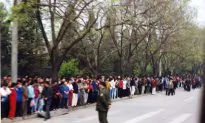
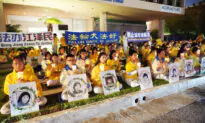
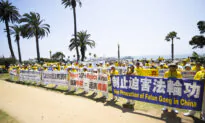
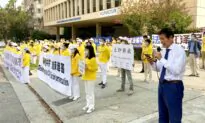
Viewing the immense popularity of Falun Gong as an ideological threat to its atheistic authoritarianism, then-CCP leader JiangZemin in 1999 unilaterally launched a campaign to demonise and eliminate the practice and its practitioners.
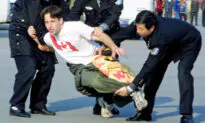
In 1999, practitioners became the target of a nationwide persecution campaign launched by former Chinese leader JiangZemin, who established the Gestapo-like office known as the “610 Office” to execute his campaign of elimination.
An Image Game of the Princelings
Shi explained that it started when former CCP (Chinese Communist Party) leader JiangZemin encouraged Chinese princelings (children of CCP founding cadres and veterans of the Red Army) to engage in entertainment industries
The investigation led to the arrest of three top officials who were members of the Shanghai Gang, a political faction led by former Chinese leader JiangZemin.
It’s too early to conclude what the intention is, but it's possible that Xi wanted to use the scandal to direct his dissatisfaction at JiangZemin, he said.
The anti-Xi screed, posted on Jan. 19 on the China-sponsored 6park site, appears to be the work of several members of the Communist Party’s Shanghai Gang faction, headed by former leader JiangZemin.
February 16, 2022By Gatestone Institute, Gordon G. Chang
Perceiving the influence of the meditation system as an ideological threat to its authoritarian rule, then-CCP leader JiangZemin initiated a violent persecution campaign in July 1999 to eliminate Falun Gong.
In the 2000s, former CCP leader JiangZemin called for the Party to represent the entrepreneurial class, who were once considered enemies of the people. More recently, CCP branches in private business have increased dramatically.
Zhao most recently headed the Central Commission for Discipline Inspection, the driving force behind Xi's campaign to rid the Party of political enemies—namely officials still loyal to former CCP leader JiangZemin.
Fearing its immense popularity, on July 20, 1999, then-Party leader JiangZemin launched a campaign to smear Falun Gong to justify a campaign of violence against them.
The practice’s popularity drew the ire of former Chinese regime leader JiangZemin, who viewed it as a threat to both his rule and the Communist Party’s ideologies.
During the same time period, the Chinese communist regime saw the net number of countries more susceptible to its influence grow to 67 in 2012 from 33 in 1989 under former Chinese leaders JiangZemin and Hu Jintao.
After Xi came to power in November 2012, Wang became the chief architect of an anti-corruption campaign that felled many of Xi's political rivals, such as officials loyal to former Party leader JiangZemin.
The third phase was ruled by Deng Xiaoping, JiangZemin, Hu Jintao; and two other CCP leaders were subsumed under Deng. The fourth phase is currently ruled by Xi.
Former CCP Chairman JiangZemin launched a nationwide persecution against Falun Gong on July 20, 1999. When the persecution first began, there were around 70 to 100 million people practicing Falun Gong in China, Ye said.
They all know that there is infighting between Xi Jinping and a faction aligned with past CCP leader JiangZemin.
They chose to do nothing so to make the central authorities the target of public anger.
With the number of practitioners greater than the number of CCP members at the time, then-CCP leader JiangZemin began a campaign to eradicate Falun Gong.
In contrast to Xi Jinping's order that out-of-school institutions must register as non-profits, education policies under the former CCP leader JiangZemin were to promote the "industrialization of education," in which the products of education had to