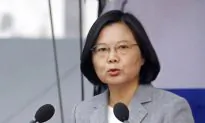
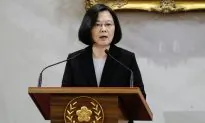
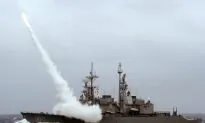
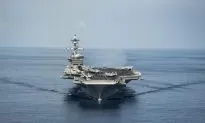
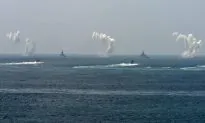
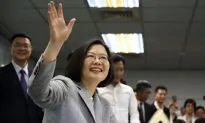
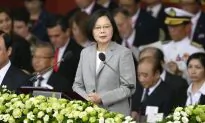
TAIPEI—Taiwanese President TsaiIng-wen called on China on Oct. 10 not to be a "source of conflict" and pledged to boost the island's defenses against Beijing's military threats.
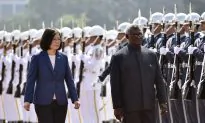
(Sam Yeh/AFP/Getty Images)
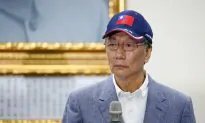
Some analysts believe that Gou's ties with Beijing could turn off ordinary voters, who are likely to have to choose between incumbent President TsaiIng-wen of the independence-leaning Democratic Progressive Party and a KMT
Taiwan’s President TsaiIng-wen, reelected last January, has taken a hard line against threats posed by the Chinese Communist Party (CCP), while the island has deepened its cooperation with the United States—prompting the regime to escalate its warmongering
However, some DPP politicians, including current president TsaiIng-wen, hold a more moderate position and prefer the status quo in relations with Beijing.
China's hostility towards Taiwan has grown since TsaiIng-wen from the pro-independence Democratic Progressive Party won presidential elections on the island in 2016.
TAIPEI —Taiwan President TsaiIng-wen vowed to boost national security, saying her government won't submit to pressure from the Beijing regime or its attempts to assert sovereignty over the self-ruled island.
China's military has been particularly focused on democratic Taiwan recently and is nervous President TsaiIng-wen wants to move the island towards a formal declaration of independence, a red line for China, which views Taiwan as its territory.
Palau, for example, has seen its important tourism industry hit hard after Beijing banned Chinese tour groups from visiting the country, following its hosting of Taiwanese President TsaiIng-wen in November 2017.
Relations between China and Taiwan deteriorated since the island’s President TsaiIng-wen, of the independence-leaning Democratic Progressive Party, swept to power in 2016.
But former President Donald Trump also moved the dial in Taiwan’s direction, by accepting a congratulatory phone call from Taiwanese President TsaiIng-wen after he won the 2016 election.
For example, after Palau hosted Taiwanese President TsaiIng-wen in November 2017, Beijing banned Chinese tour groups from bringing mainland citizens to visit the island. Palau’s economy heavily relies on its tourism industry.
The island’s president, TsaiIng-wen, responded with a strongly worded rebuttal to Beijing’s desire for unification.
The issue of Taiwan’s sovereignty is among China's most sensitive issues.
Taiwan’s fourth democratically-elected, President TsaiIng-wen, just completed four days of “transit” in the United States, visiting New York City and Denver to huge acclaim.
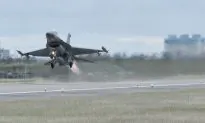
Taiwan’s President TsaiIng-wen said last week the island will increase its defense budget every year to ensure it can defend its sovereignty, including resuming domestic development of advanced training aircraft and submarines.
Taiwan's President TsaiIng-wen said last week the island will increase its defense budget every year to ensure it can defend its sovereignty, including resuming domestic development of advanced training aircraft and submarines.
“This marks the first time the terms ‘Taiwan’ and the ‘United States’ appear in equal footing on the name of an organization together,” Taiwan’s president TsaiIng-wen said in an announcement.
Taiwan Election: A Rejection of the CCP
Going hand in hand with the CCP’s Hong Kong protest disaster is the landslide re-election of anti-unification President TsaiIng-wen.
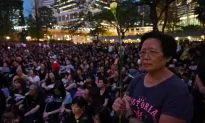
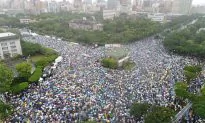
Ahead of vigils held at Liberty Square in Taipei City, Taiwan President TsaiIng-wen posted on Facebook on June 4: “The Chinese government not only did not plan to repent for the past mistakes, but it also continued to cover up the truth.”
Taiwan President TsaiIng-wen voiced her support for the rally during the opening ceremony of an international women’s association meeting early on June 23.
“I believe the rally can awaken Taiwan society,” she said.
I think this is a huge mistake,” said Taiwan President TsaiIng-wen, commenting on Kiribati’s decision to switch diplomatic recognition to Beijing during a Sept. 20 press conference.
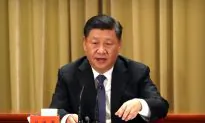
Xi’s speech quickly drew rebuke from Taiwan’s President TsaiIng-wen, as well as lawmakers from two major political parties in Taiwan: the Kuomintang (KMT), which has a Beijing-friendly platform, and the Democratic Progressive Party (DPP), which has historically