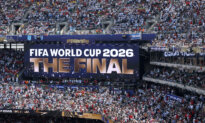

Well before the announcement that the 2026 FIFA World Cup championship would be decided at MetLife Stadium later in July, there was already a rich soccer history in the New Jersey Meadowlands.
The groundwork laid by the North American Soccer League (NASL) in the 1970s paved the way for the United States to host its first World Cup tournament in 1994.
Originally, the fledgling professional soccer league had set a goal for the 1986 World Cup to be decided stateside. Colombia was originally selected by FIFA to host the World Cup, but due to economic reasons was unable to do so. Mexico was eventually selected as the host nation.
However, eight years later, it was a mission accomplished by all who worked to take professional soccer to the highest level stateside. The 1994 World Cup was played across nine cities throughout the United States, and the final game was held at the Rose Bowl in Pasadena, California.
And now, as a champion will be crowned again on American soil, a great deal of gratitude is owed to those who began the process.
Where the parking lots sit at the east end of MetLife Stadium, there once was the 77,000-plus-seat Giants Stadium. Opened in 1976 as the home of the NFL’s New York Giants, the stadium would host the NASL’s Cosmos (shortened from Cosmopolitans) for one year, through their 1984 season, the league’s final year.
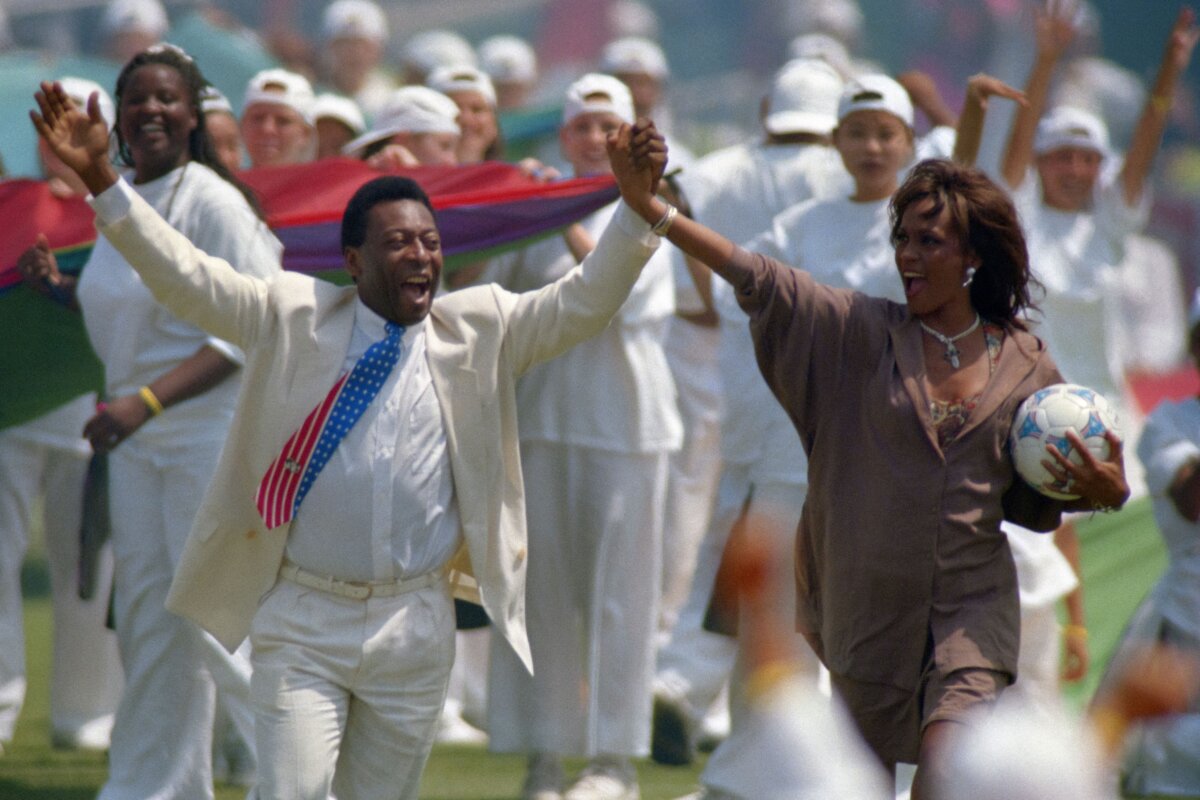
Few could have predicted the incredible, albeit brief, success of introducing soccer on a grand scale. The key to soccer’s popularity surge was the Cosmos, financially backed by Warner Communications, which lured Pelé, then regarded as the greatest soccer player on the planet, out of retirement.
Freshly retired from a career with the world’s premier soccer club—Santos, in his native Brazil, Pelé inked a three-year, $4.75 million personal services contract with Warner Communications. From then on, the soccer boom began.
“The best ever is Pelé. He is just ahead of Messi. I’ve never seen a player like Pelé. I played with him at the New York Cosmos, and you would give him the ball and just not see him again because he was too fast. Pele was all instinct,” Franz Beckenbauer, a former Cosmos teammate and two-time World Cup winner with then-West Germany, said the day after Pelé died.
By 1975, with 20 teams, the sporting public was enamored of the NASL and its growing list of international superstars who had taken up residence in major American cities.
CBS broadcast Pelé’s Cosmos debut live on June 15. Ten million viewers tuned in, many watching a soccer game in its entirety for the very first time. With a roster stacked with Pelé leading the offense and Beckenbauer regarded as the best defender in the world, the Cosmos went on a dominant run in the NASL, similar to what the New York Yankees experienced in the 1990s.
Fans flocked to the Meadowlands to see the Cosmos, averaging more than 40,000 through the turnstiles for three consecutive seasons.
From 1977 to 1982, the Cosmos saw at least 28,000 fans enter Giants Stadium for home games.
Professional soccer was thriving, and all along was hoping to influence FIFA to bring their World Cup to the United States. That was among the NASL officials’ top goals.
“What people too easily overlooked was that the NASL’s mission was to build the game and then at the end of it, make some money for the owners,” Cosmos president Clive Toye told the British newspaper The Guardian in 2022.
“The NASL as a crusader was a magnificent success. As a business, it eventually failed as a single entity. But, what it left behind is a knowledge of the game that didn’t exist in this country before, and enthusiasm for the game which never existed before.”
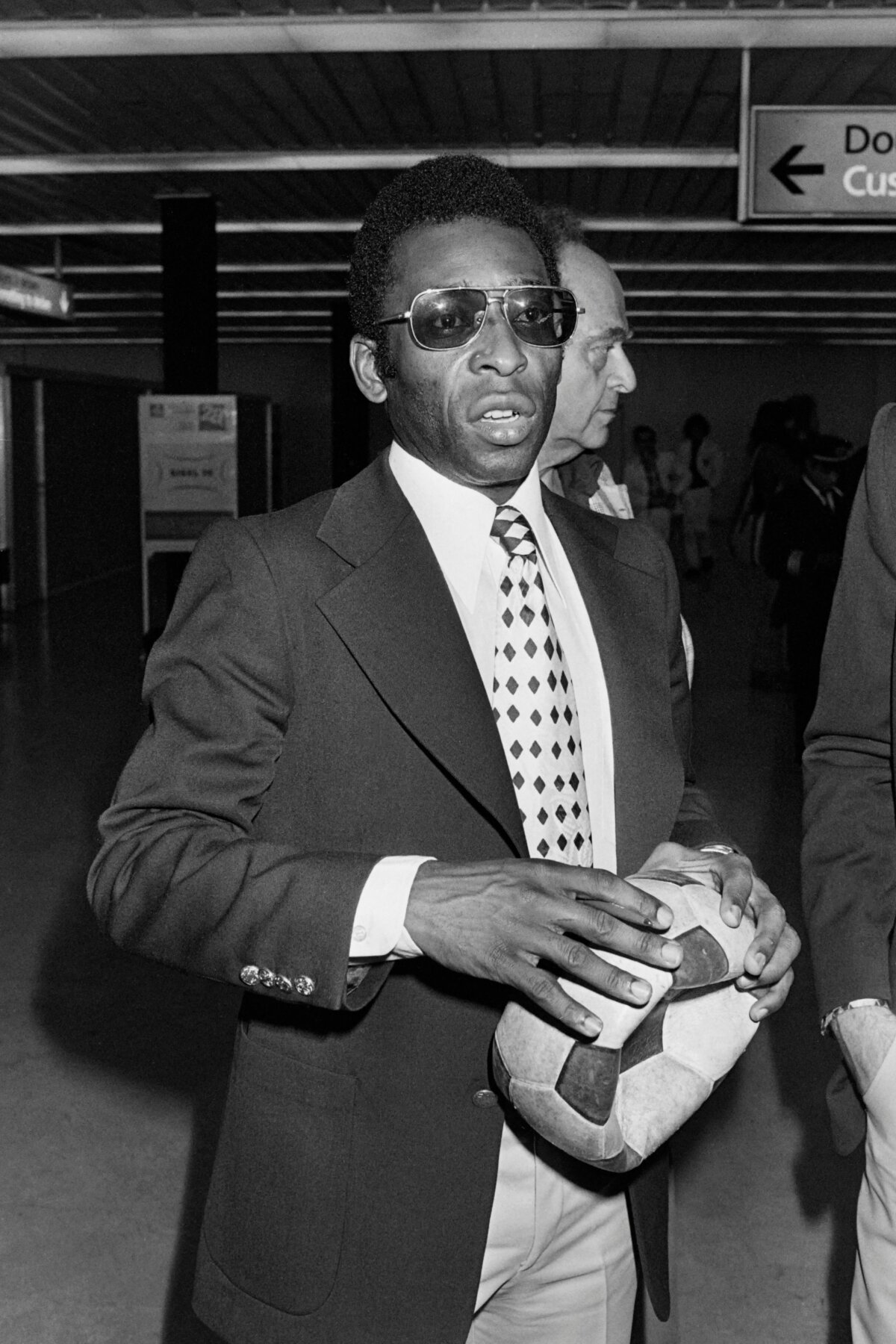
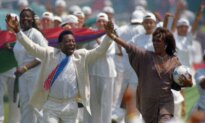
In the 1977 NASL season, Pelé’s final run as a player, the last game of his career, saw him play for both New York and Santos at Giants Stadium. With many celebrities on hand, Muhammad Ali and Mick Jagger front and center, Pelé played for the Cosmos in the first half and finished with Santos in the second half.
The league’s popularity peaked during an August 1977 playoff game between the host Cosmos and Fort Lauderdale Strikers.
The announced crowd of 77,691 was the largest attendance for a soccer game in the United States at that time. In an interview with the New York Times in August 1977, Pelé expressed his appreciation for the support he received from American soccer fans.
“I can’t explain how I feel,” the Brazilian star said. “When we draw 62,000, I cried like a baby. This I can’t believe. It’s one of my biggest thrills. You can bring Maracana (the world’s largest stadium in Rio de Janeiro) here, and you’ll probably fill it with people.”
When the World Cup tournament climaxes on June 19 at MetLife Stadium, it’s fitting to remember soccer’s humble origins, which sprouted on the same property a half-century ago.
Thanks to Pelé’s persistence in passing along his love of the game, seven miles west of Manhattan, soccer’s biggest draws, Lionel Messi and Cristiano Ronaldo, will be among the next group to pass on a stronger appreciation of the sport stateside.
 Friends Read Free
Copy
Facebook
Tweet
Friends Read Free
Copy
Facebook
Tweet