
Authorities abandoned rescue operations and shifted to recovery Wednesday at a paper mill in Longview, Washington State, after a second injured worker died and nine employees remain unaccounted for—bringing the presumed death toll to 11.
Washington Gov. Bob Ferguson told a press conference on Wednesday: “We’re bracing ourselves for this being the deadliest industrial tragedy in modern Washington state history.”
Contamination from the rupture entered the Columbia River, the largest body of water in the Pacific Northwest, but further evaluations will determine the “scope and extent of that environmental impact,” Cowlitz Fire and Rescue Chief Scott Goldstein told reporters.
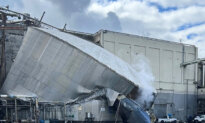
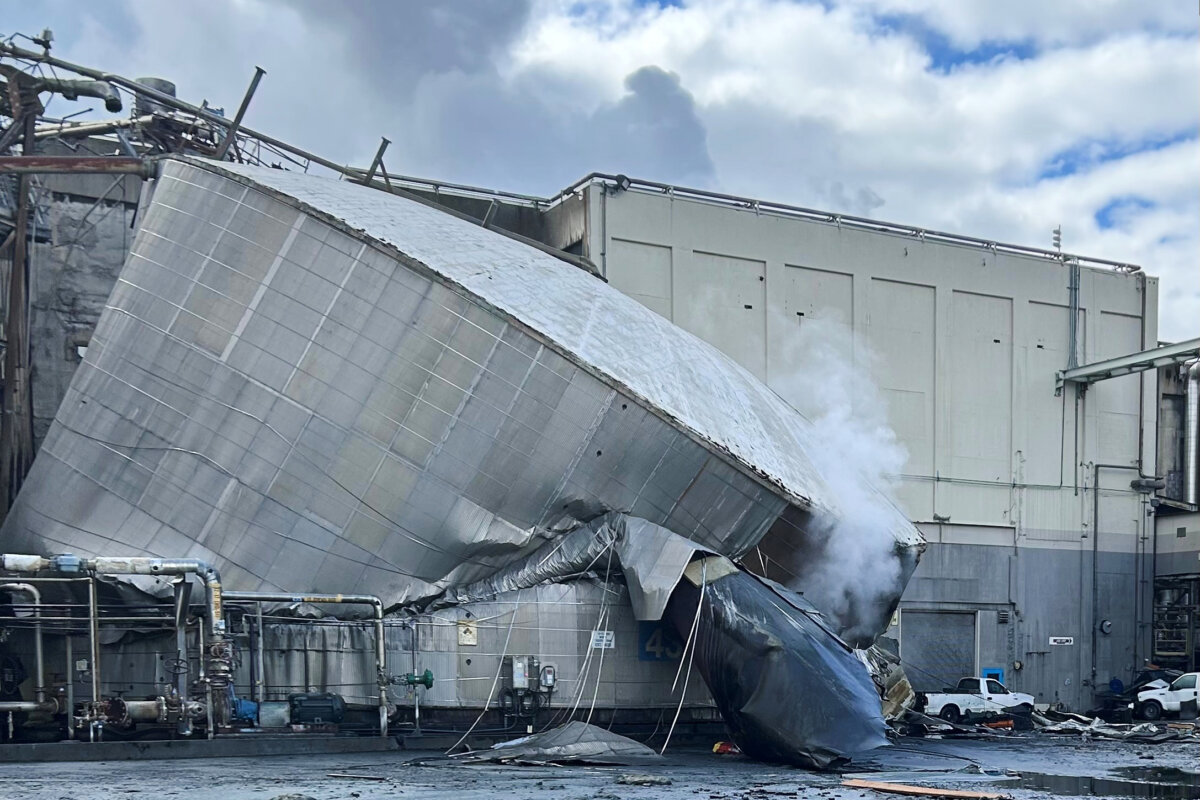
The search was delayed over concerns that the ruptured tank might collapse further and leak more of the highly destructive liquid. Officials said they would only work during daylight hours because of the dangers. Authorities said they had not yet determined where all nine missing workers were within the facility, or how long the recovery would take.
The disaster began early Tuesday morning when a tank holding a million gallons of white liquor—a corrosive mixture central to the paper-making process—imploded at Nippon Dynawave Packaging Co. in Longview, a city along Washington’s southern border with Oregon.
At least one death was reported at the time, with nine others unaccounted for, authorities said at the time. The cause remains unclear Wednesday and is under investigation. Federal workplace safety regulators are expected to open a formal inquiry into the cause of the implosion.
As evening fell, rescue workers suspended recovery operations at the facility due to the ongoing threat of exposure to the corrosive chemical. A spokesperson for PeaceHealth St. John Medical Center in Longview confirmed it received nine patients from the incident, one of whom was deceased. Four others were transferred to the Legacy Oregon Burn Center in Portland.
“This was a blast. We’ve used the word explosion. We’ve used the word implosion. I’ve used the word failure. Indeed, there was a rupture, a failure, a blast,” Goldstein said Wednesday. “All of those to us mean the same. It’s not why it happened. It’s the damage that we observe.”
The white liquor spilled into a drainage ditch at the facility following the rupture.
“I know there’s a lot of questions about how all of this happened and I want to assure you that we will all continue to [apply] pressure to get answers to those questions,” U.S. Sen. Patty Murray told a Tuesday evening press conference. “This community deserves that.”
The Longview catastrophe is the latest in a string of deadly industrial accidents to strike American workers over the past 12 months.
On the same day the Washington vat ruptured, authorities in Southern California were managing a separate chemical emergency: an overheating industrial tank containing highly flammable methyl methacrylate at a GKN Aerospace facility in Garden Grove that had prompted thousands of residents to evacuate. All evacuation orders were lifted Tuesday night after the chemical threat was resolved. The Longview scene offered no equivalent relief.
In April 2026, a release of hydrogen sulfide occurred at a silver catalysis plant owned by Ames Goldsmith Corporation in Institute, West Virginia, killing two workers and injuring 30.
Last October, more than 24,000 pounds of explosives detonated at a Tennessee explosives plant, killing 16 employees. The blast was so powerful that it registered as a 1.6-magnitude earthquake.
Two months before that, an explosion at a U.S. Steel plant in Pennsylvania killed two workers and injured more than 10 others, one of whom was trapped in rubble.
 Friends Read Free
Copy
Facebook
Tweet
Friends Read Free
Copy
Facebook
Tweet