
At least four firefighters recently perished combating wildfires in what has become the most active year for wildfires in a decade, according to the National Interagency Fire Center.
Three of those who died—Emily Barker, Nick Hutcherson, and Sydney Watson—were among five firefighters from the interagency Rifle Helitack crew out of Colorado who were involved in a burnout during initial attack operations on the Knowles wildfire in western Colorado on June 27. A fourth firefighter, Nathan Matthews, 43, of Lincoln, Nebraska, died from sustained burn injuries on July 24.
“This is another heartbreaking loss for our wildland fire family,” said U.S. Wildland Fire Service Director Brian Fennessy. “We mourn the loss of Nate while continuing to grieve the deaths of Emily, Nick and Sydney. Our hearts are with their families, friends, crewmates and everyone impacted by this tragedy. We remain committed to supporting those affected and honoring the legacy of all four firefighters who made the ultimate sacrifice in service to our nation.”
While the Knowles fire is no longer an active incident, it was one of 42,157 fires that have been reported across the United States this year as of July 26.
This wildfire tracking cooperative within the Department of the Interior, composed of the U.S. Fire Administration, U.S. Forest Service, U.S. Wildland Fire Service, National Association of State Foresters, and National Weather Service, has been at its highest level of national preparation since July 18.
It stated that 25,310 firefighters divided into 565 crews, 1,501 engines, 141 helicopters, and 27 complex incident management teams were attempting to suppress or contain 90 large uncontained fires across 13 states as of July 26, 10 of which were added on July 25.
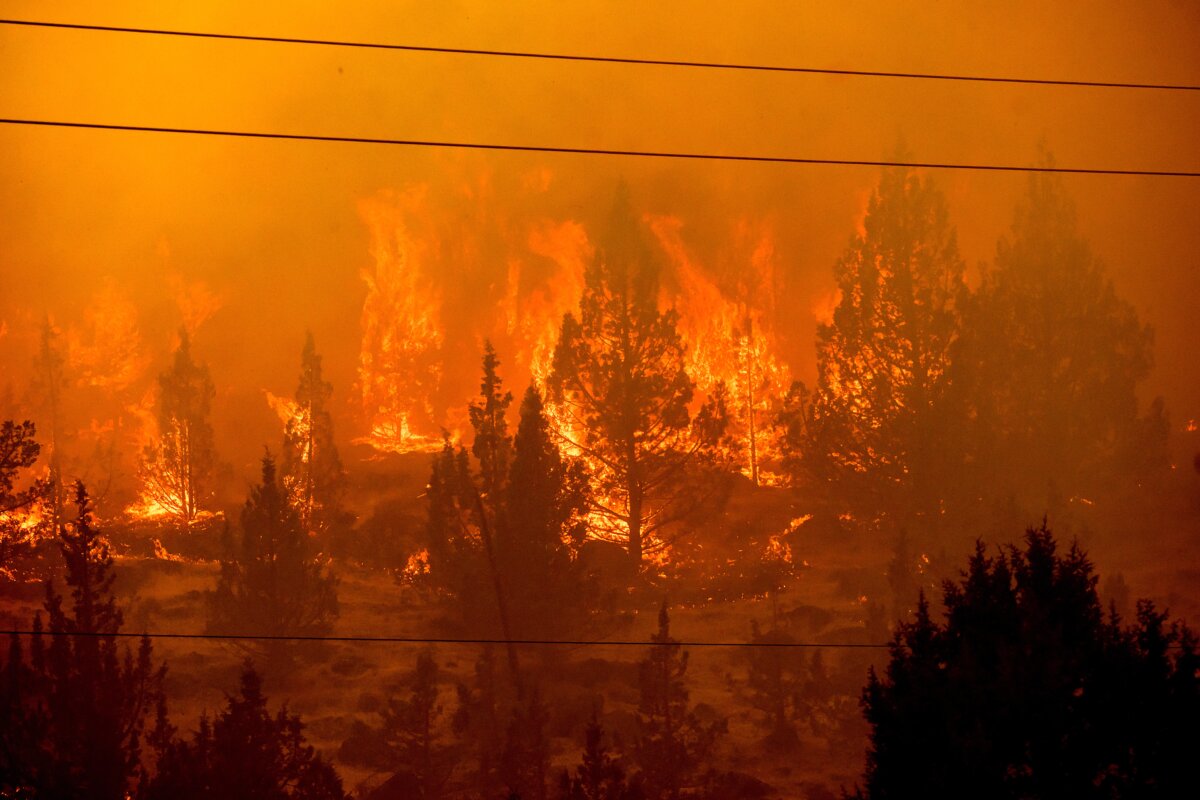
Oregon leads the nation with 21 reported large fires, followed by Minnesota and California at a distant second with six each. Washington has reported five large fires; Idaho has reported three; Florida, Colorado, and Louisiana have reported two each; and Utah, Wyoming, South Carolina, Virginia, and Montana have reported one each.
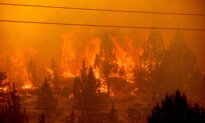
The Oregon fires alone have resulted in clouds of smoke beginning to stretch northeast across the lower 48, triggering air quality alerts for significant portions of Oregon, Idaho, Washington, and Montana.
“Air Quality Index (AQI) has been ranging from Unhealthy to Hazardous across portions of E Oregon/SW Idaho due to wildfire smoke,” the National Weather Service office in Boise said on X. “Limit your time outside, wear a mask, or move indoors.”
As of July 26, only six of these fires have been contained, and 1,865,931 acres are currently affected by large, uncontained wildfires. But these are just the latest numbers from what has been the most active year for wildfires in a decade.
From Jan. 1 to July 24, the National Interagency Fire Center reported 41,984 large fires across the United States. This was the largest number within that timeframe for at least the past 10 years, topping 2025’s record 39,279.
The 10-year average is 32,869 fires per year.
However, year-to-date, 2026 has not been the most destructive. Although 4,050,260 acres have burned nationwide in all fires, the most destructive year for this timeframe remains 2022, which saw 5,571,855 acres burned.
The National Interagency Fire Center reported that 159 fires faced “initial attack activity,” and the Western Fire Chiefs Association reported more than 270 active fire incidents of various sizes and containment levels across the country as of July 26, with most of them concentrated west of the Missouri River.
The immediate weather forecast also does not appear to help the situation.
“Widespread elevated to critical conditions will develop again today across the Inland Northwest into the northern Rockies and northwestern Great Basin today from westerly winds 15 [mph to] 25 mph with gusts 25 [mph to] 35 mph amid relative humidity of 5 [percent to] 20 percent,” the fire center said on July 26. “These breezy and dry conditions will spread into the central Great Basin later today, as well. Hot temperatures near 100 [degrees] F will continue in much of the Great Basin, central Rockies, and northern Rockies east of the Divide with low afternoon humidity.”
“Farther east, breezy conditions and low relative humidity and hot temperatures will support elevated fire weather conditions across the southern High Plains as relative humidity falls as low as 15 percent.”
Some rain was also expected in the West, particularly in the northwest along with monsoons to the southwest; however, storms in Montana and Wyoming could cause more fire ignitions.
The only location in which the fire center said storms could temporarily ease conditions was Florida.
 Friends Read Free
Copy
Facebook
Tweet
Friends Read Free
Copy
Facebook
Tweet