
The Arizona Supreme Court declined to grant prosecutors’ request to send a 2024 indictment in the so-called fake electors case back to a state grand jury after a lower court threw it out.
The ruling in the case, known as Arizona v. Ward, was dated June 2, but only became public on June 4.
In it, the Arizona Supreme Court denied the state’s petition for review in a brief docket entry. No reasoning was provided.
This is a significant procedural win for the defense, but the decision is not expected to end the prosecution because the state has indicated it will file fresh paperwork to restart the case.
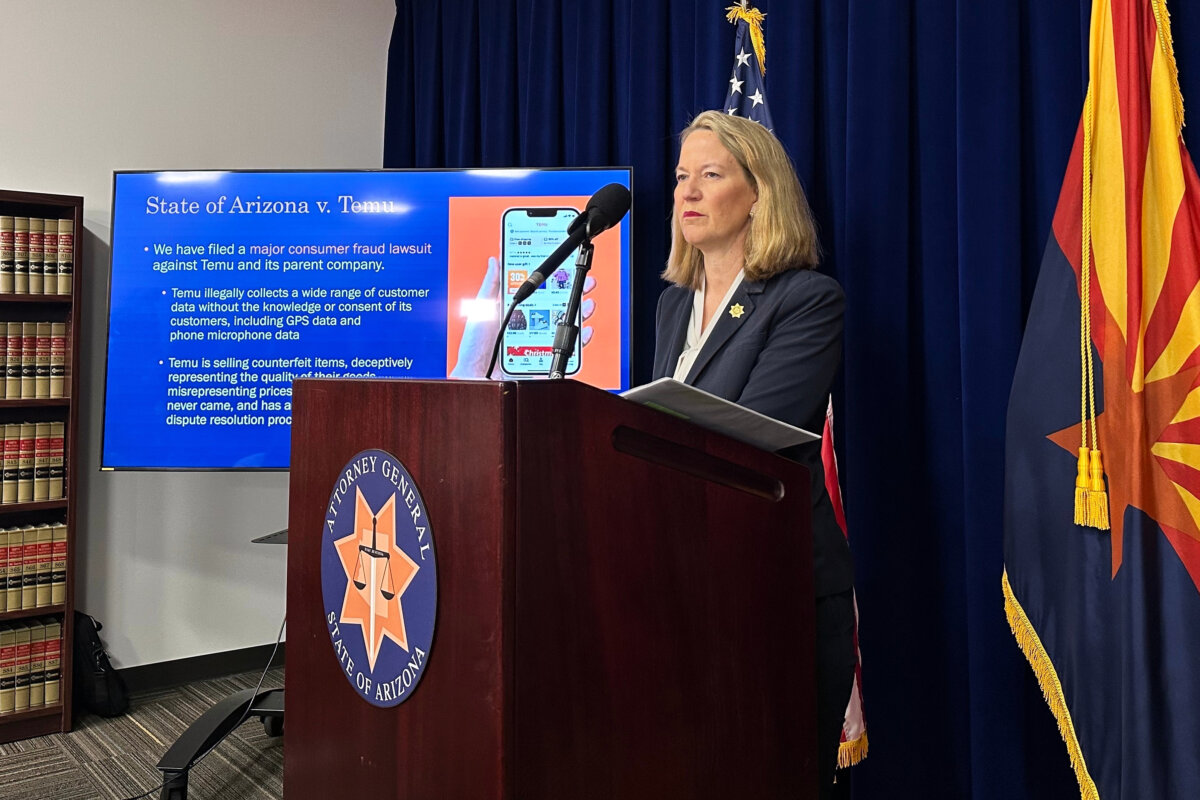
The office of Arizona Attorney General Kris Mayes, a Democrat, said it will again present the case in its entirety to a grand jury instead of concluding the prosecution. The office declined to offer further comment on the new ruling.
The new ruling upholds a Maricopa County Superior Court judge’s decision that held that the original 2024 grand jury proceedings were flawed.
That court held that the case’s original grand jury hadn’t been shown the text of the Electoral Count Act of 1887, a federal law that governs the certification of presidential elections and was invoked by the defense in the case. Congress amended the law in 2022 by passing the Electoral Count Reform and Presidential Transition Improvement Act, which provides that only one official slate of electors may be submitted by each state.
Trump and some of his supporters had urged then-Vice President Mike Pence, a Republican, to use his role as presiding officer over the Jan. 6, 2021, joint session of Congress to block or delay certification of Democrat Joe Biden’s electoral victory. The new law defined the vice president’s involvement in the electoral vote count as purely ceremonial, and provided that he or she did not have the power to affect the count in any way.
The Arizona Supreme Court ruling also upholds the invalidation of the indictment against the 18 defendants and resets the case to the grand jury stage.
One of the defendants is Kelli Ward, a former Arizona state senator who chaired the Arizona Republican Party.
The case itself goes back to the 2020 presidential election, which President Donald Trump alleged was marred by fraud. In the end, then-candidate Biden was declared the winner of Arizona’s 11 electoral votes.
In Arizona and other states, slates of Republican electors signed what they described as “alternate” or “dueling” electoral certificates for Trump. Prosecutions were launched in Arizona, as well as Georgia, Michigan, Nevada, and Wisconsin.
The cases in Georgia and Michigan were dismissed, and in late November 2024, then-special counsel Jack Smith dropped charges in his election interference case against Trump after he won the election earlier that month.
At the time, the Republican electors faced criticism for allegedly usurping the authority of the Democratic electors who were authorized by state election officials to submit electoral certificates based on the official election results.
However, the Republican electors argued that their decision to submit alternate certificates was to preserve Trump’s legal claim for the election as legal challenges to the results made their way through the courts.
Rep. Abe Hamadeh (R-Ariz.) strongly criticized Mayes’s decision to continue pursuing the prosecution.
Mayes is “wasting Arizona taxpayers’ money on her obsessive, Ahab-like pursuit of patriotic Arizonans who served as alternate electors after the stolen 2020 election,” Hamadeh wrote on X.
Tom Ozimek, Savanna Hulsey Pointer, and The Associated Press contributed to this report.
 Friends Read Free
Copy
Facebook
Tweet
Friends Read Free
Copy
Facebook
Tweet