
Democratic voters in two Midwestern battlegrounds will choose nominees over the next nine days in primaries that have become two of the party’s most closely watched contests between its progressive and establishment wings.
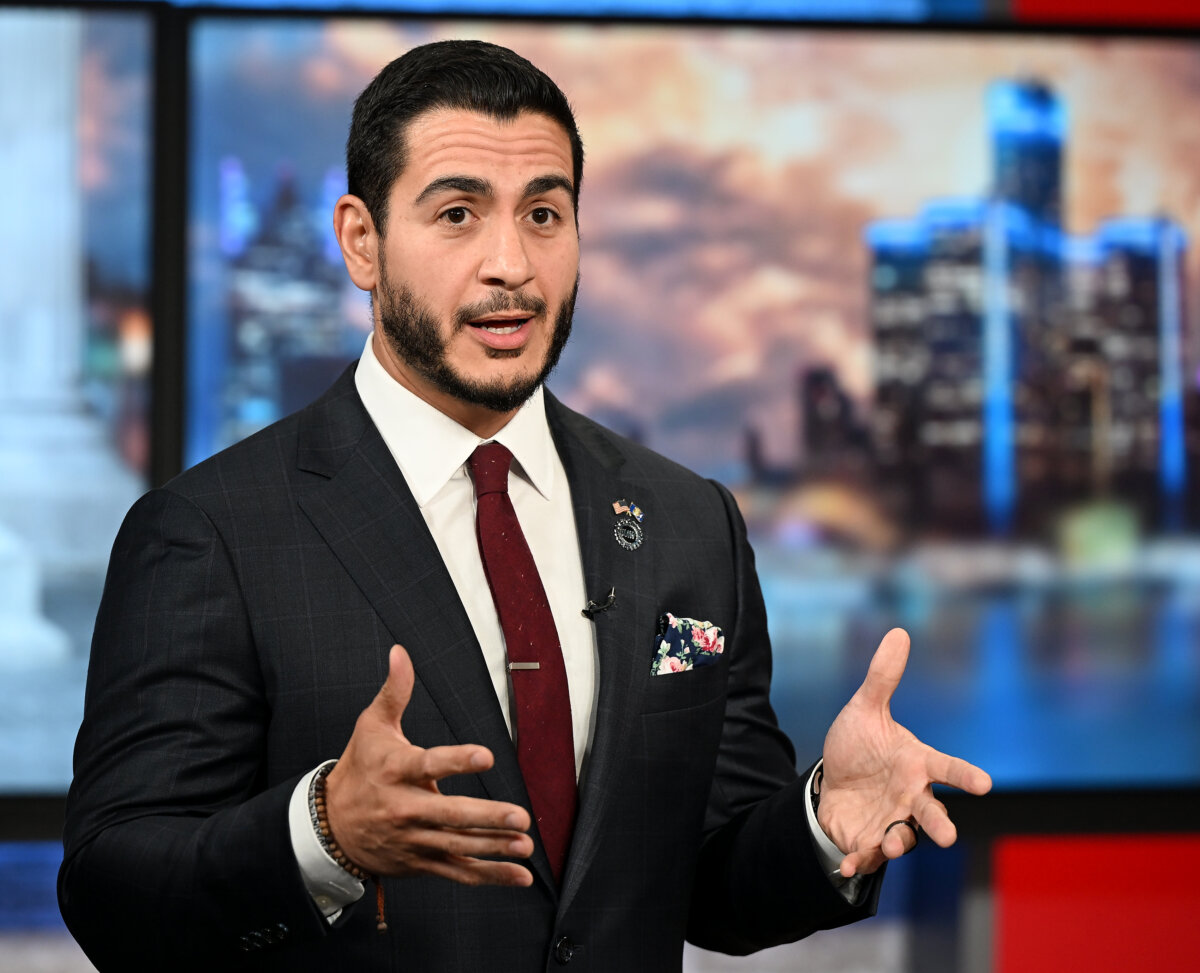
Michigan Democrats vote on Aug. 4 to pick a Senate nominee between former Wayne County health director Abdul El-Sayed and Rep. Haley Stevens (D-Mich.), with the winner facing former Rep. Mike Rogers (R-Mich.) for the seat opened by the retirement of Sen. Gary Peters (D-Mich.).
A week later, on Aug. 11, Wisconsin Democrats choose a nominee for governor from a field led in recent polling by state Rep. Francesca Hong of Madison, a self-described “proud democratic socialist,” with Rep. Tom Tiffany (R-Wis.) the likely Republican opponent.
Sen. Bernie Sanders (I-Vt.), who has endorsed El-Sayed, told NBC’s “Meet the Press” on Aug. 2 that the Michigan race was a test of whether “a candidate fighting for working people can take on tens and tens of millions of dollars of AIPAC money, special interest money,” referring to spending by the American Israel Public Affairs Committee and allied groups against El-Sayed.
“The polling recently looks good, but polls don’t win elections. People do,” Sanders said.
Asked whether democratic socialists can win general elections in purple states, Sanders said he was confident, pointing to primary results this cycle.
“From New York City with Mamdani, and in Colorado, and in California, and in Montana, and I think you’re going to see it in Michigan, people are saying, enough is enough,” he said. Moderator Kristen Welker cited a poll on the program finding that a third of Democrat-leaning voters now identify as democratic socialists.
The two candidates at the center of the primaries describe their own politics differently.
El-Sayed, backed by Sanders and fellow progressive Rep. Alexandria Ocasio-Cortez (D-N.Y.), said at the candidates’ final debate that he is not a socialist, calling himself a capitalist who favors antitrust enforcement against monopolies.
Hong is the self-described democratic socialist in the Wisconsin field. A Marquette Law School poll released last week put her at 38 percent, well ahead of Milwaukee County Executive David Crowley and the rest of the field.
Democratic socialist candidates have recently won mayoral elections in Washington, New York, and Seattle, and candidates aligned with the Democratic Socialists of America (DSA) defeated moderates in House primaries in New York and Colorado this cycle.
Sanders also pointed to Minnesota’s U.S. Senate primary, where he said outside groups were spending against Lt. Gov. Peggy Flanagan the way they were against El-Sayed in Michigan.
In Minnesota—also voting Aug. 11—Flanagan, who has aligned herself with Sanders’s populist movement, faces Rep. Angie Craig (D-Minn.), who is backed by much of the party’s establishment, in the primary to replace retiring Sen. Tina Smith (D-Minn.).
The race has drawn millions of dollars from super PACs and other independent groups backing both candidates. Sanders campaigned with Flanagan in Minneapolis in July, telling supporters, “When you stand up to these billionaires, as you will, and when you defeat them, you will bring hope and inspiration to people all across our country.”
Electability Dispute
The central argument in both states is over who can win in November.
Peters, who endorsed Stevens, has argued that winning a general election in Michigan requires appealing to a broad coalition in the swing state. Peters made the endorsement in July after previously saying he would stay out of the race.
“I wanted to stay out as long as I could and let candidates get out and campaign,” he said in an interview on July 31, after casting his vote for Stevens. “But the one thing about this race in Michigan, this is really ground zero for hopefully taking the majority in the U.S. Senate. So, a lot is at stake right now, we have to win in Michigan, we have to keep it blue, and it was my assessment that Haley Stevens was the best candidate and I felt that I needed to be involved.”
Sanders said that “Gary makes a good point” when asked about previous comments from Peters about appealing to a broad coalition and argued El-Sayed’s health care and wage agenda could draw working-class Republicans and independents. Stevens argued for her own electability and said at the July 27 debate, “I will beat Mike Rogers just like I have beat Republicans four times over.”
In Wisconsin, former Lt. Gov. Mandela Barnes exited the race on July 30, saying, “It’s become very clear who our nominee is going to be,” without specifically naming a candidate.
Past positions on policing have become one part of the electability argument. Hong wrote in a 2020 social media post, “I support defunding the police as a first step towards abolishing the police.” However, she said at the primary’s only televised debate last week that she does not support cutting police funding, adding, “The governor cannot defund the police and I’m not here to govern by slogan.”
El-Sayed has faced questions about past support for defunding police and now says he rejects the idea. New York Mayor Zohran Mamdani, whose June 2025 primary win preceded the current wave, apologized during his campaign for 2020 posts calling to defund the New York Police Department and retained his predecessor’s police commissioner after taking office.
Some Democrats have warned the debate could cost the party in November. Centrist Democratic group Third Way has been one of the most vocal advocates for moderate candidates to be elected.
In a recent post on social media, Third Way wrote, “This is exactly what we’ve warned about: Republicans will continue to parrot the DSA’s radical platform and tie it to the entire Democratic party. The GOP is underwater, and the DSA is serving them salvation on a silver platter.”
Their message was said in response to an interview in which DSA Co-Chair Megan Romer said the platform of the DSA included defunding Immigration and Customs Enforcement, abolishing the U.S. Senate, and abolishing borders.
Republican Response
Republicans have made the DSA’s new platform—which also proposes drafting a new Constitution and replacing the president and Supreme Court with an executive and judiciary appointed by Congress—a centerpiece of their midterm messaging, though progressive candidates including El-Sayed have said they do not subscribe to the group’s full agenda.
“Socialists have gone from a sideshow in the Democrat Party to the main event,” said Bernadette Breslin, spokesperson for the National Republican Senatorial Committee.
“The barbarians are inside the gate—and Democrats are WELCOMING them in,” House Speaker Mike Johnson (R-La.) wrote on X. House Majority Leader Rep. Steve Scalise (R-La.) wrote, “These ideas could be coming to your community sooner than you think.”
After the Michigan debate, Republican National Committee spokesman Hunter Lovell said El-Sayed and Stevens “proved they’re cut from the same socialist cloth.” The National Republican Senatorial Committee said the candidates were in a “race to the bottom in their effort to prove who is more radical.”
Michigan’s general election is on Nov. 3. In Wisconsin, Democrats hope to hold the governor’s office and flip both legislative chambers, which would give the party its first unified control of state government since 2010.
The Associated Press contributed to this report.
 Friends Read Free
Copy
Facebook
Tweet
Friends Read Free
Copy
Facebook
Tweet