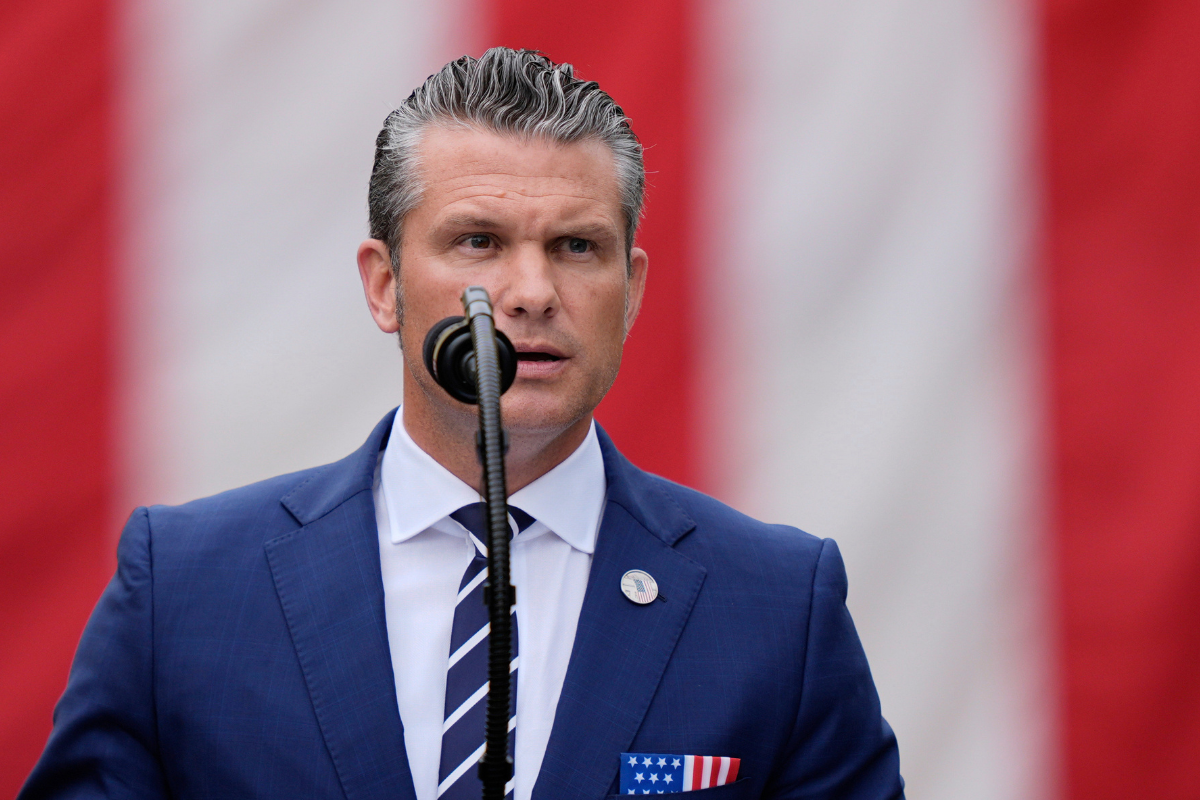

Secretary of War Pete Hegseth said on Sept. 25 that 20 U.S. Army soldiers who received the Medal of Honor for their actions in the 1890 Battle of Wounded Knee will retain their awards.
The decision came in response to the findings of a review launched in 2024 by Hegseth’s predecessor, Lloyd Austin, under the Biden administration. The review examined Medal of Honor citations—the nation’s highest award for valor—to decide whether each soldier’s conduct warranted the citation.
Austen’s July 2024 memo said that the review panel would consider whether any of the awards were given in violation of the Medal of Honor standards in place at the time they were awarded.
Hegseth said in a video posted on X that “upon deliberation, that panel concluded that these brave soldiers should, in fact, rightfully, keep their medals from actions in 1890.”
“We’re making it clear, without hesitation, that the soldiers who fought in the Battle of Wounded Knee in 1890 will keep their medals, and we’re making it clear that they deserve those medals,” Hegseth said.
“This decision is now final, and their place in our nation’s history is no longer up for debate. We salute their memory, we honor their service, and we will never forget what they did.”
The Battle of Wounded Knee, also referred to as the Wounded Knee Massacre, was a deadly armed clash that occurred when members of the U.S. Army’s 7th Cavalry and other units attempted to disarm a group of Lakota tribe members at Dakota’s Pine Ridge Indian Reservation near Wounded Knee Creek.
An estimated 250 Native Americans, including women and children, were killed, and about 100 more were wounded.
After the fighting, Medals of Honor were given to 20 soldiers from the 7th Cavalry, some of whom were credited with rescuing wounded comrades during an exchange of fire, and for continuing to fight and demonstrating bravery even after being wounded.
For years, activists, politicians, and political leaders have called for the awards to be rescinded.
Sen. Elizabeth Warren (D-Mass.) and other Democratic lawmakers repeatedly proposed legislation between 2019 and 2021, and Congress included a provision in the fiscal year 2022 National Defense Authorization Act that recommended the Department of Defense review the awards.
Arlington Memorial
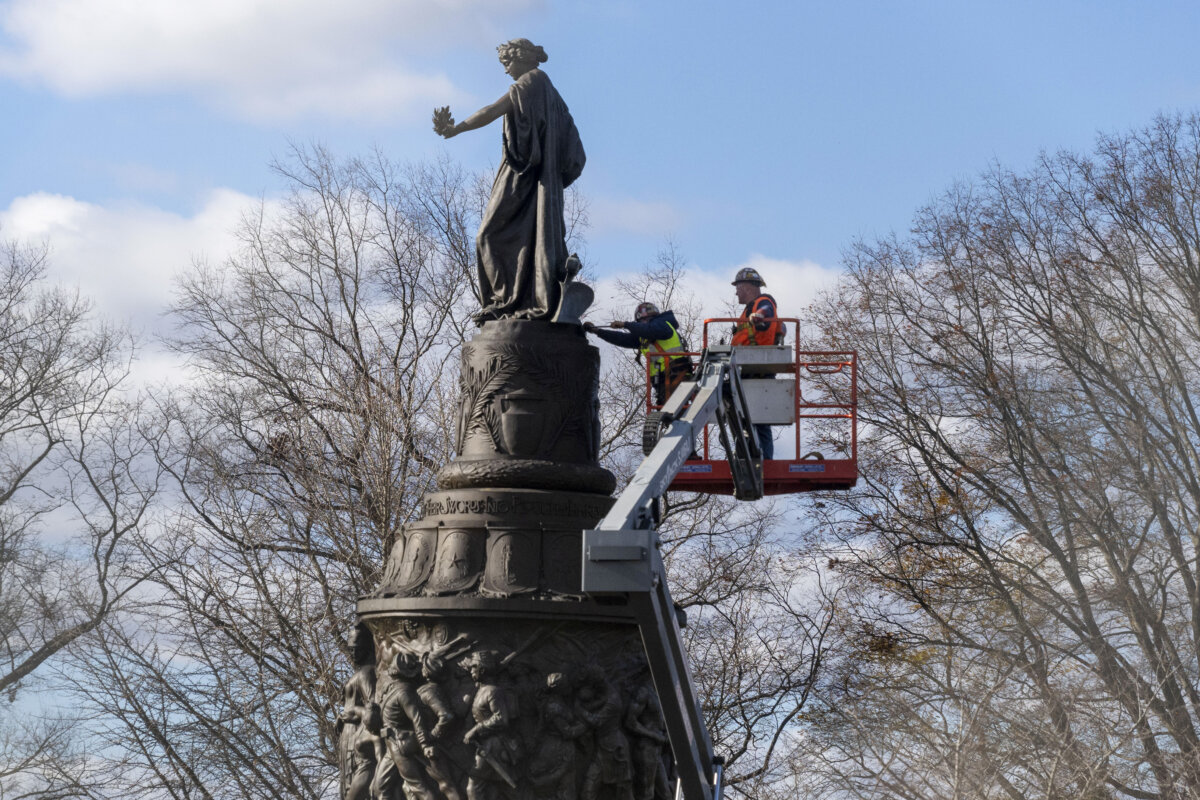
Last month, Hegseth announced that the 1914 memorial to the Confederacy, which was removed from the Arlington National Cemetery, will be returned.
“I’m proud to announce that Moses Ezekiel’s beautiful and historic sculpture—often referred to as ‘The Reconciliation Monument’—will be rightfully be returned to Arlington National Cemetery near his burial site,” Hegseth wrote in an Aug. 5 post on X.
“It never should have been taken down by woke lemmings. Unlike the Left, we don’t believe in erasing American history—we honor it.”
The monument, featuring a classical female figure crowned with olive leaves and representing the American South, was removed in 2023.
Trump’s Executive Order
President Donald Trump issued an executive order on March 27 titled “Restoring Truth and Sanity to American History,” in which he criticized attempts to rewrite American history.
“Over the past decade, Americans have witnessed a concerted and widespread effort to rewrite our Nation’s history, replacing objective facts with a distorted narrative driven by ideology rather than truth,” Trump wrote. “This revisionist movement seeks to undermine the remarkable achievements of the United States by casting its founding principles and historical milestones in a negative light.”
Among its aims, the executive order said the Department of the Interior would determine whether, since January 2020, monuments, memorials, or other historical markers under its jurisdiction “have been removed or changed to perpetuate a false reconstruction of American history, inappropriately minimize the value of certain historical events or figures, or include any other improper partisan ideology.”
Ryan Morgan and The Associated Press contributed to this report.
 Friends Read Free
Copy
Facebook
Tweet
Friends Read Free
Copy
Facebook
Tweet