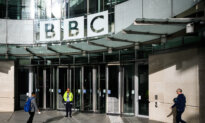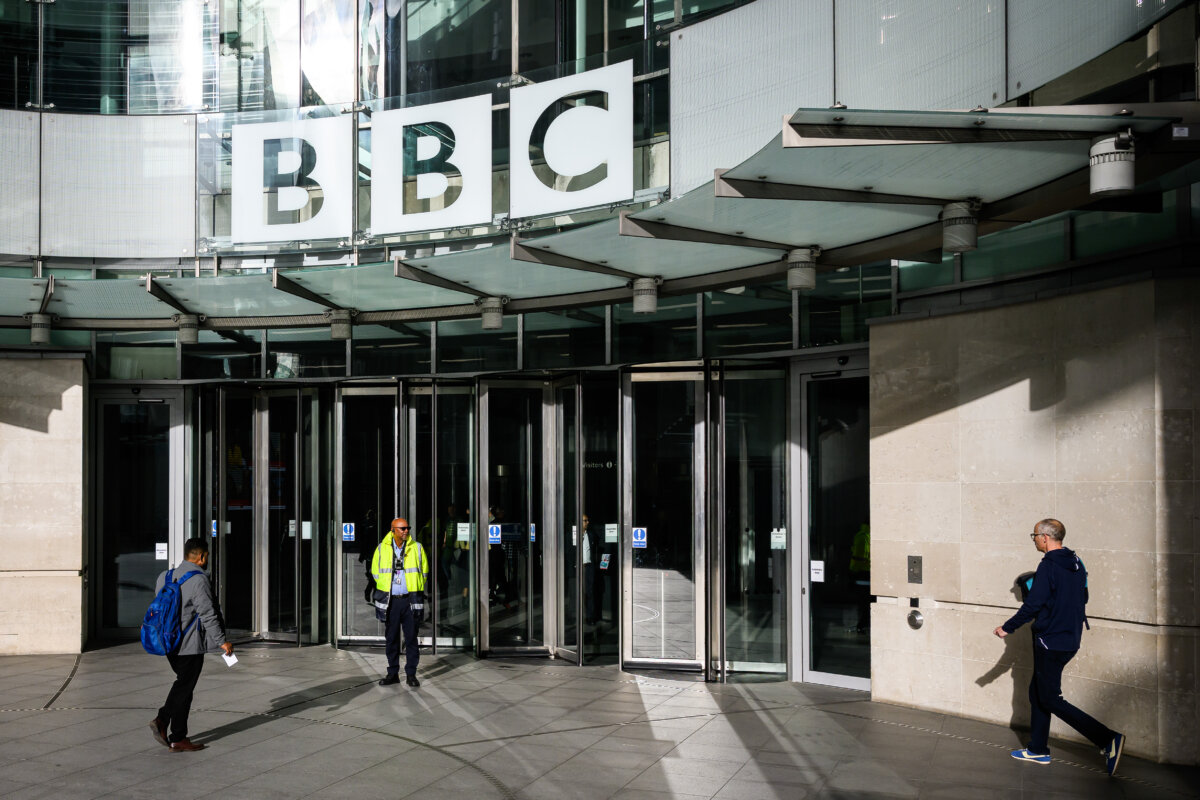

The BBC has filed a motion to dismiss President Donald Trump’s $10 billion defamation lawsuit filed over an allegedly misleading edit of a speech to his supporters at the Capitol on Jan. 6, 2021.
In court documents released on March 17, lawyers for the BBC argued that the lawsuit could have a “chilling effect” on “robust reporting on public figures and events.”
The BBC’s flagship Panorama program came under scrutiny last November over an episode broadcast on Oct. 28, 2024, a week before the U.S. presidential election.
Through cutting and splicing together different sections of his speech, the documentary created the impression that Trump had encouraged violence at the Capitol building on Jan. 6, 2021. Protesters had gathered in Washington to show they disputed the result of the 2020 presidential election, won by Joe Biden.
‘Robust Reporting’
In the motion filed in a Florida court, the BBC cited case law and said: “Early dismissal is favoured given the powerful interest in ensuring that free speech is not unduly burdened by the necessity of defending against expensive yet groundless litigation, which would constrict the breathing space needed to ensure robust reporting on public figures and events.”
The corporation’s lawyers continued: “All the more so when plaintiff [Trump] is among the most powerful and high-profile individuals in the world, on whose activities the BBC reports every day. The chilling effect is clear.”
The 34-page legal document cited a “lack of personal jurisdiction” and a “failure to state a claim” among the grounds to dismiss the lawsuit.
“In all, plaintiff [Trump] falls well short of the high bar of actual malice. He fails to plausibly allege facts showing that defendants [BBC] knowingly intended to create a false impression.”
The BBC argued that “the lack of actual malice” is demonstrated by the fact that the clip of Trump’s speech is just 12 seconds long in an hour-long film, which gave “extensive coverage of his supporters and balanced coverage of his path to re-election.”
Lawyers also argued that Trump’s subsequent election victory in 2024 demonstrates that no serious reputational harm was caused by the Panorama broadcast.
Question of Jurisdiction
Trump is unable to sue the corporation in England, as the statute of limitations for defamation is only one year. His lawyers filed the claim in the southern district of Florida, where the statute of limitations is two years, in December last year.
The BBC argued that the state of Florida has no jurisdiction because Trump cannot demonstrate that the corporation “purposefully aimed the documentary at Florida” and that it was clearly aimed at the UK audience.
BBC iPlayer is geo-blocked in the United States, although Trump’s lawyers have argued that it could be accessed by Americans using a virtual private network.
The corporation’s lawyers said in the motion: “The president has no basis at all to ask this court to exercise jurisdiction over defendants [BBC].”
The motion added that, as the BBC is “not at home in Florida,” it would be “unduly burdensome” to defend the case in the state.
The BBC, which is funded by a license fee that is supposed to be paid by anyone who watches live television, previously apologized to Trump over the edit, but made clear it would defend the claim and would not settle out of court.
BBC Director-General Tim Davie and head of news Deborah Turness both resigned in November following the scandal over a leaked internal report highlighting apparent bias at the corporation, including the Panorama edit.
Rhodri Talfan Davies has been confirmed as the corporation’s interim director-general and will take on the role from April 3 while a permanent replacement is sought.
‘Corrupt and Fraudulent’
Trump renewed his criticism of the BBC on March 17, accusing the corporation of what he termed its “corrupt and fraudulent” coverage of the Iran war.
In a press conference to mark St. Patrick’s Day alongside Irish Prime Minister Michéal Martin, the president branded the BBC’s reporting “unbelievable,” and blamed British Prime Minister Keir Starmer for the decline of the “special relationship” between the UK and the United States.
Citing the UK’s refusal to join the war with Israel and the United States against Iran, Trump said the relationship between the historical allies “always was the best until Keir came along,” before adding that he “liked” Starmer and that he is a “nice man.”
Asked about the lawsuit, Trump accused the BBC of editing his Jan. 6 speech with artificial intelligence.
“They put words in my mouth and they said I said some pretty bad things and I didn’t say them. It was AI-generated,” he told reporters in the Oval Office.
“I said ‘I never said that,’ and then we found out it was AI-generated.”
Speaking about the United States and Israel’s war with Iran, Trump said: “We have decimated that country, and if you watch BBC, it’s almost like they’re fighting us to a draw.”
He added: “It was very inaccurate news, it was fake news.
“I’m very proud of the term ‘fake news’ because it was my term, I came up with it—but it’s no longer accurate.
“It really is corrupt, fraudulent news. It really is—it’s fraudulent.”
A two-week trial is slated in February 2027 if the BBC’s motion to dismiss the lawsuit is unsuccessful.
 Friends Read Free
Copy
Facebook
Tweet
Friends Read Free
Copy
Facebook
Tweet