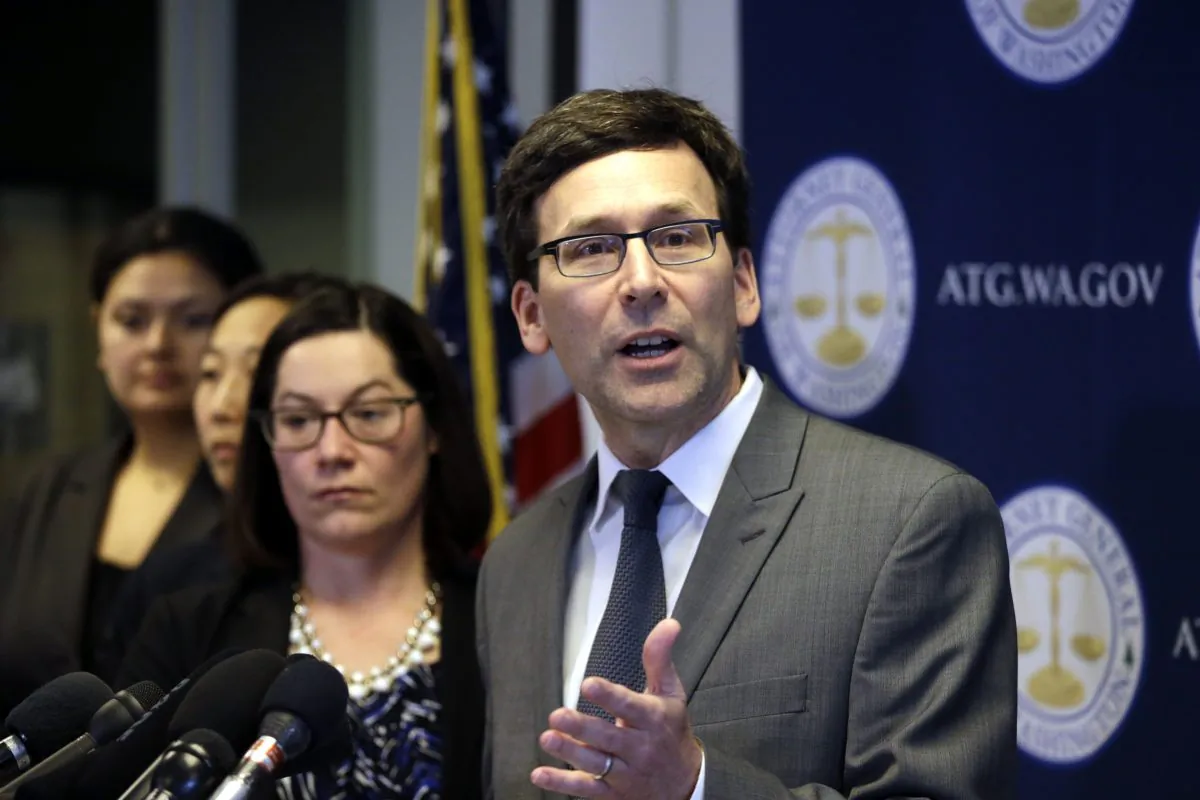

Nearly a dozen tech leaders and AI researchers on Monday sent a letter urging Washington Gov. Bob Ferguson to “pause” legislative efforts to create new taxes that could impede the state’s tech sector.
The letter, signed by current and former top executives, software engineers, and AI experts, said efforts to create a state income tax as well as increase the state’s capital gains tax would “materially undermine” the state’s ability to grow the tech sector and could slow AI innovation and investment.
“An unfavorable tax climate with an income tax and capital gains taxes prevents Washington from building the ecosystem necessary to attract talent,” the letter states.
State lawmakers have been working on a “millionaires tax” that would place a 9.9 percent tax on personal income above $1 million, and increase the state’s capital gains tax.
The authors cited Silicon Valley Bank’s February 2026 State of the Markets report, which indicated that Seattle has seen a downturn in startup formation over the past three years, while competing tech centers including San Francisco and regions in Texas are seeing growth due to attractive business climates.
The AI and tech leaders urged the governor to pause those legislative efforts and instead think of ways the state could be a leader in the AI-driven economy, “which will be one of the most important new economic sectors of the next decade.”
The letter was signed by Pedro Domingos, professor emeritus of computer science and engineering at the University of Washington; Brian Hall, former VP at Microsoft, AWS, and Google; Oren Etzioni, former CEO of Allen Institute for Artificial Intelligence; David Shim, cofounder and CEO of Read AI; Manish Kedia, CEO of CloudMoyo; Aviel Ginzburg, general partner at Founders’ Co-op; Cameron Etezadi, CTO of LaunchDarkley; Aaron Goldfeder, CEO at AZX; Paul Brown, SalesForce VP of Software Engineering; Adam Wray, managing director of AI, Data and Infrastructure at AJW Services; and Vijay Boyapati, a software engineer and author.
The authors said Washington has the tech companies necessary to attract talent “if the business climate is more favorable than California.”
However, if lawmakers create new taxes, “Washington would be left with the worst of both worlds—an AI ecosystem that can’t match California’s and high taxes that prevent us from attracting the talent to create that innovation core needed for the next wave of growth and job creation.”
Senate Bill 6346, the proposed income tax, is being debated by state House lawmakers after its approval last month by the Washington Senate. The tax, designed to take effect in 2030, is expected to generate $3.7 billion annually for the state.
 Friends Read Free
Copy
Facebook
Tweet
Friends Read Free
Copy
Facebook
Tweet