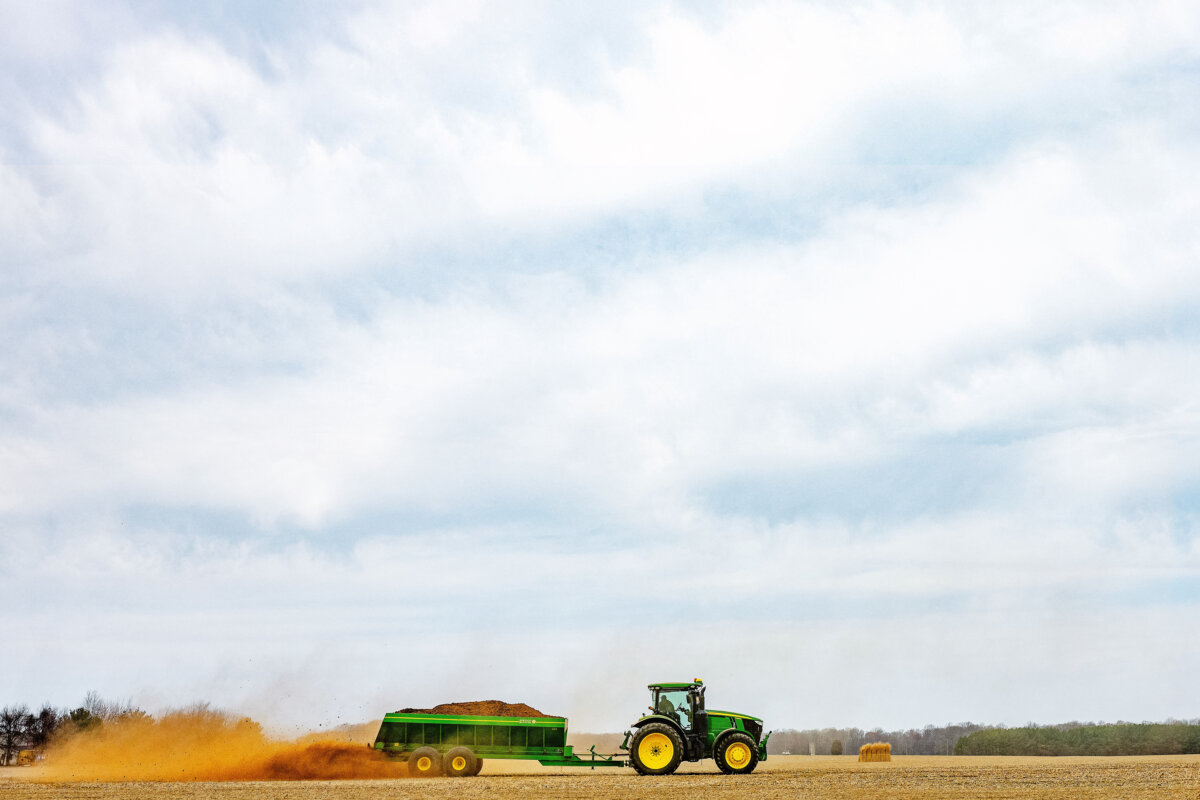
OKLAHOMA CITY—Proponents of using treated sewage sludge, known as biosolids, to fertilize farm fields told the Oklahoma House Committee on Agriculture on Oct. 28 that the science isn’t clear enough to justify the expense of ending the practice as other states have.
Ranchers, farmers, and other landowners say biosolids are an inexpensive and effective fertilizer that rejuvenates the soil and provides the nutrients their crops need.
Critics complain that biosolids are a health hazard and nuisance that contain a wide variety of harmful substances, including per- and polyfluoroalkyls, broadly known as PFAS.
PFAS, developed in the 1940s, are a family of thousands of chemicals used in stain- and water-repellent fabrics, nonstick cookware, food packaging, cosmetics, and firefighting foams, among other products. They have become ubiquitous because of their resistance to heat, oils, stains, grease, and water. They are often called “forever chemicals” because they don’t readily break down.
Jayson Lusk, vice president and dean of the Oklahoma State University School of Agriculture, acknowledged that PFAS are a problem but said that plans to deal with them must be based on solid science. Wastewater treatment residuals that contain PFAS can be used as fertilizer, disposed of in a landfill, or incinerated.
Lusk told the committee that high levels of PFAS in effluent don’t mean the wastewater treatment plant is the cause of the contamination. He pointed out that the PFAS chemicals likely were sent to the plant in wastewater from another facility.
“You might find [that] people have high levels of PFAS [in their blood] and also might have a lot of adverse health outcomes. Well, is it the packaging, or is it the fact that they’re eating very fatty, ultra processed foods? The answer is, we don’t know,” Lusk said.
Brian Arnall, a professor of plant and soil science at Oklahoma State University, agreed.
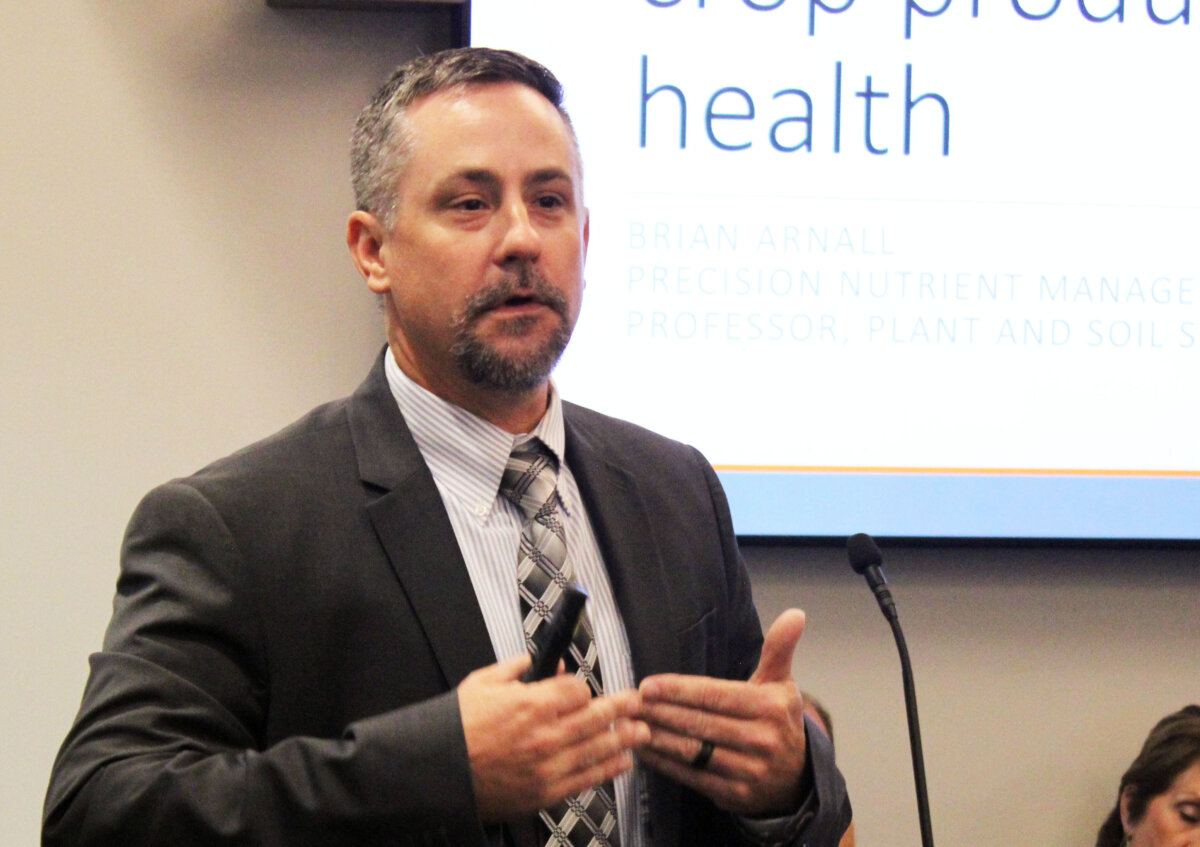
He also said that the biosolids industry is one of the most highly regulated in the country. He told the committee that when handled properly, biosolids are safe and effective.
“If you put biosolids on the soil, [beneficial] microbial activity ramps up,” Arnall said.
In Oklahoma, no biosolids are legally applied to any land without complying with a laundry list of rules, he said.
He told the committee that landowners receive a permit only after they have tested their soil and determined how much they need.
In addition, they must comply with setback rules to keep the treated sludge out of water sources and work the biosolids into the soil to prevent runoff onto neighboring property. The soil must also be tested after application.
Dredged from the bottom of wastewater treatment tanks and treated to reduce or eliminate harmful substances, biosolids have been sold or given to farmers as a low-cost fertilizer since the 1970s.
Biosolid detractors told the committee there are better, safer ways to dispose of the sewage sludge.
Larry Woolley, a county commissioner from Johnson County, Texas, said PFAS have killed livestock, poisoned ground and surface water, and even contaminated the Fort Worth municipal water supply.
Woolley told the committee that the Environmental Protection Agency (EPA) has set the maximum contaminant level at four parts per trillion. To put that in perspective, he said that one part per trillion is equal to one drop in 20 Olympic-sized swimming pools.
“Four parts per trillion is the maximum. Zero is safe. Anything over four is considered unsafe—unsafe as per EPA,” Woolley said.
The committee also heard from representatives of companies that provide other means of dealing with PFAS chemicals, including using bacteria to consume the sludge. A representative of a company that uses a super-heating process to break PFAS chemical bonds, which is almost impossible to do, also spoke.
Mary Elizabeth Mach, an engineer who specializes in water systems, said those systems have not been proven in the United States and that banning biosolids in Maine resulted in skyrocketing costs for wastewater treatment and the disposal of sewage sludge.
She said landfill operators are asking Maine officials to reconsider the ban, adding that the state is sending much of its sewage sludge to Canada. Those higher costs are borne by landfill and wastewater treatment plant customers.
In 2022, Maine adopted Public Law 2021, which banned biosolids and mandated testing of wastewater treatment plant effluent, farmland, drinking water, and any products or environmental media that could be contaminated.
The law provides owners of contaminated land with state-assisted cleanup and remediation. It also provides bottled water or filtration systems for those whose water is contaminated.
Mach said the city of Tulsa, Oklahoma, has two wastewater treatment plants. Based on Maine’s experience, she predicted that if Oklahoma were to ban biosolids, the cost of sewage sludge disposal would rise from the current price of $876,000 for one plant and $1.2 million for the other to $3 million for the first plant and $8 million for the second.
Rep. Jim Shaw said that he is not fazed by the possible costs and that he believes the state can cover the cost by eliminating wasteful programs.
He acknowledged the possibility of placing a burden on municipalities. But, he said, if legislators are responsible, that won’t happen.
“There is plenty of money out there that is being squandered that, if we were to recapture that by doing some performance audits and things like that, we would find plenty of money to cover some of the solutions and opportunities that we had to stop poisoning our food and water supply with biosolids,” he said.
 Friends Read Free
Copy
Facebook
Tweet
Friends Read Free
Copy
Facebook
Tweet