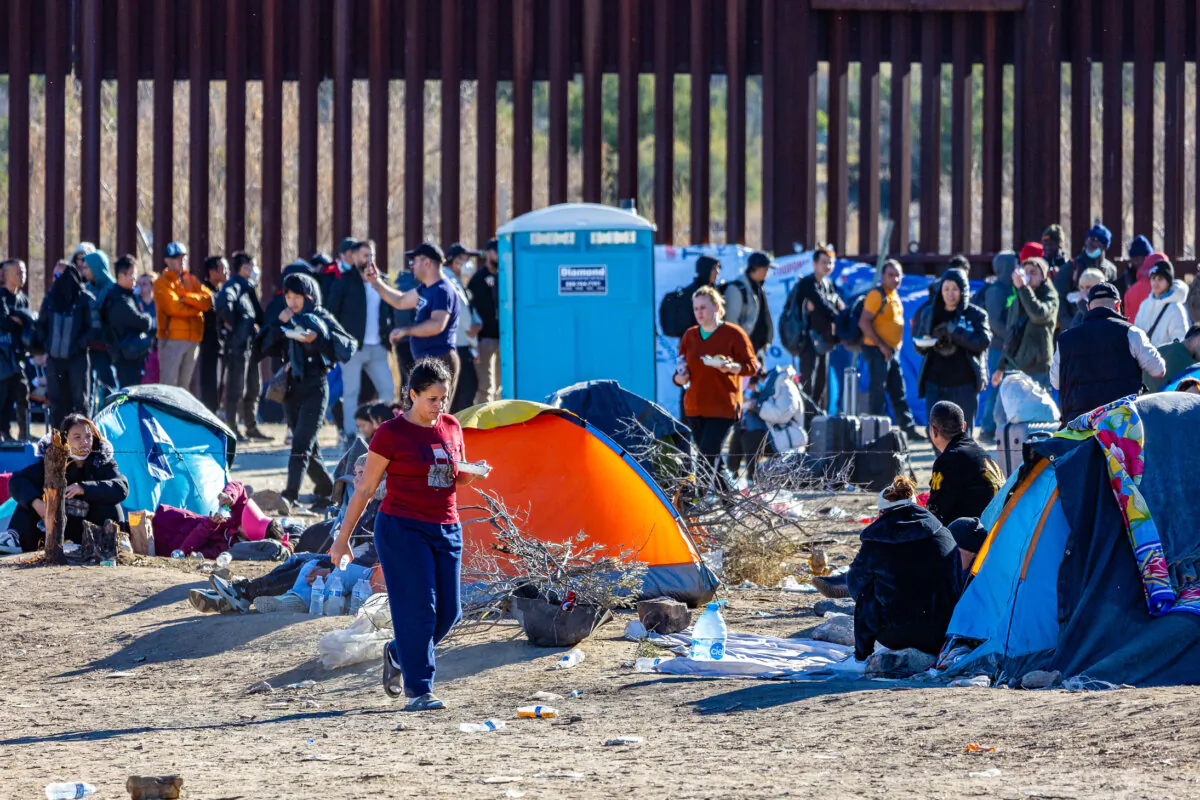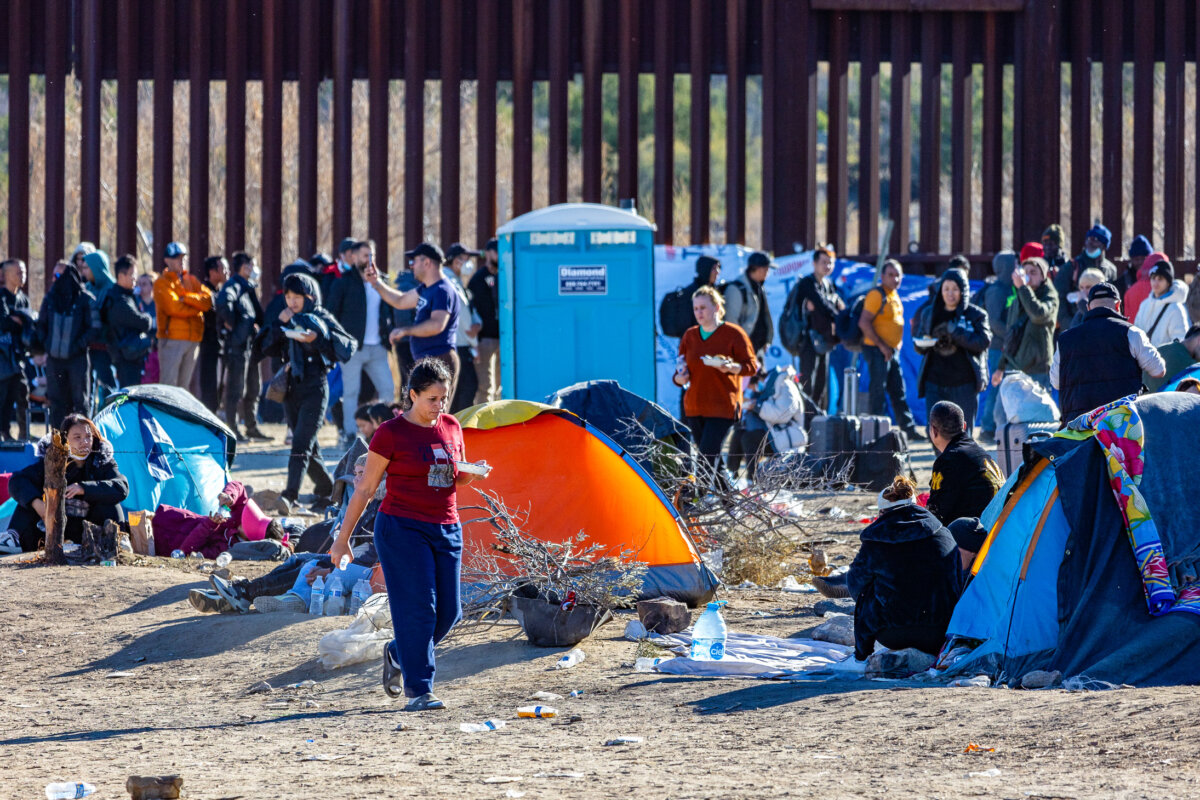

September marked the first-ever fiscal year with zero border releases, alongside the lowest annual illegal immigrant encounters in American history, according to Customs and Border Protection (CBP).
September also marked the 17th straight month of zero border releases, the CBP said in an Oct. 16 statement.
Border Patrol agents apprehended around 98,700 illegal immigrants along the southwest border in fiscal year 2026, which was 95 percent lower than an average year under the Biden administration, at around 1.8 million apprehensions.
“These results reflect sustained enforcement and the deterrent effect of a secure border. Illegal aliens have received a clear message: don’t try to enter the country illegally, or you will be apprehended, detained, and deported,” CBP said.
The agency hit a major border infrastructure milestone this year by building 250 miles of new barriers along the southwest border, a process that began at the start of the second Trump administration.
The agency credited the One Big Beautiful Bill Act, signed into law by President Donald Trump, for speeding up the construction of smart walls.
A smart wall includes a steel bollard wall, together with roads, cameras, lighting, detection technology, and sometimes a secondary wall. Between September 2025 and September 2026, CBP obligated more than $34 billion to support smart border wall projects in all states along the southwest border, the agency said.
Stephen Miller, White House deputy chief of staff for policy and Homeland Security advisor, said in an Oct. 16 X post, “Had the border not been sealed, America would have been lost.”
In late September, a migrant caravan from Honduras consisting of hundreds of people had entered Mexico and was headed towards the United States. Homeland Security Secretary Markwayne Mullin told Newsmax at the time that the caravan had “zero chance” of entering America.
“I’ve been talking with the Mexican government, and we actually have been watching this caravan for quite some time,” Mullin said, adding that Mexican authorities were helping to break up the caravan.
Border Deaths and Drug Seizures
The decline in illegal immigrant inflow has contributed to a significant decrease in border-related deaths, the agency said.
CBP reported an increased number of drug seizures for the latest year owing to the deployment of new inspection technologies and intelligence-driven strategies. These identification methods target precursor chemicals, tools, and pill presses, as well as finished drug products.
“CBP’s drug seizures in FY 2026 totaled nearly 1 million pounds—63 percent higher than the 600,000-pound annual average of the last four years,” the agency said.
Besides seizing drugs, CBP has been able to enforce stricter compliance with regulations regarding shipments of counterfeit merchandise.
CBP stopped over $325 million in shipments involving forced labor, and seized counterfeit goods valued at more than $12.6 billion in fiscal 2026.
“By securing the border, intercepting dangerous narcotics, expanding physical barriers, and enforcing lawful trade, CBP has closed vulnerabilities across every front to ensure the long-term safety and prosperity of the American people,” the agency said.
Native American Objection
In June, the Native American tribe Tohono O’odham Nation filed a motion to block the construction of a border wall on the tribe’s reservation lands in southern Arizona.
The tribe argued that allowing the construction of the wall would inflict lasting damage to their reservation land.
On Aug. 14, a federal judge declined to block the Trump administration from building the wall, highlighting that Congress has “exclusive authority to diminish reservation boundaries.”
In a statement, the Tohono O’odham Nation said it strongly disagreed with the ruling.
“The primary concern is that the court did not adequately address many critical issues that the construction of a border wall will have on our nation, our people, our land, and our culture,” the tribe said.
“It is imperative that these concerns be addressed before any construction or pre-construction activities are done by the federal government on our land,” the tribe said. Tohono O’odham Nation filed an appeal with the Court of Appeals for the District of Columbia Circuit.
James Percival, general counsel for the Department of Homeland Security, welcomed the ruling in an Aug. 14 post on X.
“We respect tribal sovereignty but not to the detriment of border security. This wall is getting built. Our authority is beyond dispute,” Percival said.
During a June event in Washington, CBP Commissioner Rodney Scott said that the primary wall along the southern border would be completed by the end of 2027. The wall will span from San Diego to Texas near the Gulf of America.
While there will be some gaps in the wall coverage, “the only places we’re not building a border wall are places where we’ve made a conscious decision that we don’t need it,” Scott said.
 Friends Read Free
Copy
Facebook
Tweet
Friends Read Free
Copy
Facebook
Tweet