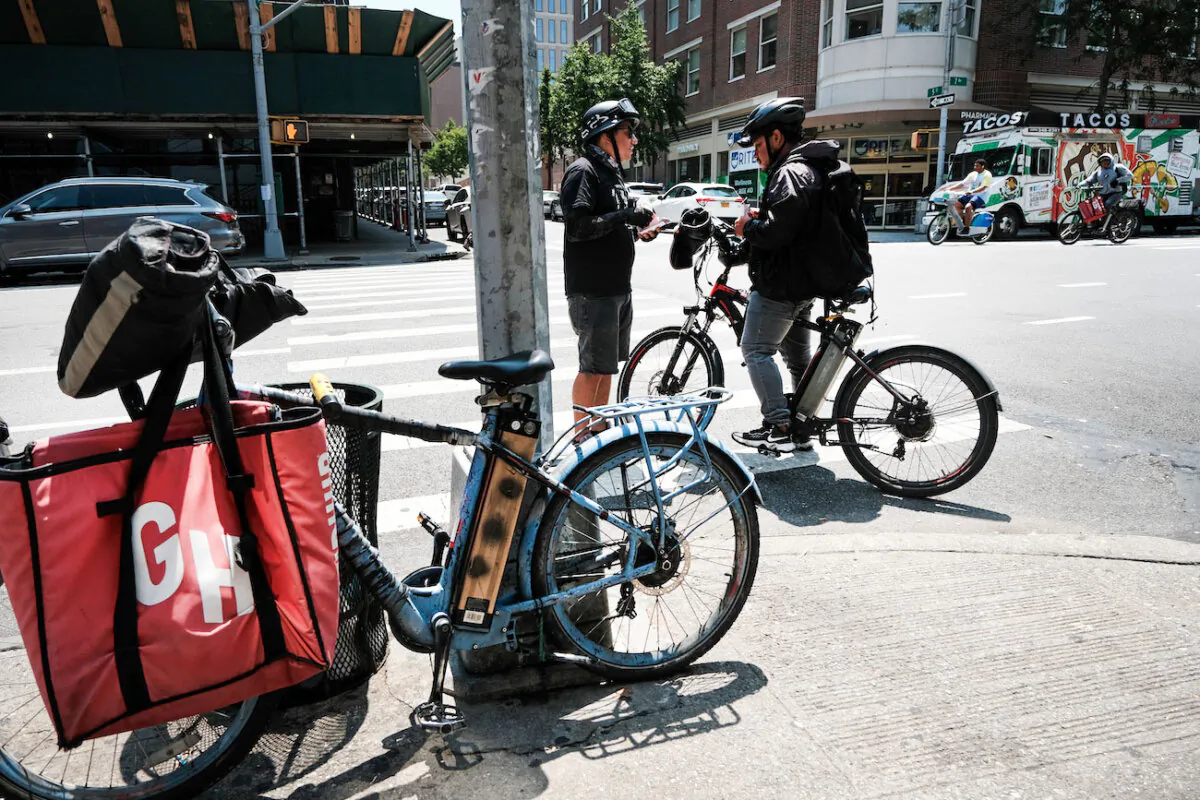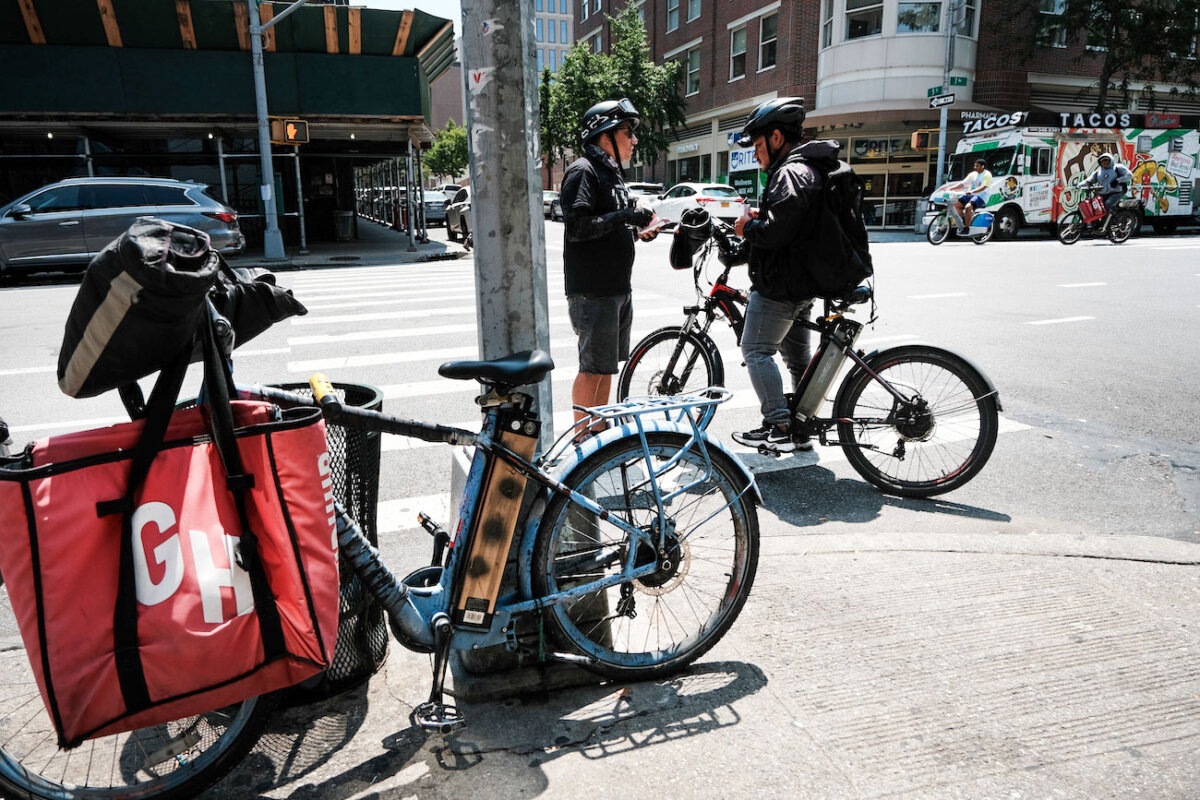

A federal judge on Jan. 23 denied a request to block two New York City laws that would require food delivery apps to prompt users to pay tips.
Uber and DoorDash sued the city on Dec. 11 to overturn the laws, arguing that they compelled speech by food delivery apps in violation of the First Amendment.
The delivery apps sought an injunction to stop the laws from taking effect, as scheduled, on Jan. 26.
“The Tipping Laws concern commercial speech, which enjoys a ‘limited measure of protection,'” Judge George B. Daniels of the U.S. District Court for the Southern District of New York wrote in his order denying the injunction.
“The tipping prompt thus does not involve the ‘propagation of views’ or ‘advocacy of causes’ as [the companies] argue.”
The laws, enacted by the New York City Council on Aug. 14, mandate that delivery apps prompt users to offer a tip of at least 10 percent to their delivery drivers.
They also require tips to be offered before the order is picked up, allowing delivery drivers to reject trips without a tip.
DoorDash and Uber immediately appealed against Daniels’s order to the U.S. Court of Appeals for the Second Circuit.
The companies have argued that the laws will make food delivery unaffordable in the city.
“Not only does this make life more expensive for New Yorkers, it undercuts the city’s existing policies on pay for delivery workers,” DoorDash wrote in a statement about the lawsuit.
“[DoorDash delivery drivers] in New York are guaranteed to earn $21.44 per hour while on delivery, more than many first responders in the city.
“In fact, they earn much more than that—almost $30 per hour while on delivery, before tips.”
“New Yorkers shouldn’t be pressed by their city council to add a tip on top of some of the most expensive delivery costs in the country,” the statement concluded.
New York City politicians have defended the laws as essential for worker safety.
“All contracted delivery workers provide essential labor, and they deserve fair workplace safety and pay standards, as we address broader safety and quality of life issues in our communities caused by delivery app corporations,” City Council Speaker Adrienne Adams wrote about the laws.
In their court filings, the companies argued that the laws forced them to adopt the city council’s political views about affordability.
“By commandeering space on [delivery companies’] online platforms and dictating the content, timing, and manner of [companies’] communications with their customers regarding the discretionary act of tipping, the law violates core constitutional protections,” the companies wrote in their complaint.
“The Tipping Law unlawfully compels [companies] to convey and endorse a message in New York City that they do not communicate now and would not otherwise communicate, in a manner they would not otherwise use, about a controversial subject, in violation of the First Amendment.”
In its court filings, New York City defended the law as necessary for worker protection.
“These laws are a continuation of the city’s years-long effort to improve the conditions of delivery workers, and are meant to reverse the practices of [companies] that sought to punish delivery workers in response to the implementation of a food delivery worker minimum pay rule,” the city wrote in a brief to the court.
“As a result of [the companies’]’ retaliatory actions, tips earned by delivery workers declined significantly.”
The actions were that companies “moved the opportunity to tip from pre- to post-checkout,” it stated.
 Friends Read Free
Copy
Facebook
Tweet
Friends Read Free
Copy
Facebook
Tweet