
Long-term trends and short-term challenges are converging to send the price of beef soaring.
As Americans continue to deal with persistent, shockingly high food inflation, the steep increase in beef prices has drawn the attention of Main Street and the White House. In October, President Donald Trump proposed executive actions to drive down the price.
Those who spoke with The Epoch Times said there is no easy solution.
In short, the size of the U.S. cattle herd is as small as it has been in nearly 70 years, and even aggressive efforts to get more head in the field would take years to pay off.
Price Trends
Over the past year, the price of beef has risen far faster than all other food items and faster than the overall pace of inflation.
According to the latest statistics published by the Department of Agriculture, during the period of Oct. 11 through Oct. 17, the price of ground beef—the most sold beef item in the United States—averaged at about $7 per pound. Specifically, the price of 80 percent to 89 percent lean ground beef sold in 2- to 4-pound packages was $5 per pound, according to the Department of Agriculture. Prices vary widely depending upon label claims, leanness, and form of sale.
Because of the prolonged government shutdown, the Department of Labor’s Bureau of Labor Statistics (BLS) did not publish a report in October. However, the BLS’s September release states that the price of all beef and veal products has increased by 13.9 percent between August 2024 and August 2025.
That increase is more than twice as high as the overall price hike for all animal proteins and nearly five times as high as the overall increase in food prices observed by the bureau. Between August 2024 and August 2025, the price of meats, poultry, fish, and eggs increased by 5.6 percent. During the same time period, the price of food as gauged by the bureau increased by 2.9 percent.
Overall prices, as measured by the consumer price index for all urban consumers, have increased by about 2.9 percent, according to BLS figures retained by the Federal Reserve Bank of St. Louis.
Between August 2020 and August 2025, the price of all animal proteins rose by about 30 percent, according to BLS figures retained by the Federal Reserve Bank of St. Louis. During the same period, according to the same data, the price of beef increased by about 97 percent.
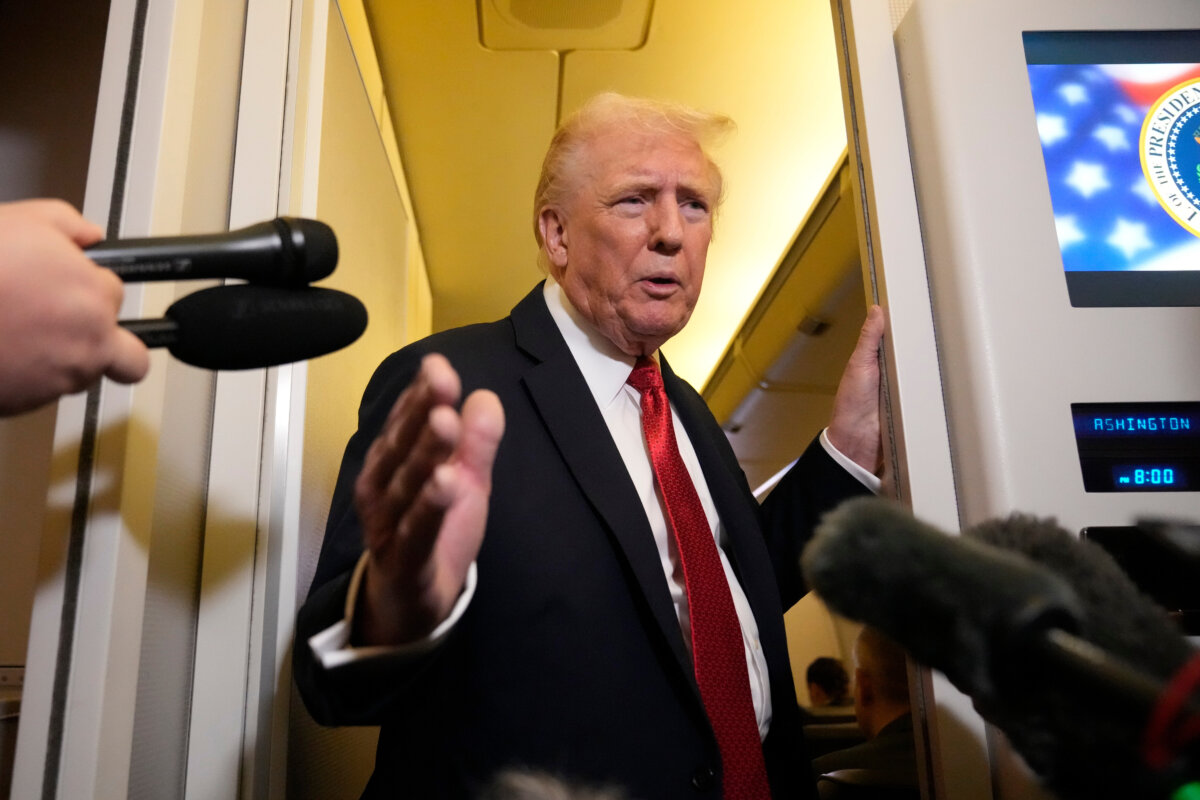
On Oct. 20, Trump suggested that the United States begin to import more beef from Argentina—a country in the process of receiving a $20 billion so-called rescue plan from the United States—in order to bring down the price of beef. The president on Oct. 22 said his administration would be talking to ranchers about how to decrease prices.
Industry observers who spoke with The Epoch Times said increasing imports from a country that accounts for about 2 percent of the U.S. beef supply would do little to change the price consumers pay, nor would it address the root cause of the problem.
Long-Term Issues
As always, the question of price is based upon the issue of supply and demand. The price of beef is so high right now because the supply of beef is so low.
In an interview with The Epoch Times, Bill Bullard, CEO of the Ranchers-Cattlemen Action Legal Fund United Stockgrowers of America, said the number of cattle in the United States is as low as it has been in the past 70 years.
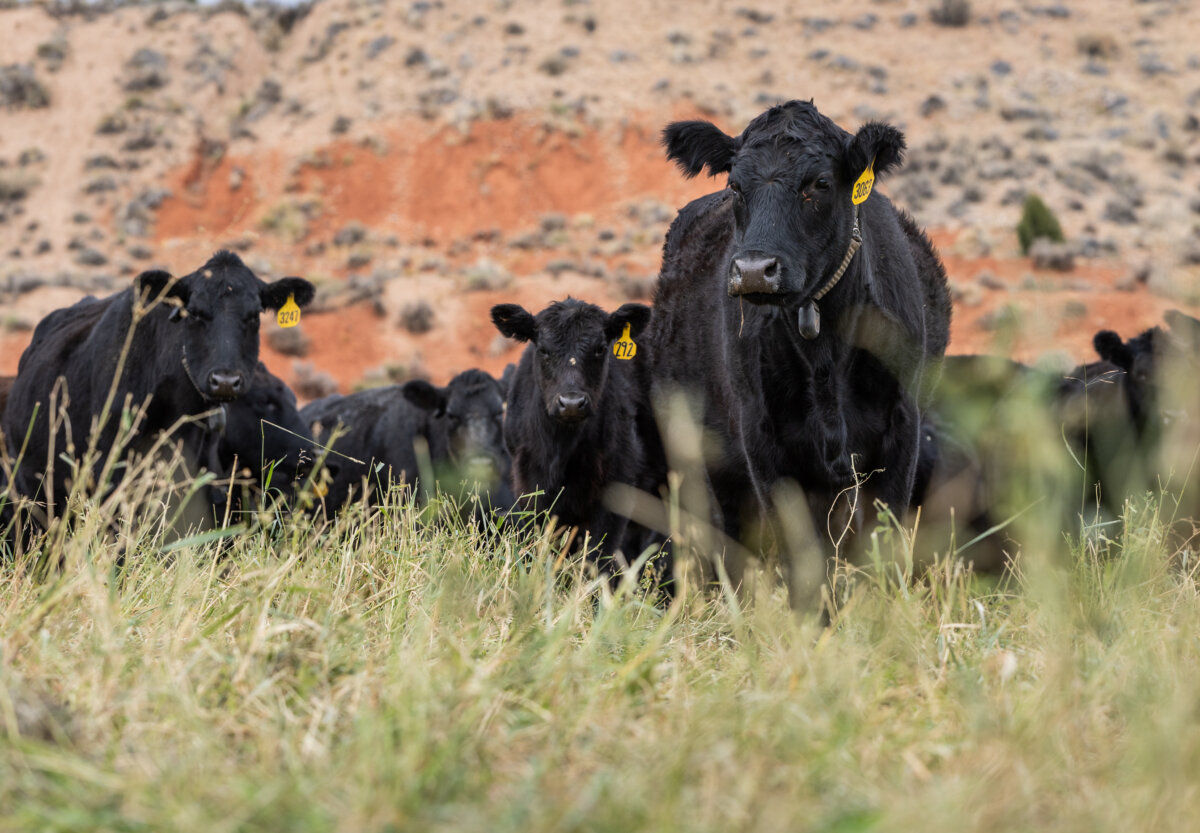
In July, in its U.S. cattle inventory report, the Department of Agriculture’s National Agricultural Statistics Service reported that there were 94.2 million head of cattle and calves on farms in the United States. That reflected a sharp decline the agency has observed since the turn of the century. In 2000, the service counted 113 million head.
Bullard, a former rancher in South Dakota who now leads the country’s largest producer-only organization representing U.S. cattle and sheep producers on domestic and international trade and marketing issues, said that ranchers are putting fewer animals in the field because of depressed prices for cattle.
According to James Mitchell, assistant professor and extension economist at the Department of Agricultural Economics and Agribusiness at the University of Arkansas, that action is part of what he called the cattle cycle.
Mitchell told The Epoch Times that agricultural economists observe a consistent cycle lasting about 10 to 12 years in which cattle numbers go up, peak, and then fall in response to industry profitability.
In short, he said, when cattle and beef prices are high, ranchers will try to increase the number of animals in the field to capitalize on those high prices. At a certain point, the expanded number of animals processed will drive down the price of cattle and beef. Then, in response to lower prices, ranchers will dial back the number of animals in the field.
This process, Mitchell said, takes so long because of the biological cycle of the animals. A heifer, a young female, takes two to three years to begin reproducing.
This means, Mitchell said, that ranchers must constantly make hard decisions on whether they should let a heifer calve or if they should send it to market. This decision is influenced by their prediction of how the cattle and beef markets will change in the future.
Mitchell and David Anderson, professor and extension specialist focused on livestock and food product marketing at Texas A&M University, said the decision right now hinges on whether the individual rancher wants to sell that heifer now for the best price he has ever seen in his lifetime or if he bets that the heifer’s calves will be worth more than the heifer is right now.
“So what’s better, the check in hand or the future?” Anderson said. “I think for the last couple of years, the check in hand has been better than expectations for the future.”
Bullard argued that a significant factor in that calculus—the price of beef—is being artificially manipulated by the amount of foreign product that is allowed to enter the country.
Right now, Bullard said, about 22 percent of the beef sold in the United States comes from a foreign country. His figure, he said, is based upon both the number of live animals that are brought into the country and then slaughtered and the amount of processed beef that is sold to consumers.
Bullard said a long-term trend of meatpacking industry consolidation and a lack of strict import controls are contributing to the declining size of the cattle herd, as well as the fortunes of individual ranchers.
The so-called “Big Four” meatpackers—Tyson Foods, Cargill, JBS, and National Beef—now control more than 80 percent of the beef-processing market. This, his organization argues, gives these four companies “undue influence” over the market. In addition, he said, this structure allows the major packers to import cattle and beef from around the world so that the packers can profit from high prices while U.S. ranchers get nothing.
Those meatpackers have paid multiple multimillion-dollar settlements in part because of Ranchers-Cattlemen Action Legal Fund United Stockgrowers of America’s legal activities, Bullard said. Most recently, in February, JBS paid an $83 million settlement to settle an outstanding class-action suit. JBS denied fault as part of that settlement.
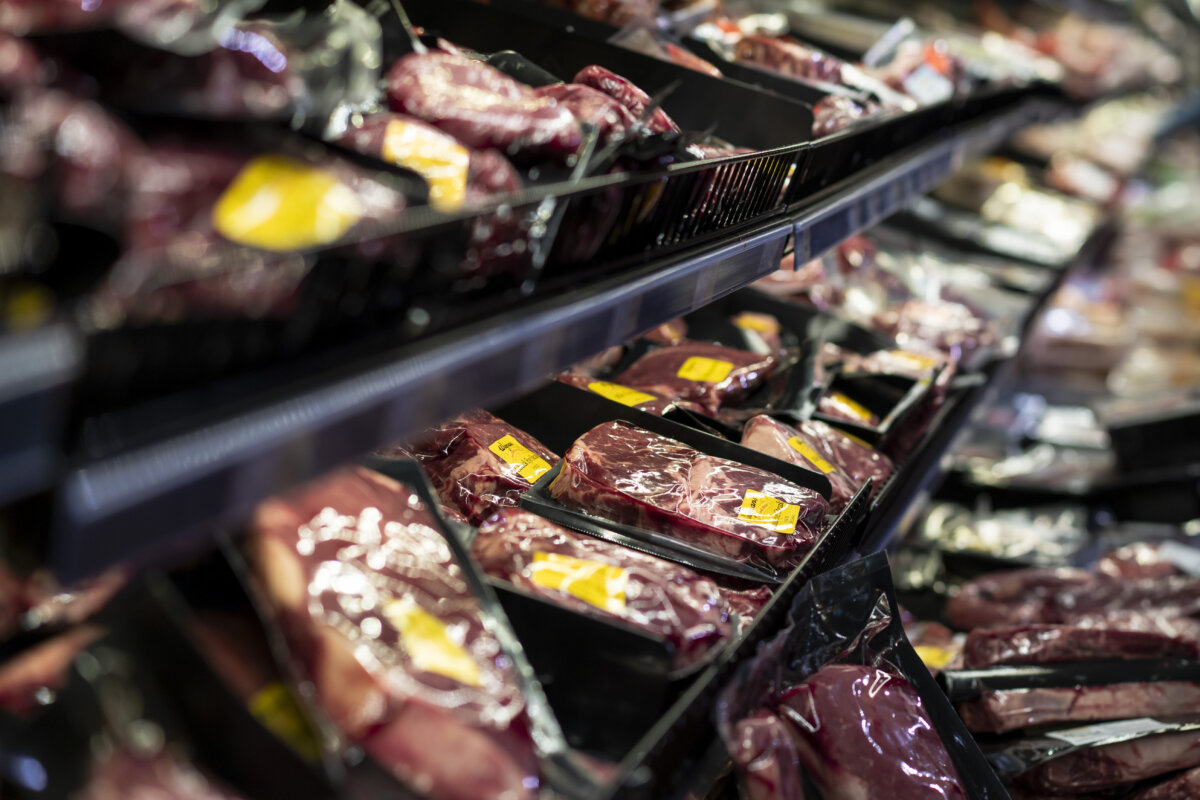 Meats on a shelf at a grocery store in Columbia, Md., on June 8, 2024. (Madalina Vasiliu/The Epoch Times)
Drought, Screwworm, Tariffs
To make matters worse, the industry is facing three additional disruptions: a prolonged drought affecting much of cattle country; the threat of an invasive pest returning to the United States; and new tariffs driving prices up on imported beef.
According to data released by the National Drought Mitigation Center based at the University of Nebraska, as much as 33 percent of the country’s alfalfa hay acreage is within an area experiencing a drought.
Mitchell said the present drought conditions, as well as similar events in 2022 and 2023, and the resulting lack of forage have led to a smaller cattle herd.
South of the border, the New World Screwworm, a potentially devastating pest, is being detected within 70 miles of the U.S.–Mexico border. The screwworm, which reproduces by laying eggs in the flesh of a living animal, was eradicated in the United States in 1966.
In May, when screwworm detections were 700 miles from the border, the United States suspended the transportation of live cattle, horses, and bison across the southern border. As of Oct. 17, the Department of Agriculture’s Animal and Plant Health Inspection Service has not yet detected any screwworms in the country.
Bullard said Mexican imports accounted for about 4 percent of the beef supply in the United States. While there is not a real market impact from the pest yet, he said, there is a “psychological reaction” to the threat, which is pushing cattle prices downward.
Finally, the new, 50 percent tariffs on imports of beef from Brazil are causing the United States to import less beef from the South American country than it otherwise would have, Anderson said.
Mitchell said the tariff on what is imported is an additional cost to domestic buyers.
In a Truth Social post published on Oct. 22, Trump said that “the only reason” cattle ranchers are “doing so well, for the first time in decades,” is because he “put Tariffs on cattle coming into the United States.”
High Prices to Continue
Given the current state of the cattle and beef markets, Mitchell and Anderson predicted that beef prices will remain high well into the future.
Anderson said the demand for beef in the United States is generally inelastic, meaning that consumers will generally continue to buy it no matter the price. While there are plenty of cheaper alternative proteins, there is no true comparable product. Mitchell said that if there is to be any substitution, it is more likely that consumers will choose to eat beef at home rather than go out for burgers or steaks.
Due to the long timeline for raising the animal, it is likely that decisions to aggressively increase the size of the domestic cattle will not have an immediate effect. Spring calving season begins in early 2026, and therefore, more mature animals will not be in the field until 2028 or 2029.
Plus, Mitchell said, if ranchers are holding back heifers now so that they can calve in 2026 and beyond, then those animals will not be going to market, either. This will further reduce the supply of animals available for processing in the short term.
“Over the next couple of years, we will see beef production decline even more,” Mitchell said. “So we will see beef prices go higher in the next couple of years.”
 Friends Read Free
Copy
Facebook
Tweet
Friends Read Free
Copy
Facebook
Tweet