
In what it calls “a new wave of agency-wide actions,” the U.S. Department of Health and Human Services (HHS) announced new steps toward halting unnecessary laboratory testing on animals.
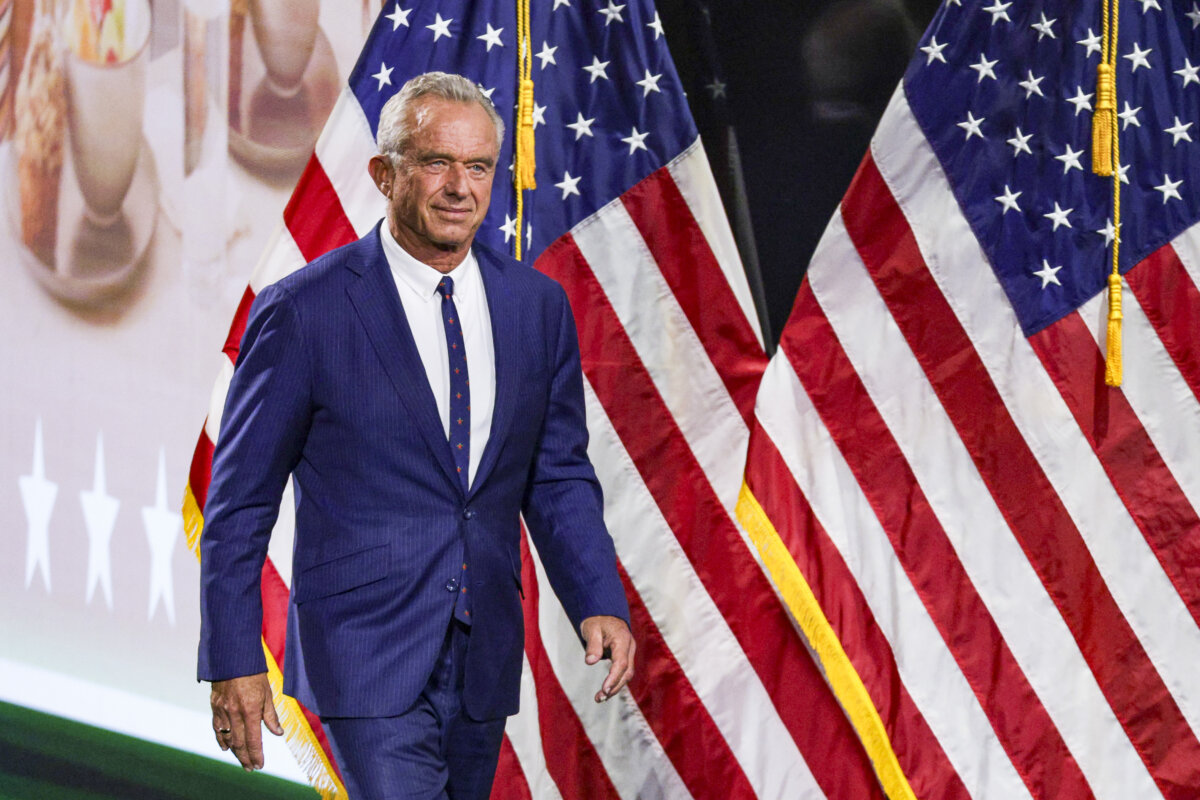
“We are moving HHS toward a new era of biomedical research that puts human biology at the center of science,” HHS Secretary Robert F. Kennedy Jr. said in a Sept. 21 news release.
The department is “modernizing outdated regulations, investing in human-based technologies, and breaking down barriers that have kept researchers dependent on animal models when better tools are available,” he said.
Since President Donald Trump’s HHS appointee, Kennedy, took office in February 2025, the department has launched more than 20 initiatives “to expand the use of technologies including human organoids, tissue models, artificial intelligence, and computational modeling while reducing reliance on animal models,” the release said.
Besides the stereotypical rodents, hundreds of types of animals are held or used in research labs across the nation. Domesticated animals such as dogs and cats are on one federal list, along with wild creatures including birds, fish, reptiles, nonhuman primates and even elephants, the largest living land mammals.
Kennedy and Agriculture Secretary Brooke Rollins head a new task force to fight animal cruelty. Rollins’ agency tracks many of the animals used in research.
According to that data, 851,423 animals were reported at U.S. research facilities in 2021. About 15 percent—128,089—were listed as held but not used. But nearly 292,000 animals were used in procedures classified as involving pain; in about three-quarters of those cases, the pain was reported to be “minimized.”
By 2025, the number of held animals had fallen by about 100,000, to 751,355. The number in pain-involved procedures fell by about 60,000, to 231,003.
Multi-Pronged Effort
At least four agencies under HHS have made important changes to support the goal of reducing reliance on animal testing, the news release said.
The National Institutes of Health (NIH) announced more than $88 million in funding for biomedical infrastructure projects nationwide. NIH also is offering more than $7 million in awards to encourage alternatives to animal testing.
Further, after closing its last on-campus laboratory that used beagles for research last year, the agency is allowing grant funding to be used to retire or rehome former research-lab animals. Private nonprofit organizations are also assisting.
 Big Dog Ranch Rescue boarding manager Michelle Williams plays with beagles rescued from the research-lab pipeline and are now up for adoption in Loxahatchee Groves, Fla., on June 29, 2026. (Natasha Holt for The Epoch Times)
Meanwhile, another HHS agency, the Food and Drug Administration, has shifted its regulations and its guidance declarations to encourage drug developers “to use scientifically validated alternatives to animal testing,” the HHS release said.
Some of those changes could spare hundreds of nonhuman primates and more than a million horseshoe crabs from experimentation each year.
Further, the Centers for Disease Control and Prevention reduced the size of its laboratory animal colony and is now using nonanimal methods in more than a dozen studies that seek to improve America’s ability to respond to public-health threats rapidly.
“We are applying greater scrutiny to animal research and focusing our resources on science that directly advances our public health mission,” CDC Director Erica Schwartz said in the release.
The Advanced Research Projects Agency for Health, a funding agency within HHS, is investing in artificial intelligence and computational modeling—advances that “can fundamentally change how we predict whether medicines will be safe for people,” the agency’s director, Alicia Jackson, said.
Nanette Holt contributed to this story.
 Friends Read Free
Copy
Facebook
Tweet
Friends Read Free
Copy
Facebook
Tweet