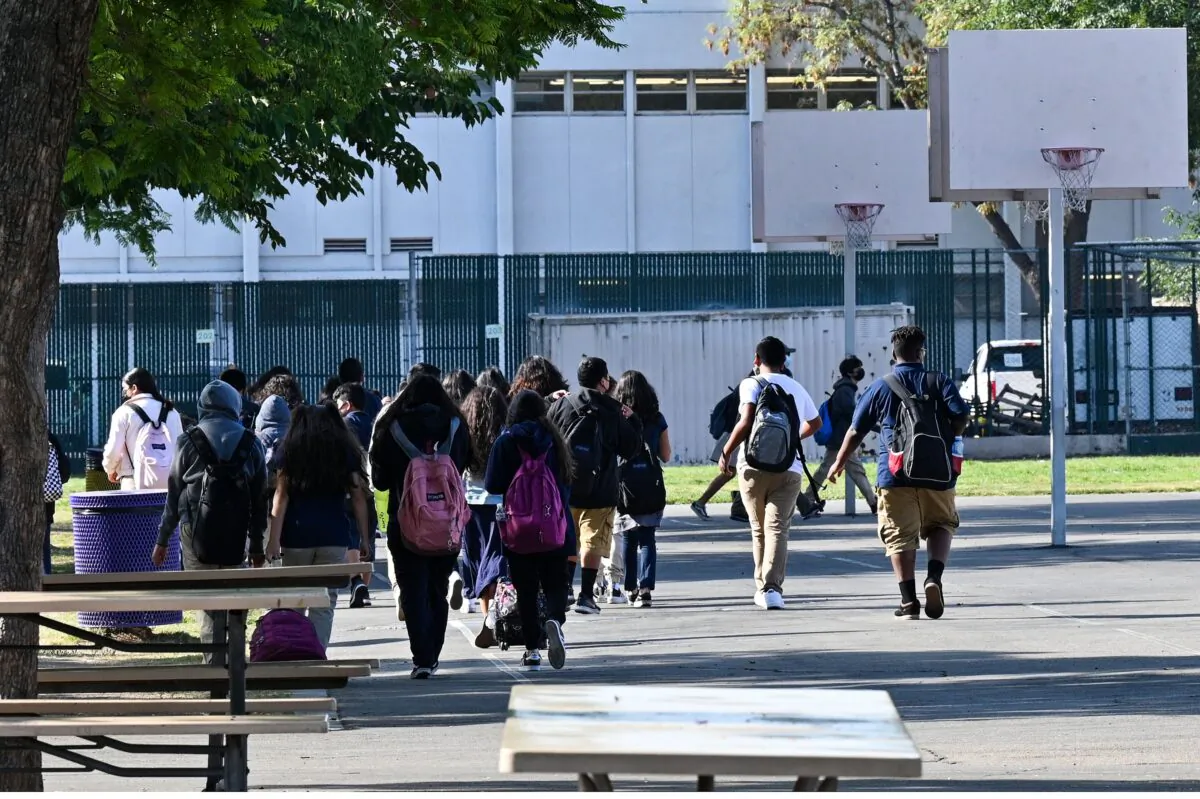

School choice or public schools? Across the nation, the great debate is heating up once again. In the end, it all boils down to how each side believes taxpayer dollars should be spent.
As a high school social studies teacher currently serving as the president of the Ohio Education Association (OEA), Scott DiMauro advocates for public schools.
“We have no concerns and fully understand that private schools have been part of the fabric of American education for centuries, or the idea that parents have options and can choose to send their kids to public schools, private schools, or home school their children,” Mr. DiMauro told The Epoch Times. “The issue and the real debate is how public taxpayer dollars are used to subsidize those options.”
The OEA—a National Education Association affiliate, headquartered in Columbus, Ohio—has 120,000 members and comprises more than 700 local affiliates and district associations across the state. Founded in 1847, the OEA is one of the oldest teachers unions in the United States.
“As public school educators, we advocate for full and fair funding of our public school system,” Mr. DiMauro said. “What we don’t believe is appropriate is that taxpayer dollars be used to subsidize private school options.”
For comparison, he said, “If somebody wants to build a private road” or “a swimming pool in their backyard,” it’s “not the taxpayer’s responsibility to do that.”
‘2 Big Issues’
In 2021, Education Next reported that 18 states enacted seven new educational choice programs and expanded 21 existing programs. EdChoice dubbed 2021 “The Year of School Choice.” On Sept. 18, National School Choice Week proclaimed that 2023 is easily lapping 2021, as “a record” 19 additional states also said “yes” to expanding school choice programs.
Vouchers are the alternative option provided to parents in Ohio. Mr. DiMauro said there are “two big issues” with vouchers.
“One, as the state spends more money on private school vouchers, it is essentially subsidizing the cost of private school tuition,” he explained.
According to EdChoice, Ohio ranked seventh in state spending for school choice programs in 2022, dedicating $394.3 million in vouchers and tax-credit scholarships.
A report (pdf) by Policy Matters Ohio showed that state lawmakers provided public schools with $12.5 billion for fiscal 2022 and another $12.7 billion for fiscal 2023, accounting for “the largest share of the state budget.”
The second issue, he said, is that “public schools are held to very high standards of accountability.”
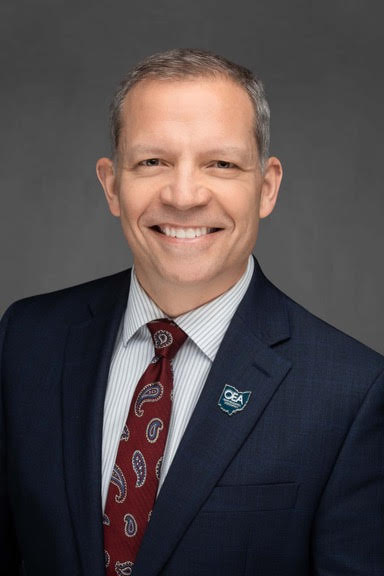
“We have a state report card that provides parents and taxpayers with information on the academic performance of schools, information on physical accountability,” Mr. DiMauro said. “There’s accountability in terms of publicly elected school boards that are required to meet and make decisions in the open, and those kinds of accountability standards just don’t exist for private schools that are receiving [a] significant amount of taxpayer dollars.”
Private School Regulation
In Ohio, regulations on private schools are extensive.
There are detailed curriculum requirements, and students must pass all five parts of the Ohio graduation tests to graduate. Every private school must submit an annual report to parents and the Ohio Department of Education proving that the school meets minimum standards.
As described by the National Association of Private Catholic and Independent Schools (pdf), school board members of private schools generally comprise the institution’s founding members. Replacements aren’t elected by the community; the Board of Trustees recommends and votes on them. The goal is to ensure continuity of the school’s founding mission rather than adapt the school to the changing preferences of new members.
“Part of the debate,” Mr. DiMauro said, “has been this notion that if you subsidize private education, that’s going to create competition, but there is absolutely no evidence that suggests that you see school improvement as a result of subsidizing private schools through voucher programs.”
But an Aug. 29 analysis of data regarding public and private schools by U.S. News & World Report showed that private school students score better in almost all subjects, with eighth-grade students scoring about 20 points higher than students from public schools or charter schools in 2022, and fourth-grade students showing a similar advantage. Students from private schools also consistently outperformed those from public schools on college entrance exams such as the SAT.
Mr. DiMauro also suggested that “private school vouchers have the impact of making school segregation worse” by exacerbating “white flight” and racial disparities.
“I’m not saying it’s the intent, but I think there’s an impact that private schools exacerbate inequities,” Mr. DiMauro said.
A 2022 study by The Century Foundation, a progressive think tank, concluded that migration, immigration, and population growth are greater contributors to school segregation than private schools.
‘Dire Situations’
In a video posted on social media in May, Georgia state Rep. Mesha Mainor said she was tired of being attacked by her fellow Democrats because of her support for school choice. In a subsequent post on July 11, she announced she “made the decision to leave the Democrat Party.”
In an interview with The Epoch Times, Ms. Mainor said the decision was motivated by the Democrats’ opposition to school choice.
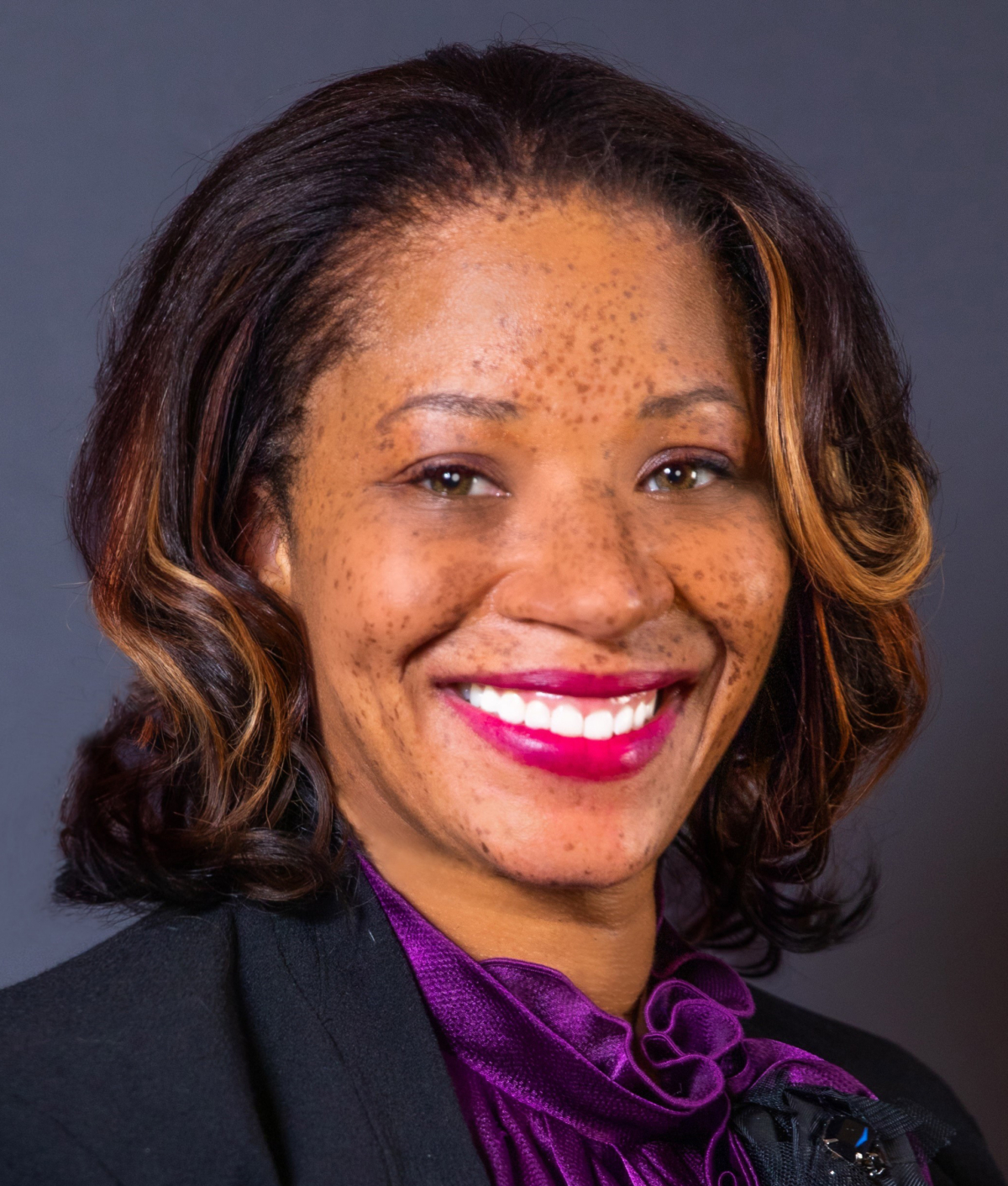
Her district, which includes a large portion of Atlanta, is divided by Interstate 75/85, she explained.
On one side of the proverbial track is the “high socioeconomic group,” comprising business owners and college graduates. On the other side is “a very low socioeconomic group” with “low education attainment and high unemployment.”
“The schools on the higher socioeconomic side are not failing, but they are overcrowded,” she said. “They are overcrowded because we have parents from the other side of the highway using someone else’s address so their child can go to a better-performing school.”
Atlanta Public Schools received nearly $1.5 billion for public education last year. Yet the percentages of eighth-grade students in Atlanta schools who were proficient in math were extremely low.
Of 26 Atlanta schools analyzed by The Atlanta Journal-Constitution, in only three were more than 50 percent of eighth graders proficient in eighth-grade math. In 19 schools, less than 25 percent were proficient, and eight schools failed to reach even 10 percent proficiency.
“Why is that a concern? We are entering into an era of artificial intelligence,” Ms. Mainor said, citing a March Goldman Sachs report (pdf) warning that 300 million jobs are going to be lost in the next 10 years to artificial intelligence.
She said that if the people she represents can’t read and can’t perform simple math, they will most likely be part of those 300 million.
“Where do we go if children can’t read who become adults who can’t read who have children who can’t read?” Ms. Mainor posited, adding that unemployment “leads to dire situations.”
“Dire situations lead to high crime, high mortality rates, and a straight K–12-to-prison pipeline,” she said.
“At this point, the for-profit prison system is benefitting because of the poor performance of public education,” she said. “For me, the option is school choice. Critics say we don’t want to take money out of public schools. The problem is the more money we put into the schools, the less we have in return on investment.”
‘Teachers Are Fed Up’
In a recent interview, American Federation of Teachers President Randi Weingarten likened the language used by advocates of school choice and parental rights to that used by Jim Crow-era segregationists.
Ms. Weingarten was speaking with Seth Harris, senior fellow at the Burnes Center for Social Change at Northeastern University, on Sept. 12.
“I was kind of gobsmacked when I was talking to Southern Poverty Law Center, and they showed me the same words: ‘choice,’ ‘parental rights,’ and attempts to divide parents versus teachers, and at that point, it was white parents versus other parents. But it’s the same kind of words,” she said.
During a 45-minute speech on March 28, Ms. Weingarten blamed the GOP for the decline in academic achievement and enrollment in public schools while mental health and substance abuse problems escalated.
“The Betsy DeVos wing of the school privatization movement is methodically working its plan” to “starve public schools of the funds they need to succeed,” Ms. Weingarten asserted. “It’s an extremist scheme by a very vocal minority of Americans, and it’s not what parents and the public want.”
During the interview with Mr. Harris, Ms. Weingarten again insisted that only a “small group of extremists” back school choice and parental rights policies over public schools.
Ms. Mainor said Democrats oppose school choice “because they’re in lockstep with the unions,” and Ms. Weingarten “gets paid a lot of money to make what she says sound right.”
“The more teachers there are, the more money unions receive,” she said.
“I represent 60,000 people,” Ms. Mainor said. “The only leaders in the community are all Democrats.”
“The school board is all Democrats. The superintendent is a Democrat. Everyone is a Democrat, and that’s how it is in most black communities,” she said. “So show me how Republicans are the reason why public schools are failing.”
Ms. Mainor said that chronically low academic performance in Georgia’s schools led to the “cheating scandal.”
In a 2011 report, the Georgia Bureau of Investigation revealed that educators in 44 of the 56 schools they examined had engaged in a cheating scheme that dated back to 2001. To artificially improve test scores, teachers and administrators provided students with answers, erased incorrect answers, hid and altered documents, offered monetary incentives to encourage cheating, and punished anyone who refused to participate.
“Teachers are fed up with the system,” Ms. Mainor said. “I know that because teachers write to me. They are leaving because they no longer want to be a part of the system where they’re sending kids to take out student loans and put them in debt when they know they can’t read. You can’t trap kids in a failing system and put them in a cycle of generational poverty.”
By the Numbers
Recent polling contradicts Ms. Weingarten’s assessment that school choice is “not what parents and the public want” and that it’s only supported by a “small group of extremists.”
A June RealClear Opinion Research survey showed overwhelming support for school choice, with 71 percent of registered voters saying parents should “have the right to use tax dollars designated for their child’s education to send their child to the public or private school which best serves their needs.”
The survey also showed that 80 percent of Republicans, 66 percent of Democrats, and 69 percent of independents support school choice, as do 73 percent of black voters, 71 percent of white and Hispanic voters, and 70 percent of Asian voters.
Reports show that students entering college lack basic math skills and are academically “stuck” in the ninth grade. While some educators blame the COVID-19 pandemic lockdowns of two years ago, Education Week reported on the same issues in 2009.
 Friends Read Free
Copy
Facebook
Tweet
Friends Read Free
Copy
Facebook
Tweet