
The Department of the Interior will cut the amount of water it allocates through the Colorado River to Arizona, Nevada, and California in 2027 and 2028.
The cuts were signed off by Secretary of the Interior Doug Burgum on Aug. 21 as part of the department’s 2027-2028 Operating Guidelines for the Colorado River, which provides water to over 40 million people, generates hydropower for seven states, and is a vital resource for 30 tribes and two Mexican states.
The Colorado River Basin is experiencing historically low runoff and reservoir levels amid a 26-year drought, which worsened recently after the winter of 2025–2026 resulted in the lowest observed snowpack on record.
The cuts were not a surprise to Arizona, Nevada, and California, as they pitched a temporary, two-year agreement to the Assistant Secretary of Water and Science in May in an effort to address the “deteriorating hydrologic conditions in the Colorado River system.”
The Lower Basin states will see water deliveries reduced by a total of 1.25 million acre-feet annually in both 2027 and 2028, with Arizona taking a reduction of 760,000 acre-feet, California 440,000 acre-feet, and Nevada 50,000 acre-feet, according to the Interior Department press release.
The plan will see the Lower Basin states face a 21 percent reduction in water from the river in 2027 and 2028, with deeper cuts later.
But a trio of states warned that if water cuts double after 2028, it would devastate their economies.
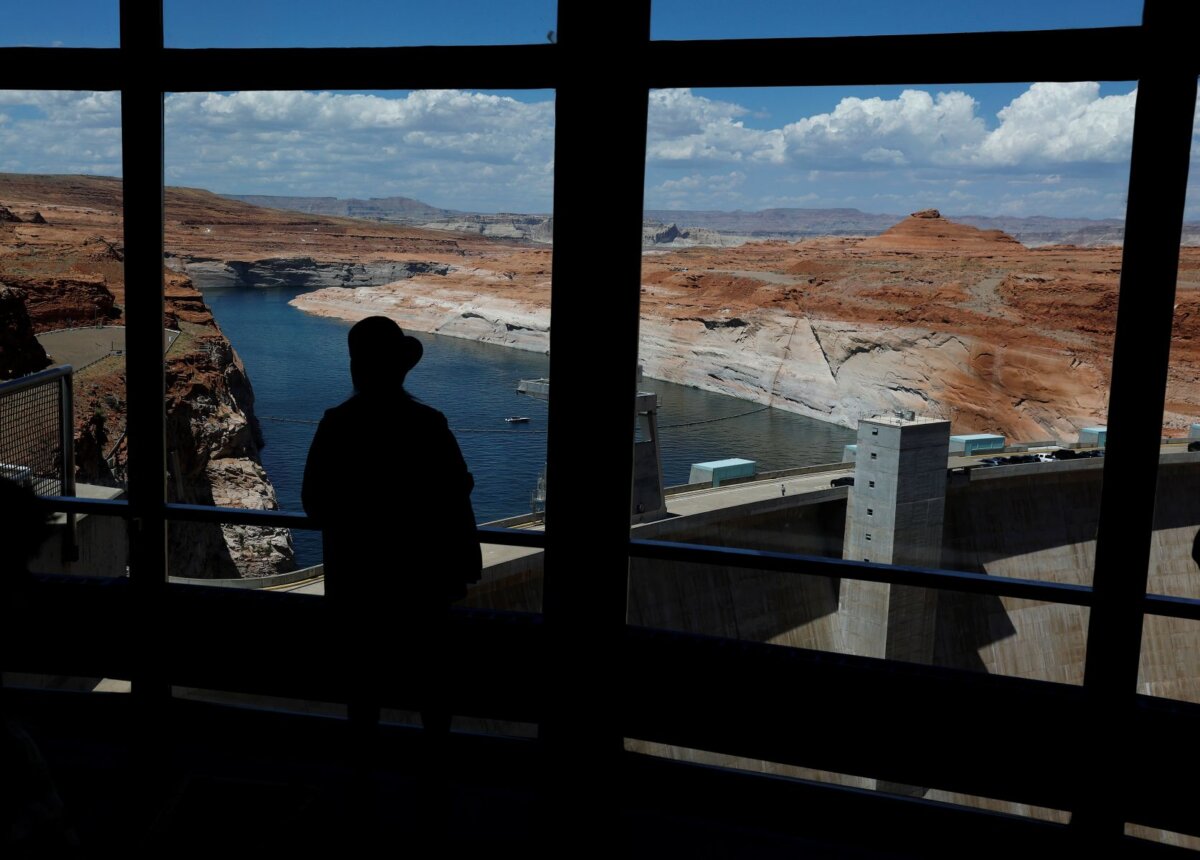
“The combined contents of Lake Powell and Lake Mead have not been this low since before Lake Powell began filling following the closure of the gates at Glen Canyon Dam in 1963, with both Lake Powell and Lake Mead hitting record lows the last few weeks,” the press release said.
The department suggested the plan will continue allowing reliable operations and water deliveries while “preserving the flexibility necessary to respond to Basin states’ voluntary actions, consensus recommendations and the continued prolonged drought,” the release said.
“Forty million people, millions of acres of farmland and ranchland, industries that power the American West, and some of our nation’s fastest growing metropolitan areas depend on the Colorado River,” Burgum said.
“These decisions provide a water management strategy for Basin stakeholders to respond to the prolonged drought by incorporating flexible tools and voluntary actions while leaving room for consensus agreements,” said Andrea Travnicek, the Assistant Secretary of Water and Science.
“The Department and Reclamation will continue to work with all Basin stakeholders to identify areas to maximize efforts throughout the Basin to modernize infrastructure, develop conservation programs, and identify innovative approaches to deliver water under changing conditions.”
Arizona Gov. Katie Hobbs, who is running for reelection this November, applauded California and Nevada for “stepping up to the plate” on Aug. 21 to implement a water allocation plan but urged that more needed to be done from other states that receive water from the Colorado River.
 Friends Read Free
Copy
Facebook
Tweet
Friends Read Free
Copy
Facebook
Tweet