
In an emergency ruling on May 19—as Georgia’s primary election day was already underway—a state court judge ruled that officials must allow observers to scrutinize election-related processes.
The decision came a day after state Sen. Greg Dolezal, who is running for lieutenant governor, joined with two fellow Republican candidates in filing a lawsuit seeking the order.
Fulton County Superior Court Judge Ural Glanville ordered Secretary of State Brad Raffensperger to immediately instruct “all staff, contractors, and county election officials under his supervision” to comply with the order, adding that outsiders must be allowed to “meaningfully observe all activities without interfering with the orderly conduct of election operations.”
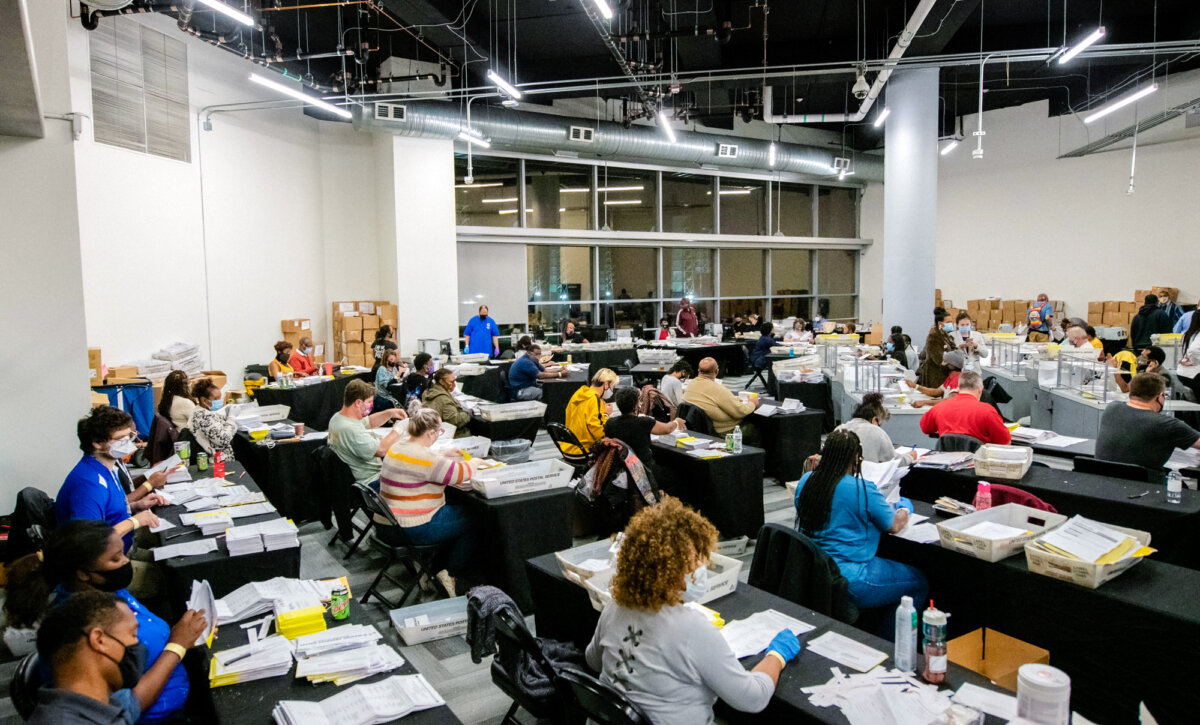
“Georgia law expressly entitles properly designated poll watchers to observe ‘the conduct of the election and the counting and recording of votes’ at tabulation centers and related locations,” the ruling states.
State law declares, “All proceedings at tabulating centers ‘shall be open to the view of the public,’” the judge noted.
The candidates would have suffered “immediate and irreparable” harm if poll watchers and observers had been barred from witnessing the process.
Further, granting the candidates’ request “imposes no meaningful burden” on Raffensperger, the judge wrote, adding: “The harm to Petitioners and the public from denial of observation rights far outweighs any minimal administrative inconvenience.”
Dolezal posted all three pages of the decision on X and applauded it.
“Bipartisan members of the State Election Board and poll watchers WILL be allowed inside Secretary Raffensperger’s ‘bunker’ to observe tonight’s process,” he wrote. “Transparency wins. The people of Georgia deserve honest, observable elections.”
Garland Favorito, co-founder of election watchdog VoterGA, alleged that the election hub, where results are aggregated, would be off-limits to “candidates, the public and even to State Election Board (SEB) members who have requested access.”
“The secret aggregation of election results is a clear violation of state election transparency law which requires all election officials to conduct all election activities in public,” he wrote May 18 on X.
The state board had requested “that a member of each of the two major political parties be present for the aggregation,” he wrote.
Favorito further stated: “The bunker is operated by the Georgia Emergency Management Agency to mitigate emergency conditions and threats. It is believed to be below an Emergency Operations Center building at an undisclosed location in the metro Atlanta area. Why Secretary Raffensperger would want to secretly aggregate results in an emergency bunker continues to be inexplicable.”
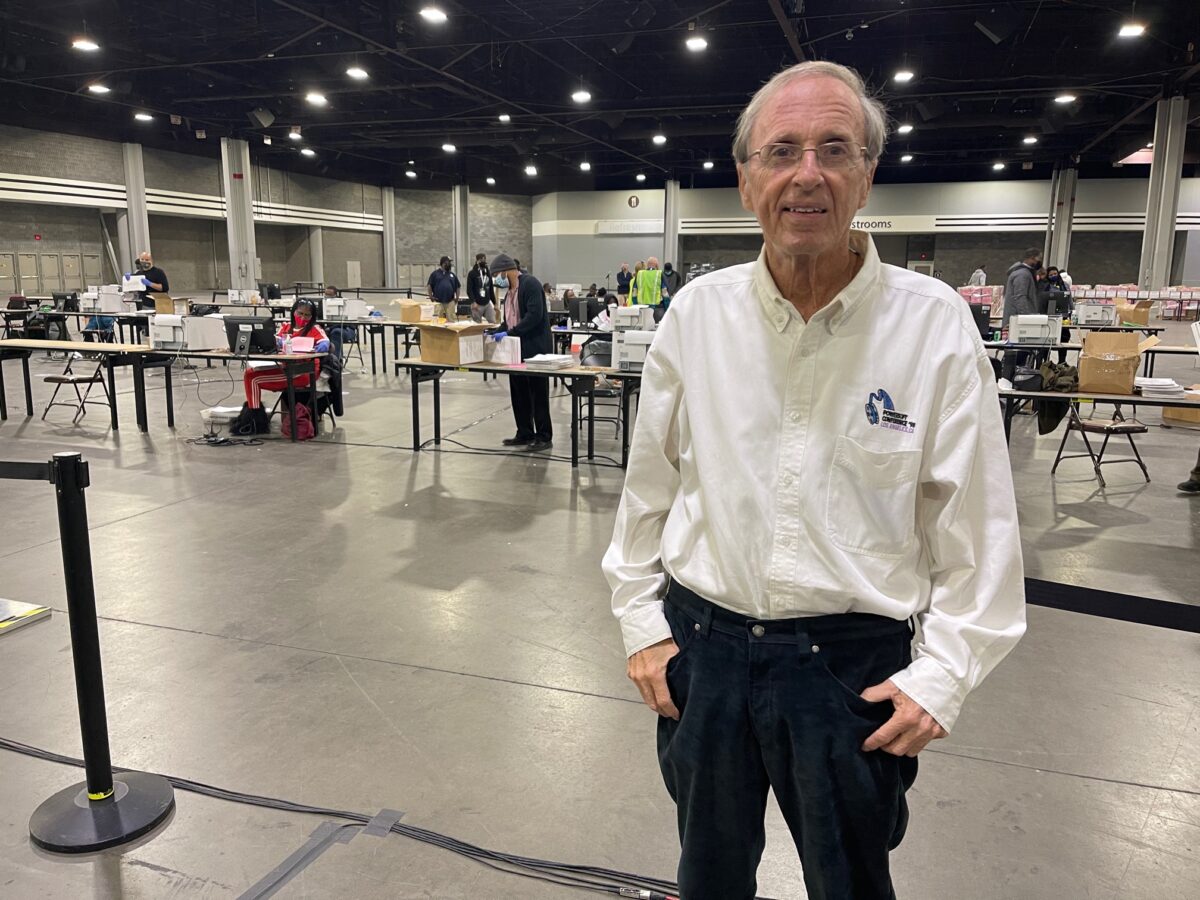 Garland Favorito, co-founder of Voters Organized for Trusted Election Results in Georgia, at the Georgia World Conference Center in Atlanta, Ga., on Dec. 1, 2020. (Roger L. Simon/Epoch Times)
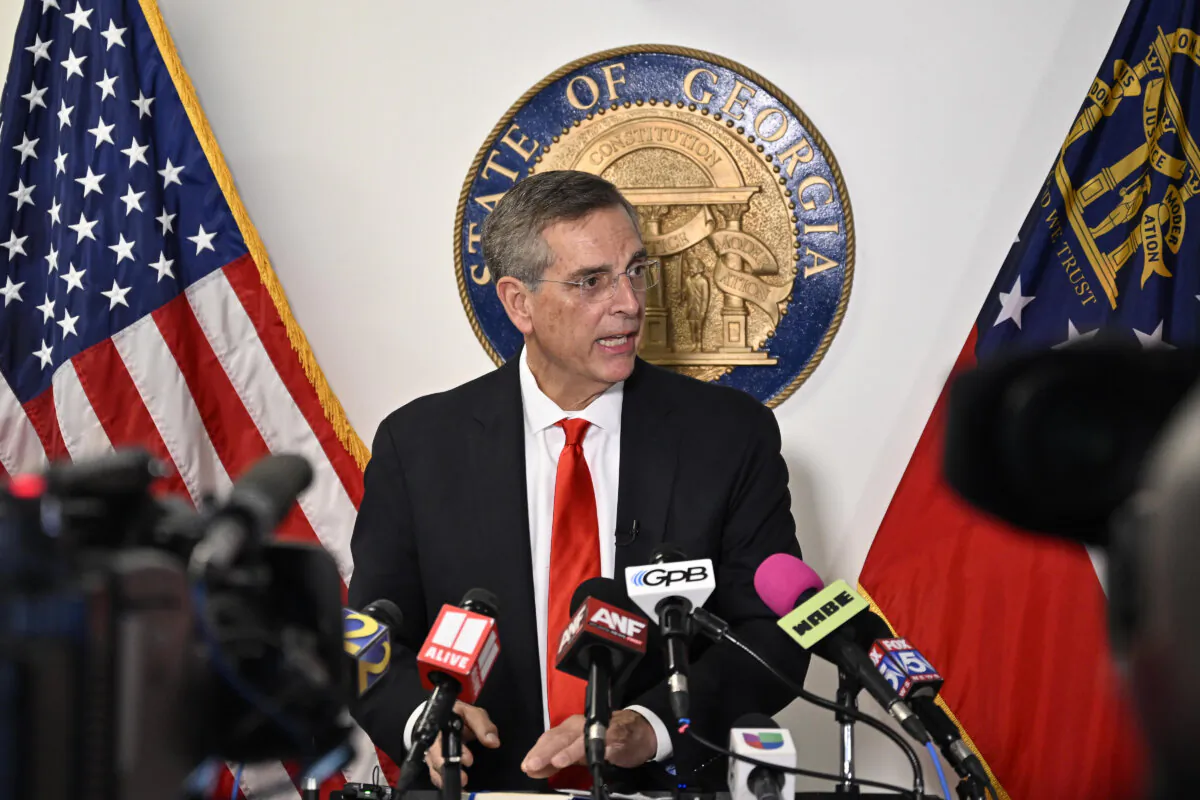
Just before the judge signed the order, Raffensperger pushed back during a news conference, without naming names.
“Despite what you have heard online, votes in Georgia are received, inspected, counted, and tabulated at the county level under the supervision of local election officials under public observation,” he told news reporters. “So, it’s a transparent process … We’re making sure that election integrity is upheld.”
Raffensperger said results are merely “aggregated” at the hub, then posted.
Dolezal filed the court action along with Cobb County Commissioner Keli Gambrill and congressional candidate Christopher Mora.
In their petition, the trio stated that employees of Raffensperger had said they intended to “exclude all poll watchers,” including officials with the independent supervisory agency, the State Election Board, from observing certain voting-related operations. That’s according to a copy of the document posted on DemocracyDocket.com.
The petitioners also argued that Raffensperger’s candidacy for governor while overseeing elections as secretary of state “creates an inherent and apparent conflict of interest,” increasing the need for “robust, court-enforced observation and immediate publication of results.”
Raffensperger did not respond to the petition, the judge noted.
However, Raffensperger told reporters that his circumstances were similar to those that surrounded current Gov. Brian Kemp during the 2018 election. Kemp was then secretary of state and running for governor.
Now, after winning the governorship twice, Kemp was barred from running during this election and must leave office in January 2027 because of state-imposed term limits.
Raffensperger cited record turnout for early voting as “further proof that Georgians trust our elections.”
He emphasized: “If you’re concerned with the integrity of the election, you should visit one or several of the 149 county tabulation centers today, instead of trying to confuse voters and some reporters with wild claims and accusations.”
Raffensperger said that “the actual work of the election” occurs at more than 2,400 precincts throughout the state.
After poll workers verify people are qualified to vote, tabulation is done at the precinct, which then reports those to counties. In turn, the counties tabulate the results and “send that up to our office, and that’s what we post on our board.”
 Friends Read Free
Copy
Facebook
Tweet
Friends Read Free
Copy
Facebook
Tweet