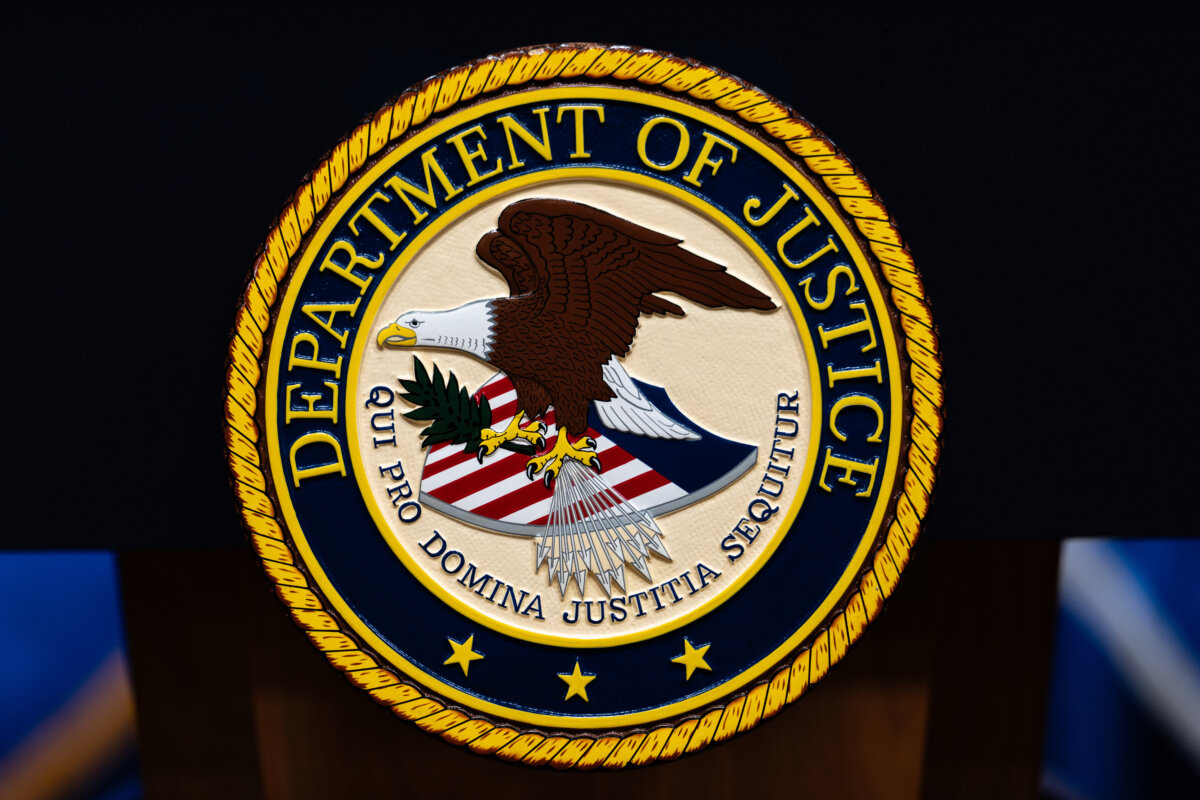

The Justice Department has withdrawn subpoenas for three reporters from The New York Times following criticism from a federal judge.
U.S. District Judge Arun Subramanian indicated on July 23 that he would have granted the request from the newspaper to reject the subpoenas if the Justice Department had not withdrawn them.
Subramanian said that the government was required to ensure that it could not obtain the information it sought from any other sources before subpoenaing journalists.
“Subpoenas are not the first thing you do; they are the last thing you do,” the judge said.
The Justice Department issued subpoenas to three journalists at The New York Times on July 10 after the newspaper published a report on alleged concerns about the new Air Force One, the plane used by the president, which was donated by the Qatari government.
The report alleged that the new aircraft lacked advanced security features, including anti-missile capabilities. It also said the Secret Service had urged President Donald Trump to use the old Air Force One as he departed from the NATO summit in Turkey earlier this month.
U.S. Attorney for the Southern District of New York Jay Clayton, who was nominated by Trump to be the next director of national intelligence, issued the subpoenas.
During the July 23 hearing, Subramanian questioned government lawyers regarding the steps they took in their investigation. He cited rules protecting against violations of the First Amendment and said the department’s actions had turned the law “on its head.”
“When you see something like this, if this were a civil proceeding, what I would normally do is ask the parties to show causes why sanctions should not be issued,” the judge said.
A Justice Department spokesperson told The Epoch Times in an email on July 23 that Subramanian threatened the government attorneys with sanctions unless the subpoenas were withdrawn. The spokesperson said the judge also blocked the government from “presenting the meticulous process of this investigation.”
“The grand jury has a right to hear testimony from all material witnesses in a federal criminal investigation,” the spokesperson told The Epoch Times. “This judge’s conduct overrides clear longstanding principles and common sense-blocking the grand jury from receiving core evidence in a national security investigation.”
Despite withdrawing the subpoenas on Thursday, the Justice Department spokesperson confirmed that the investigation remained ongoing.
“Make no mistake, this investigation remains ongoing, and we will pursue justice against those threatening national security by leaking classified information, a serious federal crime,” the spokesperson added.
In a statement on July 11, David McCraw, the senior vice president and deputy general counsel for The New York Times, criticized the subpoenas as an “attempt to prevent the public from knowing what is happening in their country by intimidating journalists from doing their jobs.”
The Justice Department’s rapid response account responded by saying that the department had an important role to ensure that people entrusted with classified information did not share it. “To be clear, reporters are not the targets; those leaking classified information are,” the department said.
On July 15, The New York Times asked a court to toss out the grand jury subpoenas. In a motion unsealed on July 20, the paper also said the Justice Department issued subpoenas to obtain phone records of the publication’s journalists and some of their family members.
“Two of the subpoenas seek records beginning on January 1, 2026, long before the events that are purportedly the basis for the Department’s investigation,” the publication wrote in a letter. “That timeframe strongly suggests that the Department is using this investigation not to focus on any purported concerns arising from the July 8 and 9 articles, but instead to forage for information about the Journalists’ source relationships more broadly.”
During his confirmation before the Senate Intelligence Committee on July 15, Clayton maintained that the Southern District of New York’s office followed protocol when issuing the subpoenas.
“I’m confident that the procedures that we have in place to protect the First Amendment and protect the freedom of the press and not result in intimidation of journalists or the like were followed,” he said.
Jacki Thrapp, Aldgra Fredly, and The Associated Press contributed to this report.
 Friends Read Free
Copy
Facebook
Tweet
Friends Read Free
Copy
Facebook
Tweet