
A federal lawsuit filed Thursday in the Middle District of Louisiana seeks to block state officials from suspending U.S. House primary elections after the Supreme Court struck down Louisiana’s congressional map for relying too heavily on race.
The lawsuit was filed by Democratic candidate Lindsay Garcia and voter Eugene Collins against Gov. Jeff Landry after he ordered a suspension of the primary elections on the same day.
The plaintiffs argue the move is unconstitutional and disrupts an ongoing election.
Landry posted on X on Thursday about his suspension of the elections.
“The best way to stop discrimination on the basis of race is to stop discriminating on the basis of race. Here in Louisiana, we’re proud to lead the nation on this charge,” Landry said.
“Allowing elections to proceed under an unconstitutional map would undermine the integrity of our system and violate the rights of our voters. This executive order ensures we uphold the rule of law while giving the Legislature the time it needs to pass a fair and lawful congressional map.”
The U.S. Supreme Court on Wednesday limited the use of race in redistricting in a case involving Louisiana’s congressional map. In a 6–3 ruling in Louisiana v. Callais, the court held that race cannot be the predominant factor in drawing congressional district boundaries.
The dispute centers on whether a lower court properly ordered Louisiana to create a second majority-black congressional district under the Voting Rights Act.
Courts have stated the Voting Rights Act allows states to take race into account when drawing electoral boundaries, but that electoral maps drawn explicitly based on race are unconstitutional.
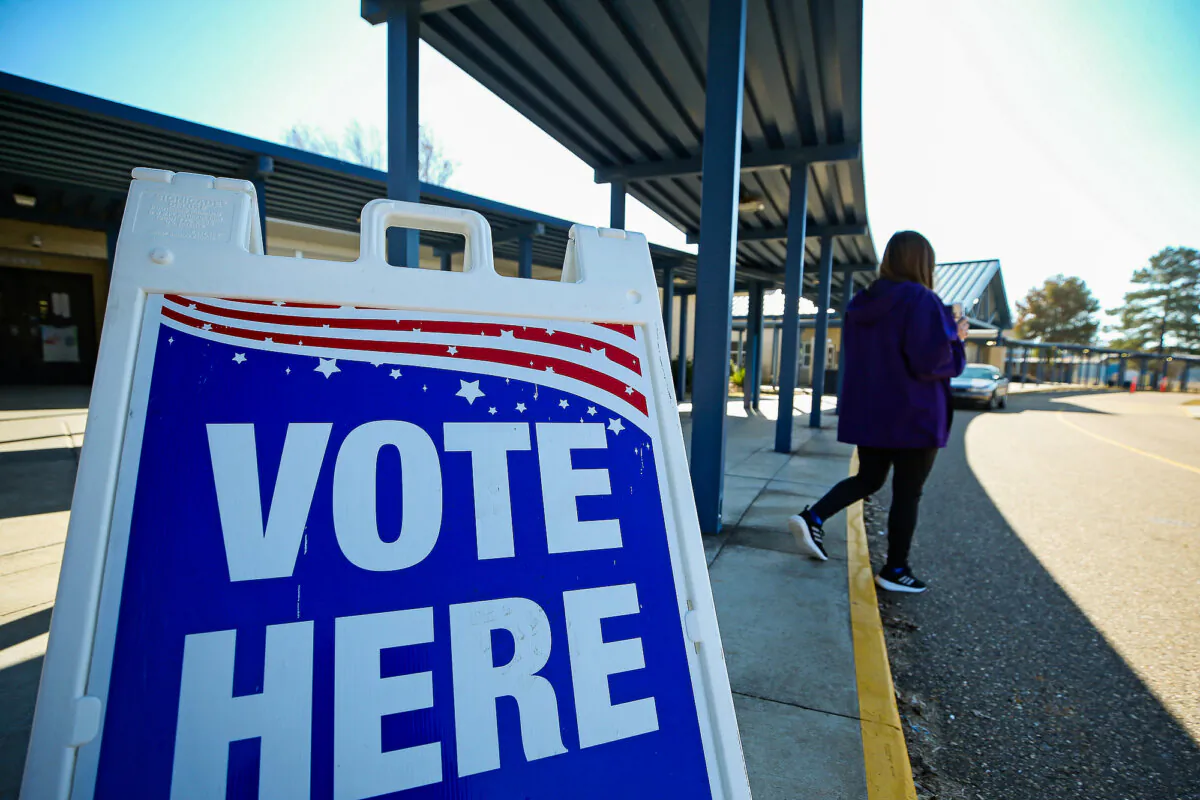
U.S. House of Representatives primary elections in Louisiana were scheduled for May 16 and June 27.
The federal lawsuit seeking to have the elections continue said the Supreme Court did not mandate, recommend, or authorize the suspension of any election and did not direct the state to halt voting already underway.
The complaint argues the suspension came after voting had already begun, with more than 100,000 absentee ballots mailed to voters statewide, including military members, students, and elderly residents.
Early in-person voting was also set to begin within days of the order. The lawsuit says halting only the U.S. House races—while leaving other contests on the same ballot intact—creates confusion for voters and election officials and risks suppressing turnout.
Landry’s office did not respond to an email seeking comment on the lawsuit.
 Friends Read Free
Copy
Facebook
Tweet
Friends Read Free
Copy
Facebook
Tweet