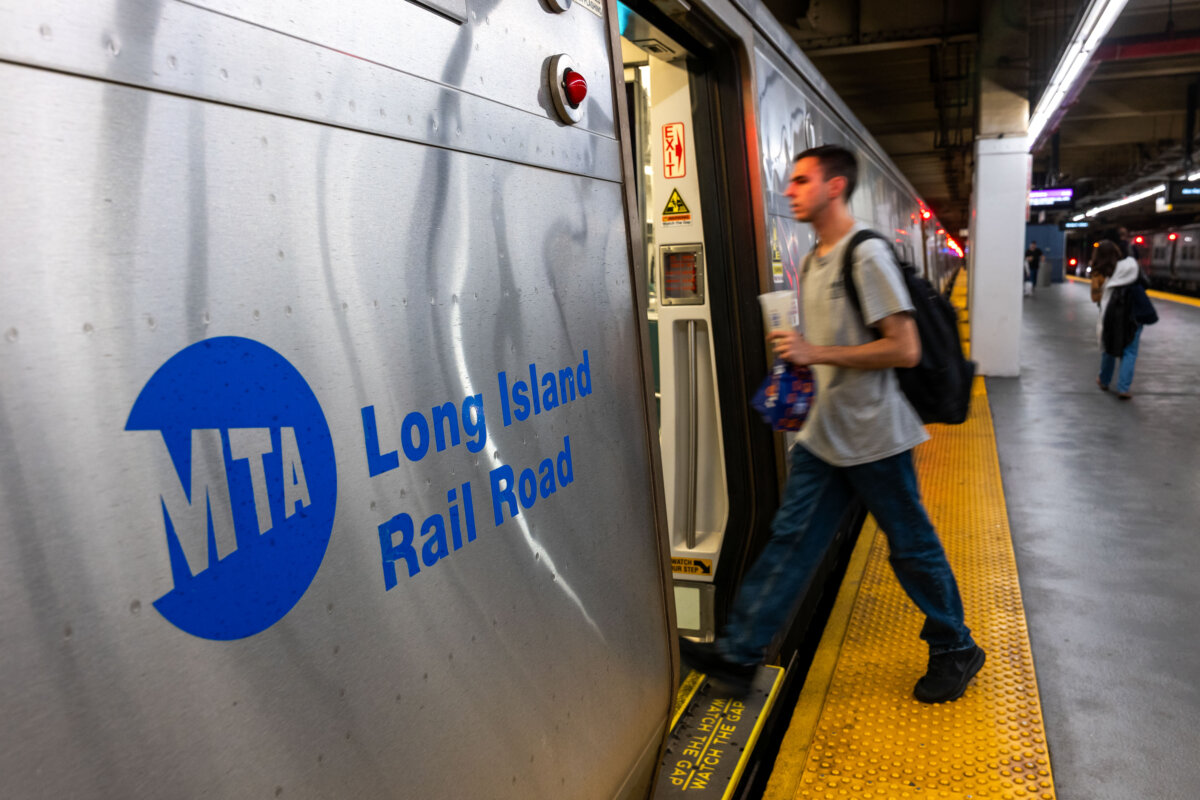

The Long Island Rail Road (LIRR), the busiest commuter railroad in North America, is moving closer to a possible strike as labor unions and New York state officials remain deadlocked over wage increases.
The possibility of a walkout grew more serious after a 12-hour negotiating session on Thursday ended without a deal. Talks resumed on Friday morning.
The dispute involves a five-union bargaining coalition representing more than 3,500 LIRR employees—including engineers, signal workers, machinists, electricians, and communications workers—and the Metropolitan Transportation Authority (MTA), the state agency that runs the railroad.
The two sides have reached an agreement on the first three years of a contract that would be retroactive to 2023, but they remain divided over terms for a fourth year.
The unions are seeking a retroactive 9.5 percent wage increase covering the past three years, matching the deal the MTA has offered several other transit and civil service unions in recent months. On top of that, they want a 5 percent raise for the current year, a demand that exceeds the MTA’s offer to other unions.
The MTA has countered with a 3 percent raise for 2026, in addition to cash compensation. MTA officials said they worried that agreeing to the unions’ request would set a pattern for future negotiations with other unions, and, by that measure, every 1 percent increase would add $100 million to the MTA’s budget.
To cover that expense, MTA chief financial officer Jai Patel said the agency might need to raise fares by 8 percent instead of the scheduled 4 percent, seek additional taxes from the state, cut services, or shed its workforce.
“I think it’s clear a strike is bad for everyone,” Patel said on an April 29 board meeting.
Union leaders, however, have argued that MTA’s proposed wage increases are not enough to keep pace with the cost of living in one of the country’s most expensive metropolitan areas. The workers have not received raises since 2022, they said.
“We are still fighting for something very simple: a contract that keeps pace with the cost of living,” Kevin Paxton, vice president of the Brotherhood of Locomotive Engineers and Trainmen, said in a statement.
If no agreement is reached, a strike could shut down the LIRR at noon on Saturday.
A strike would severely disrupt transportation across Long Island and into New York City. If workers walk off the job, the LIRR plans to offer bus connections from five stations to subway lines in Queens. The agency is also urging some passengers to use the Long Island bus service to reach subway connections.
But MTA officials have warned that those contingency measures would not come close to replacing a rail system that carries more than 250,000 riders on an average weekday.
“This is a limited-service plan,” MTA chief customer service officer Shanifah Rieara said at the April 29 board meeting.
“We cannot possibly replace Long Island Rail Road’s daily service. But we’re going to do our best to ensure that no essential worker is stranded or left behind.”
Rieara said the MTA would encourage passengers to work from home if possible.
 Friends Read Free
Copy
Facebook
Tweet
Friends Read Free
Copy
Facebook
Tweet