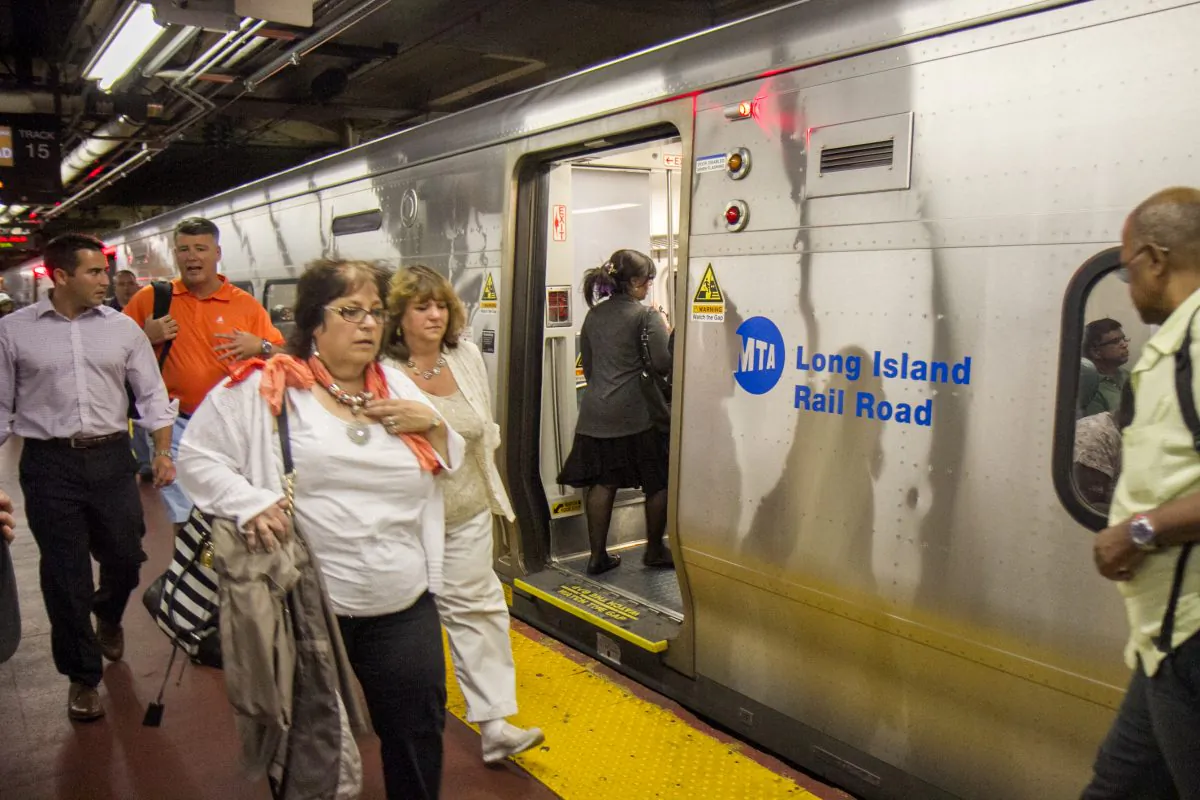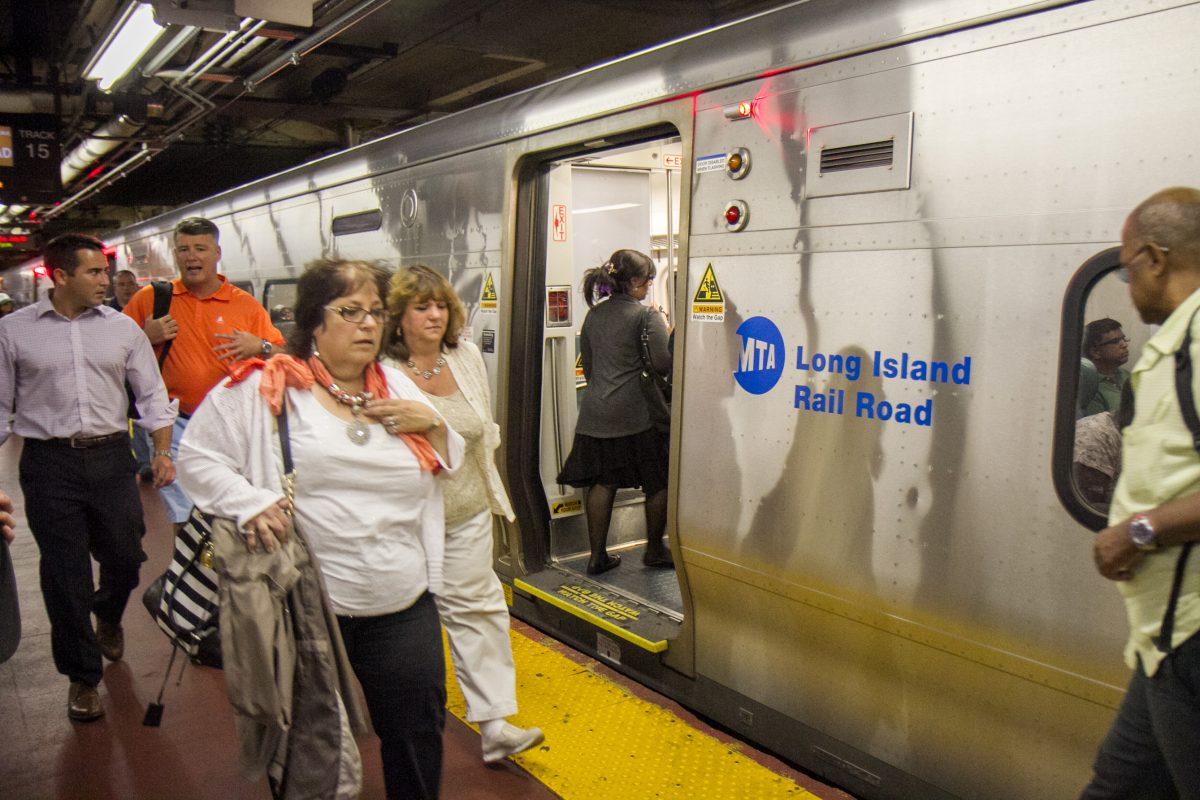

Members of a union representing the engineers working for New York’s Long Island Rail Road voted to approve a strike, but the union and other unions are first requesting federal intervention.
Leaders of the Brotherhood of Locomotive Engineers and Trainmen (BLET), along with representatives of four other unions representing workers on the Long Island Rail Road, said on Sept. 15 that they had voted to authorize a strike if a contract agreement is not reached.
Under the terms of the vote, workers could strike as soon as Sept. 18, the unions said at a news conference in New York City. However, the labor coalition is instead requesting that President Donald Trump convene a Presidential Emergency Board to mediate the dispute.
In addition to BLET, the other unions in the coalition are the Brotherhood of Railroad Signalmen, the International Association of Machinists and Aerospace Workers, the International Brotherhood of Electrical Workers, and the Transportation Communications Union. Together they represent more than half of the railroad’s unionized workforce.
At the news conference, BLET General Chairman Gilman Lang said the decision to seek federal mediation “does not mean a strike won’t happen, but it does mean it won’t happen now.”
A strike by Long Island Rail Road workers could impact roughly 270,000 to 300,000 daily commuters across Long Island. The transit system is currently expecting an uptick in passengers related to the 2025 Ryder Cup at Bethpage State Park near Farmingdale, New York, set for Sept. 26 to Sept. 28.
According to Jim Louis, BLET’s national vice president, federal transit law allows for a board to review proposals from both sides, recommend solutions, and impose a cooling-off period that delays any work stoppage.
If a settlement is not reached through that process, the earliest potential strike could occur in mid-May 2026.
The Metropolitan Transportation Authority (MTA), which governs public transportation infrastructure in the greater New York City area, is proposing that the unions take a 9.5 percent wage increase over the next three years. Union leadership on Sept. 15 contended that the proposal does not keep up with rising inflation or with wage growth at similar jobs, and it is instead seeking a 16 percent wage increase over a four-year period.
In a statement that the authority published immediately after the announcement, John McCarthy, the MTA’s chief of policy and external relations, said the vote and news conference was an admission that the unions “never had a plan to resolve this at the bargaining table.”
“If these unions wanted to put riders first, they would either settle or agree to binding arbitration,” McCarthy stated. “If they don’t want to strike, they should say so—and finally show up to the negotiating table. This cynical delay serves no one.”
On Sept. 11, the MTA announced contingency plans, including limited shuttle-bus service during peak hours, suggested alternative subway drop-offs, and prorated refunds for monthly ticket holders.
On Sept. 15, Gilman accused the MTA of running a “scare campaign” designed to frighten riders who rely on the Long Island Rail Road.
Also on Sept. 15, New York Gov. Kathy Hochul issued a statement saying: “There is a fair offer on the table.
“I have directed the MTA to be ready to negotiate anytime, anywhere.
“Unfortunately, five unions have refused to come to the table in good faith and rejected binding arbitration, putting riders at risk of an unnecessary strike.”
Union representatives at the news conference criticized the governor.
“Gov. Hochul has decided to play games, games of political convenience, and the worn-out blame game of blaming the current administration. This is nonsense,” Nick Peluso, national vice president of the Transportation Communications Union, said.
 Friends Read Free
Copy
Facebook
Tweet
Friends Read Free
Copy
Facebook
Tweet