
Missouri lawmakers convened in Jefferson City, Missouri, on Sept. 3 for a special legislative session that could help deliver another seat in the House to the Republican Party.
In the special session, the state’s General Assembly will deliberate over the new Missouri First District map and potential changes to the state’s initiative petition process. The special session, called by Missouri Gov. Mike Kehoe, a Republican, on Aug. 29, will likely last from Sept. 3 through Sept. 10.
The redistricting effort comes at the urging of President Donald Trump, who has encouraged Republican-led states to redraw voting districts mid-decade to preserve or expand GOP representation in the House. Missouri currently holds eight congressional seats. Six are represented by Republicans and two by Democrats.
In his Aug. 29 announcement, Kehoe unveiled a proposed new map that seeks to break up the existing Fifth Congressional District, which currently encompasses most of the Kansas City, Missouri, metropolitan area. As proposed, the district would be absorbed into a new, mostly rural fifth district in western-central Missouri south of the Missouri River; a redrawn, mostly rural fourth district in western Missouri; and a redrawn, mostly rural district covering western Missouri north of the Missouri River.
Missouri is the third state to pursue mid-decade redistricting for partisan purposes, following Texas and California. Other Republican-led states—including Indiana, Florida, and Ohio—are considering similar efforts.
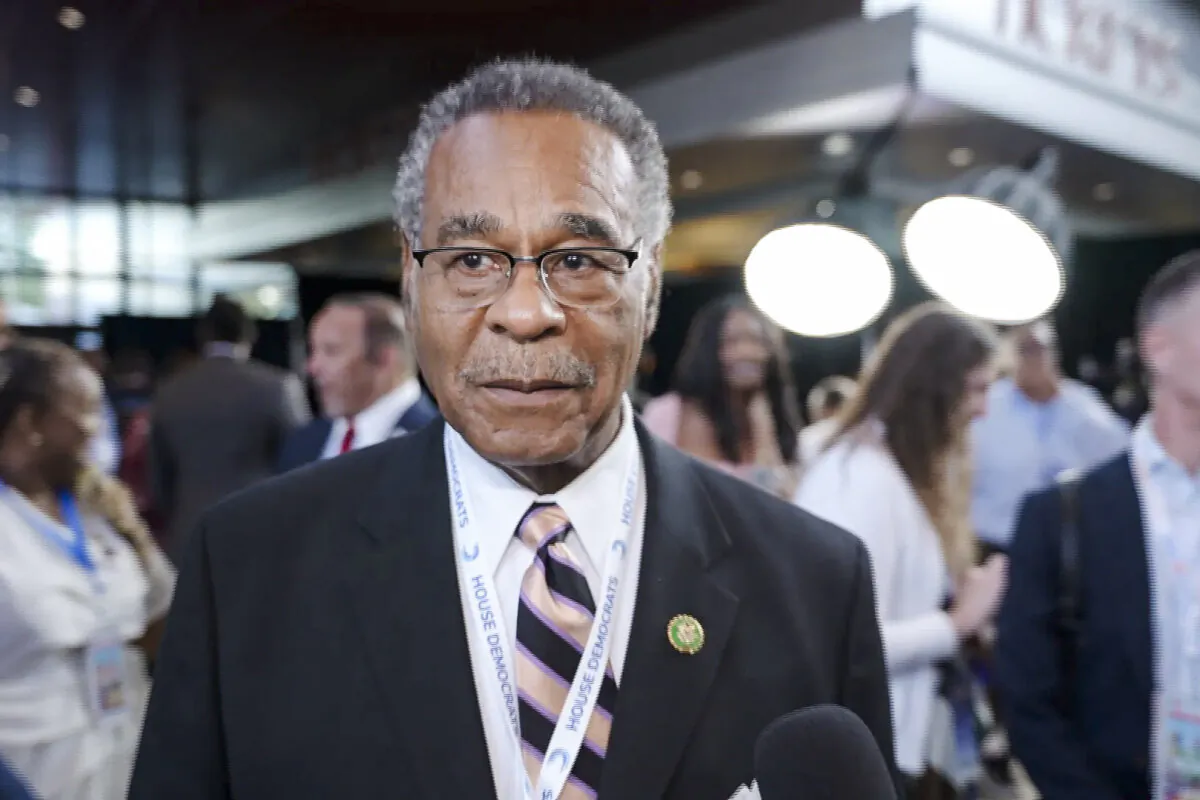
Rep. Emanuel Cleaver (D-Mo.), who currently represents the Fifth Congressional District, called the proposed map “an unconstitutional attack.” Cleaver, a former mayor of Kansas City, has represented the urban district for more than 20 years. Democrats have held the district since 1949.
“In attempting to dismantle the Fifth District, state lawmakers would be working to drown out Missouri voices in favor of a single man a thousand miles away,” Clever said in a statement published on Aug. 29. “It is my sincere hope that they will not give in to this short-sighted and irresponsible demand.”
The proposal also makes smaller adjustments to the St. Louis region. However, it does not seek to make a similar change to the First Congressional District that is currently represented by Rep. Wesley Bell (D-Mo.).
According to Kehoe, the map is more compact and contiguous than the current configuration, splits fewer counties and municipalities, and retains current members of Missouri’s congressional delegation in their existing districts.
“Missourians are more alike than we are different, and our Missouri values, across both sides of the aisle, are closer to each other than those of the extreme Left representation of New York, California, and Illinois,” Kehoe said in a statement. “Missouri’s conservative, common-sense values should be truly represented at all levels of government, and the Missouri First Map delivers just that.”
The session will also include proposals to amend the state’s initiative petition process.
Among the changes are requiring a statewide majority and a majority of votes in each congressional district for a ballot measure to pass, banning foreign contributions to committees for or against statewide ballot initiatives, criminalizing fraudulent signature gathering, and expanding public access and transparency requirements.
The move could dilute the voting power of St. Louis and Kansas City, the state’s largest and second-largest population centers. Both were instrumental in passing an initiative petition that overturned the state’s abortion restrictions in 2024. The petition process also yielded legalized recreational marijuana in 2022 and sports betting in 2024.
Given the GOP’s extreme numeric advantage in the statehouse, the Republican-led effort is likely to succeed. Republicans hold 24 of the 34 seats in the state Senate and 108 of the 163 seats in the state House of Representatives.
If successful, the redrawn congressional map would likely make it more difficult for Democratic Party candidates to represent the state’s Fifth Congressional District in Washington. The move would likely send another seat to the GOP, which currently holds a slight, 219 to 212 majority in the U.S. House.
 Friends Read Free
Copy
Facebook
Tweet
Friends Read Free
Copy
Facebook
Tweet