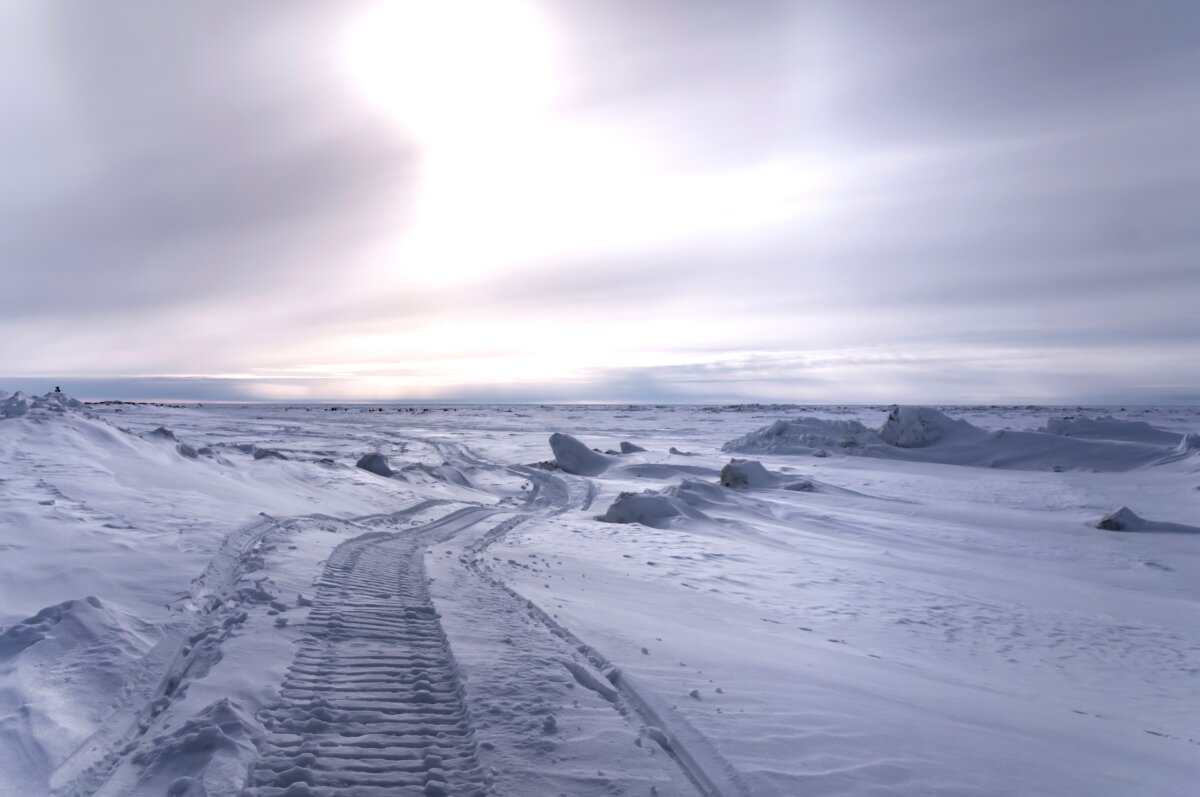

Americans living in the nation’s northern-most city saw the sunset on Nov. 18, and they won’t see it rise again until Jan. 22, 2026.
Formerly known as Barrow, the town of Utquiagvik sits on Alaska’s Arctic Coast, about 300 miles north of the Arctic Circle and adjacent to Point Barrow, which is considered the northernmost point of all U.S. territory. It is home to nearly 5,000 people, most of whom are Inupiaq, a Native American people.
At approximately 1:36 p.m. local time, the sun dipped below the horizon for the last time of 2025. It won’t completely clear the horizon again for 64 days. This phenomenon is called the Polar Night, and it is experienced by communities all over the world at higher latitudes as the Earth continues its annual tilt on its axis, bringing the northern hemisphere into winter and moving places like Utquiagvik out of the sun’s line of sight.
This night won’t be completely dark. The town’s residents will still experience “civil twilight,” which allows the sun’s glow to peak over the southern horizon for a few hours a day. The sky will also be illuminated by the Aurora Borealis.
Meanwhile, the North Pole itself won’t see the sun for nearly 180 days, and the town of Ny-Ålesund, in Norway’s Svalbard archipelago, won’t see the sun for more than 80 days and won’t even get twilight.
The amount of daylight will continue to diminish across Alaska, with even Anchorage receiving as little as 5.5 hours of sunlight during the winter solstice. Fairbanks, situated closer to the Arctic Circle, will receive less than four hours of daylight on the shortest day of the year.
Come summertime, though, the opposite effect will occur.
The sun will peak over the horizon for less than an hour in January, appearing to emerge from the south rather than the east. Each day after the sun clears the horizon will get longer and longer until the sun never sets above the Arctic Circle, and Alaska lives up to its nickname, “The Land of the Midnight Sun.”
Elsewhere, the days in Antarctica and at the South Pole are currently getting longer as the southern hemisphere begins its summer. The United States’s McMurdo Base, the nation’s largest year-round base and logistics hub for the U.S. Antarctic Program, is already in perpetual sunlight.
 Friends Read Free
Copy
Facebook
Tweet
Friends Read Free
Copy
Facebook
Tweet