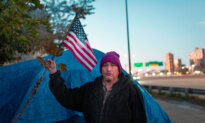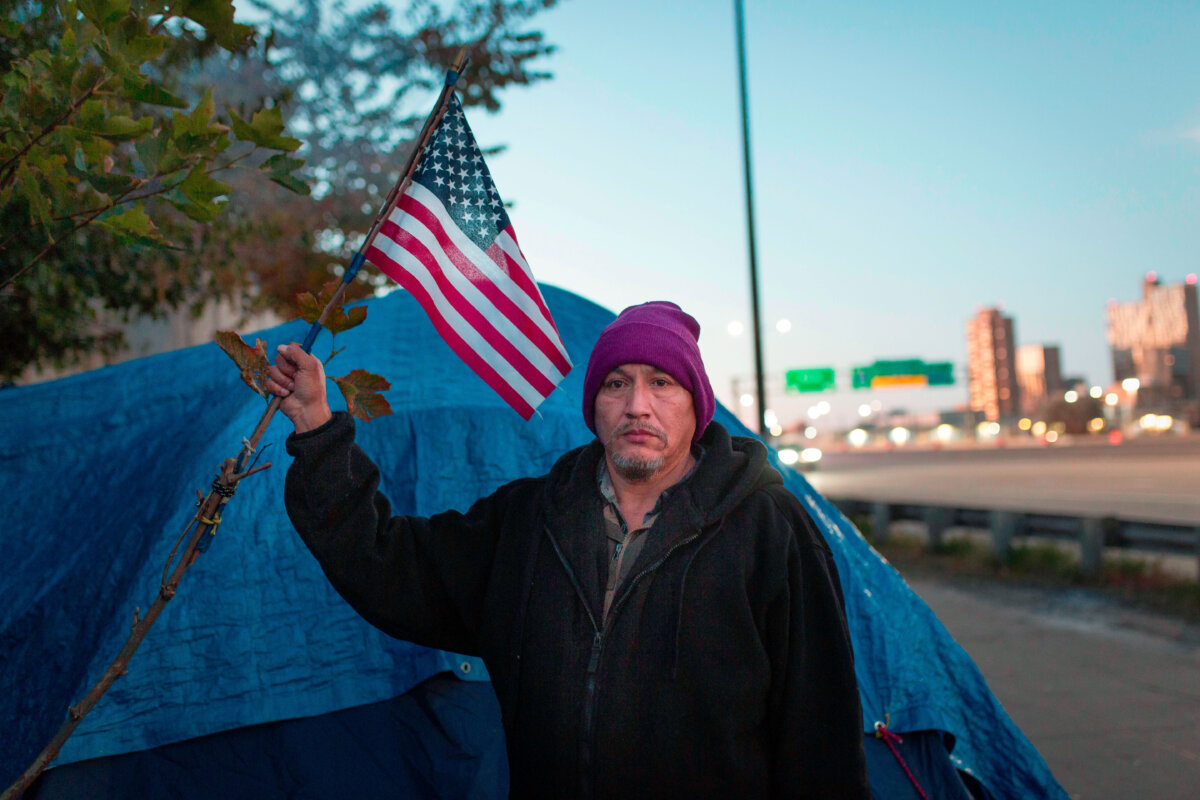

The Department of Veterans Affairs (VA) permanently housed 51,936 homeless veterans during fiscal year 2025, the largest figure in seven years, the department said in a statement released on Nov. 18.
In FY 2025, VA housed 4,011 more veterans compared to FY 2024 under the prior administration, it said.
“This is life-changing and in many cases life-saving work,” VA Secretary Doug Collins said.
“We are proud of the progress VA is making to get Veterans off the streets and are redoubling our efforts to continue this momentum moving forward.”
President Donald Trump signed an executive order on May 14 aimed at tackling homelessness among veterans.
“Our Nation’s security, prosperity, and freedom would not be possible without our veterans. Many service members paid the ultimate sacrifice. Many others bear visible and invisible wounds from their service. Too many veterans are homeless in America. Each veteran deserves our gratitude,” Trump said in the order.
“Yet the Federal Government has not always treated veterans like the heroes they are.”
The order directed the secretary of Veterans Affairs to set up a National Center for Warrior Independence on the West Los Angeles VA campus, where homeless veterans can seek and receive care, with the center estimated to provide housing and other support to approximately 6,000 homeless veterans by 2028.
The VA launched the “Getting Veterans Off the Street” initiative in May, complementing Trump’s executive order.
Under the initiative, every VA health care system across the United States hosted outreach events to identify homeless veterans and offer them housing and other services, the department said.
The programs helped shift 25,065 unsheltered veterans into permanent or interim housing.
In July, the Senate Committee on Banking, Housing, and Urban Affairs advanced the bipartisan Housing Unhoused Disabled Veterans Act, according to a July 29 statement from the office of Sen. Alex Padilla (D-Calif.), a lawmaker backing the bill.
The bill seeks to exclude disability payments received by veterans from annual income used to assess housing assistance under the Department of Housing and Urban Development’s Veterans Affairs Supportive Housing program.
“Our nation’s veterans who made tremendous sacrifices to serve our country and protect their fellow Americans deserve our utmost support to help access housing opportunities,” Sen. Katie Britt (R-Ala.) said.
“This commonsense bill would simply exclude disability benefits from HUD’s annual income calculation, so disabled veterans are not unfairly disqualified from accessing these vital services.”
Meanwhile, the VA is also reducing the backlog of veterans waiting for compensation and pension benefits, thus easing the financial situation of many former military members.
On Nov. 18, the VA announced that the backlog had been reduced from 264,717 cases on Jan. 20 to 112,353 as of now, a 57 percent reduction.
During FY 2025, VA processed 3,001,734 disability compensation and pension claims, which it said was an “all-time high.”
“VA is constantly raising the bar for customer service and convenience,” Collins said in the statement.
“Our record claims processing productivity is proof these efforts are working. Veterans deserve fast and accurate claims decisions, and we look forward to continuing to deliver amazing results to those who have worn the uniform.”
The VA said it distributed $195 billion in compensation and pension benefit payments to more than 6.9 million veterans and survivors in 2025.
According to data from the U.S. Census Bureau, there were about 15.8 million military veterans in the United States in 2023, representing 6.1 percent of the country’s adult civilian population aged 18 and above.
Nearly 28 percent of these veterans were 75 years or older, while 8.3 percent were younger than 35, it said.
 Friends Read Free
Copy
Facebook
Tweet
Friends Read Free
Copy
Facebook
Tweet