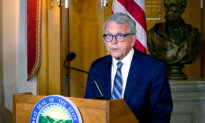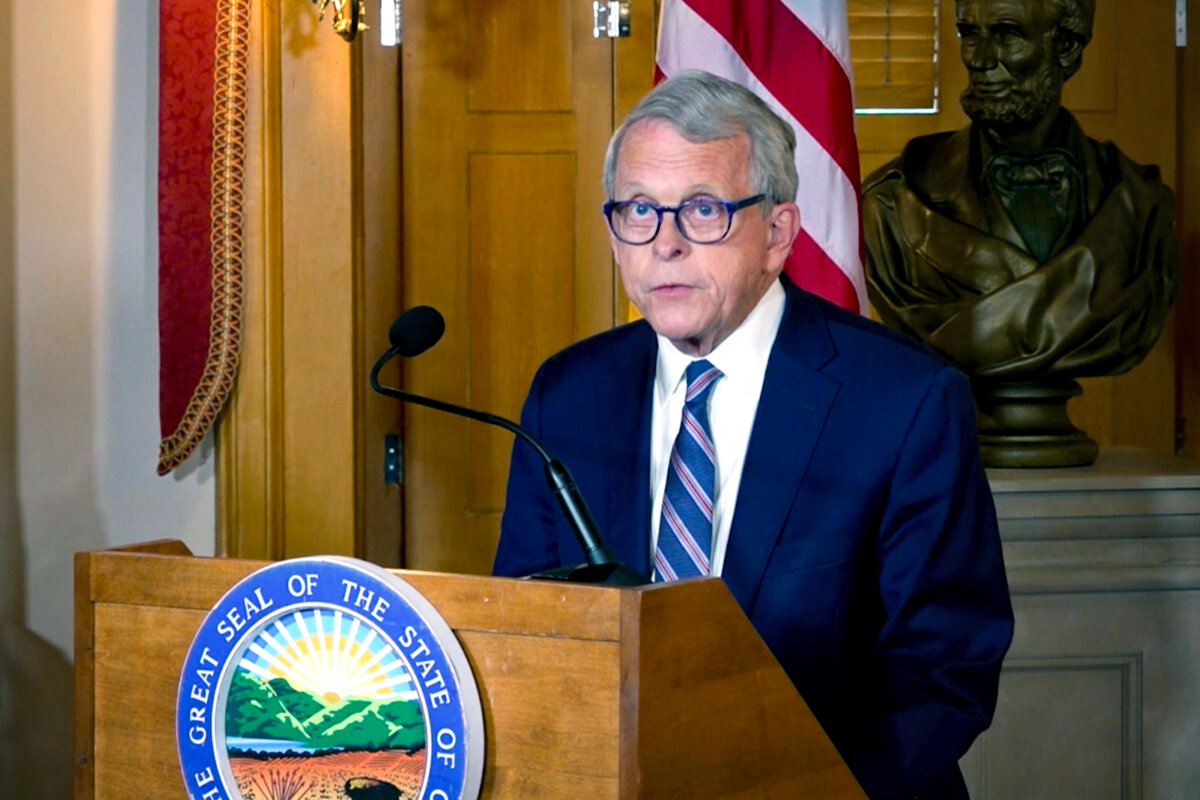

Ohio Gov. Mike DeWine announced new initiatives aimed at fraud prevention on May 13, including immediately ending payments to providers whose billing practices raised “red flags” for possible fraud.
The action comes as the state faces increasing scrutiny over its Medicaid expenditures, although the governor said some of the initiatives have been in the works for some time.
He noted that the state began using a new system in January to identify “billing data anomalies.”
The Ohio Department of Medicaid will move toward a rule change requiring GPS-verified locations, ensuring that home-health providers are present at the specific location where they are supposed to be helping someone. The state began phasing in this “Electronic Visit Verification” more than a year ago, the announcement states.
Live-in caregivers will soon be required to comply with these electronic-verification rules, too.
DeWine also said he would issue an executive order empowering the state Medicaid agency “to implement emergency rules to require more frequent revalidation of providers being identified as higher-risk for committing fraud.”
The governor made his announcement the same day that the U.S. Centers for Medicare and Medicaid Services took two major actions.
First, the agency withheld $1.3 billion from California amid massive hospice-care fraud.
Second, the agency announced a six-month freeze on Medicaid enrollments for new home-health care and hospice services. DeWine said he had planned to ask for such a moratorium in Ohio, which would give the state time to evaluate existing providers and “help remove those at high risk for having committed fraud.”
Fraud has become a focal point nationwide for President Donald Trump’s administration since late 2025, when media reports drew attention to widespread fraud allegations in Minnesota, mostly against Somalis.
Those reports sparked concerns about Ohio, home to the nation’s second-largest Somali population, behind Minnesota.
Earlier this month, scrutiny of Ohio soared after the Daily Wire published an investigative exposé of the Buckeye State’s home-health industry. The state spent $1 billion on home health care in 2024, the most recent year available, according to the media outlet.
Beginning May 4, a series of articles reported that some providers received millions in Medicaid money but were registered to addresses in deserted office spaces—sometimes with dozens of such businesses tied to a single building.
Stephanie O’Grady, spokeswoman for the Ohio Department of Medicaid, told The Epoch Times via email that “some of the entities mentioned in the [Daily Wire] series are no longer Ohio Medicaid providers or have not billed Medicaid in several years.” Others remain under investigation, she said.
Current laws also allow relatives to provide in-home care for Medicaid recipients, O’Grady said.
On May 1, DeWine sent a letter to the federal Medicaid department, “committing Ohio to partnering with the Trump Administration and using a more stringent revalidation process to better prevent fraud,” the governor said in the announcement.
He said Ohio is considered a national leader in aggressively policing Medicaid.
“Since the beginning of 2023, Ohio has secured 444 Medicaid fraud indictments, 481 convictions, and 146 civil settlements and judgments resulting in $78.4 million in recovered taxpayer funds,” the announcement reads.
Ohio Auditor Keith Faber said he has flagged suspicious Medicaid expenditures long before the current wave of publicity.
In a May 8 video posted on X, the auditor noted that Franklin County—where the Ohio state capital, Columbus, is located—is home to about 30 percent of the state’s registered in-home care businesses.
That county receives about 38 percent of the state’s public dollars that are spent on home health care—and 41 percent of that amount “is spent in a four-mile radius.”
Although that “anomaly” raises concerns, the auditor cautioned that “correlation doesn’t equal causation.”
“What does that data mean? It’s going to take more review,” he said.
Statements on Faber’s website show that he and his predecessor, Dave Yost—the current attorney general, who will leave office in about a month—have repeatedly exposed Medicaid waste, fraud, and abuse since at least 2011.
 Friends Read Free
Copy
Facebook
Tweet
Friends Read Free
Copy
Facebook
Tweet