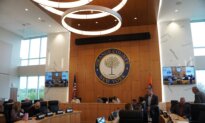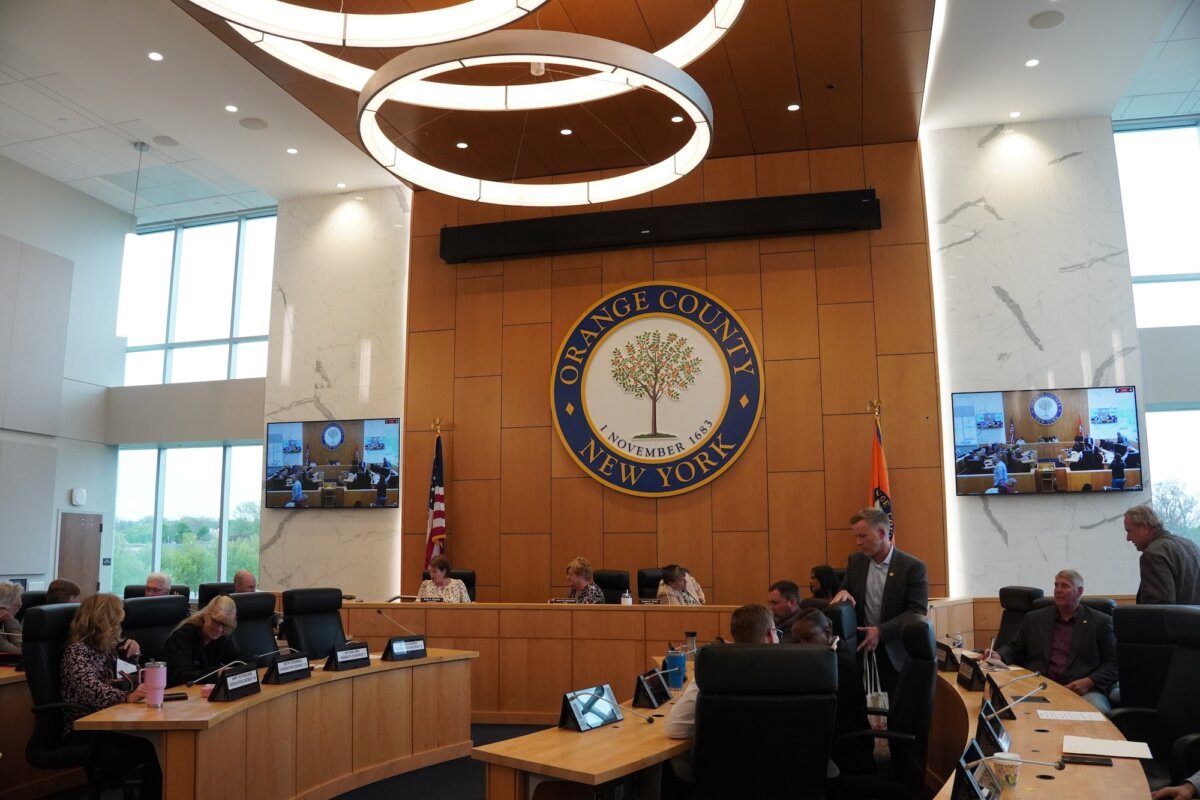

MOUNT HOPE, N.Y.—Orange County legislators on April 28 unanimously cosponsored a resolution to send a home rule regulation to the state Legislature to legalize a county tax distribution error that has persisted unnoticed since 2014.
New York law allows counties to generally tax up to 3 percent, and Orange County collects a 3.75 percent local sales tax. The county can tax even more under an incremental tax system that requires state legislative authorization every two years. It then shares about 26 percent of the collected tax money with local municipalities every year.
The issue Orange County faces is that only the base 3 percent may be shared with municipalities, while the extra 0.75 percent may not.
County legislators warned during the April 28 legislative session that the discovery of the tax law violation by the Office of the New York State Comptroller could lead to municipalities losing 20 percent of the sales tax revenue distributed by the county in 2026 if the home rule request is not approved, totaling a $20 million loss to municipality budgets.
Sales tax revenue distributed by the county is a major source of funding for many municipal budgets. Orange County Legislator Barry Cheney said that sales tax is likely a top two revenue source for every municipality. He gave the example of the village of Warwick, which receives $1.2 million of its $5 million budget from the county sales tax.
The issue with the county sales tax began in 2004, when Orange County began collecting a 3.75 percent sales tax. The additional 0.75 percent requires authorization from the state Legislature every two years, and during the approval process, the Comptroller’s Office found that Orange County had violated a provision of the law that prohibits sharing the taxes collected from the extra 0.75 percent with municipalities.
County Attorney Rick Golden told the Orange County Rules Committee on April 22 that the county began sharing 0.75 percent of the tax with cities, towns, and villages in 2014. He said the mistake was made because the regulation was uncodified and therefore hard to find.
Golden told The Epoch Times on April 28 that the county shares about 24 percent of total collected sales tax revenue with municipalities, and keeps the rest. Should the law be enforced in the county, it would not change the county’s actual funds, but only how much it can distribute to cities, towns, and villages.
During the legislative meeting, concerns were raised that the state would have a difficult time getting it passed through its Assembly and Senate before adjournment in June, and that after that, the resolution would need to be signed by the governor before budgeting for 2027 is up in the next few weeks. During the session, it was suggested that municipal leaders write letters of support to help the regulation gain more attention at the state capitol.
State Sen. James Skoufis told The Epoch Times on April 28 that he is working with his colleagues to draft a fix to the tax distribution issue as quickly as possible. He warned that failure to pass a solution would result in enormous property tax hikes and service cuts.
Following the discovery of the tax error, county legislators voted down a resolution to freeze the gas sales tax.
The resolution fell two votes short of passing the 11-vote threshold. Several legislators voted against the bill because of the possibility that municipalities could lose sales tax revenue.
 Friends Read Free
Copy
Facebook
Tweet
Friends Read Free
Copy
Facebook
Tweet