LOS ANGELES—Following a multi-agency international investigation, a federal jury on Feb. 5 found Jorge Rubén Camargo-Clarke, alleged founder of Panama’s biggest drug federation, guilty of narcotics trafficking.
Known as “El Cholo Chorrillo” and “El Nene,” Camargo was convicted in a Los Angeles federal court of conspiring to distribute cocaine for the purpose of unlawful importation to the United States, the U.S. Attorney’s Office, Central District of California, announced on Feb. 6.
“Camargo contributed directly to the flow of illicit narcotics into American communities. The conviction represents a major blow to a criminal network responsible for extreme violence, instability, and large-scale drug-trafficking,” the U.S. Embassy in Panama said in a statement applauding the verdict.
The embassy noted that forensic evidence and expert testimony from Panamanian authorities, in coordination with the U.S. Drug Enforcement Administration, were critical to securing the conviction.
“The case underscores DEA’s continued commitment to targeting and dismantling transnational criminal organizations that threaten regional stability and public safety,” the embassy said.
The case is part of the Justice Department’s “Operation Take Back America,” focused on illegal immigration, cartels, and transnational criminal organizations.
As the kingpin of the “Baghdad” syndicate, Panama’s largest criminal drug federation, Camargo led a sprawling network of 4,000 narcotraffickers that moved metric tons of U.S.-bound cocaine across multiple borders, prosecutors charged.
A 2020 grand jury indictment alleged Camargo used coded language on BlackBerry Messenger to direct coconspirators moving narcotics along a supply route stretching from Colombia through Panama, Costa Rica, El Salvador, and beyond.
In one 2017 incident cited in the indictment, unnamed coconspirators moved cocaine and marijuana by boat from Colombia and buried the drugs in an “earth trap,” which was later intercepted by law enforcement.
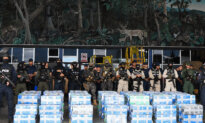
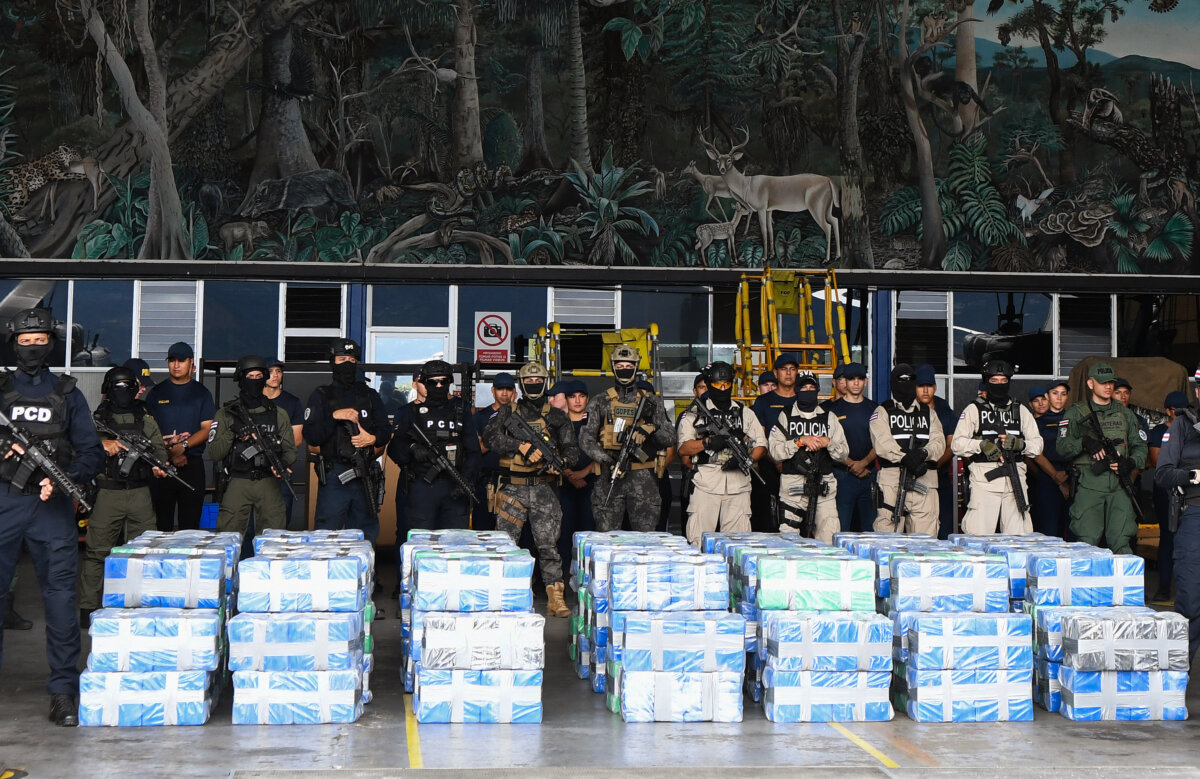
The same year, Panama’s national security forces seized nearly eight tons of cocaine from areas under Camargo’s control, which included most of the country’s Pacific Coast, according to the Justice Department.
Fleeing charges in both Panama and the United States, Camargo hid in Costa Rica until February 2022, when local authorities apprehended him; he was extradited to the United States in 2023.
Camargo’s arrest and extradition were part of a broader crackdown in which Panamanian police snared 20 heads of the Baghdad Syndicate, which they consider one of the country’s most violent criminal organizations, in 2021.
Vying for territory with rival gang Calor Calor, Baghdad is responsible for much of the bloodshed in Panama’s streets and prisons, and inter-gang clashes have been linked to upticks in the country’s homicide rate, according to reporting by Washington-based think tank Insight Crime.
Both groups are involved in “drug logistics and guarding shipments, contract killings, kidnapping, extortion, and controlling territory for the movement and sale of drugs,” according to the Global Organized Crime Index.
Baghdad controls the “vast majority” of drug sales in Panama, and Calor Calor is focused on transporting drugs for more sophisticated transnational criminal organizations based in Mexico and Colombia, the Index reports.
Panama has long been a key juncture of U.S-bound cocaine trafficking; local criminal organizations have served as a bridge between Colombian and Mexican cartels and moved product through Central America to Mexico.
Attorneys for Camargo argued that the government failed to prove a key element necessary to justify his indictment in a U.S. federal court.
They argued in a Jan. 26 motion to dismiss that the indictment offered no evidence to support its allegation that Camargo made arrangements to have the cocaine transported to the United States and thus was missing a “nexus” between the drugs and the United States that is required for applying a federal criminal statute extraterritorially.
 Friends Read Free
Copy
Facebook
Tweet
Friends Read Free
Copy
Facebook
Tweet